Key takeaways
- Pro: CoreXY frame delivers stable results at 600mm/s rated speed.
- Pro: 300°C nozzle expands material choice beyond PLA and PETG.
- Con: The multicolor module is an add-on, not integrated, adding setup complexity.
Multicolor 3D printing has moved past the hobbyist novelty phase into a practical workflow tool for product designers, small-batch manufacturers, and home-office creators who need finished parts without post-painting. The core problem buyers face in this category is not whether a machine can switch filaments, but how reliably it does so over dozens or hundreds of prints without wasting material, triggering jams, or demanding constant babysitting.
What separates a good multicolor setup from a mediocre one comes down to three things: the color-change mechanism (dedicated multi-material units versus add-on boxes), purge waste management, and ecosystem maturity. A printer with 600mm/s rated speed means little if the color-change routine pauses for two minutes each swap. This guide compares eight models on published specifications and aggregated owner feedback to help you match a machine to your actual workload.
Our top picks





As an Amazon Associate we earn from qualifying purchases at no extra cost to you.
Quick Picks
| Product | Best for | Price |
|---|---|---|
| FLASHFORGE AD5X (CoreXY) | Precision at high speed on a budget | $349 |
| Bambu Lab P1S Combo | Proven ecosystem and reliable AMS | $549 |
| Bambu Lab P2S Combo | Upgraded platform with AMS 2 Pro | $769 |
| Anycubic Kobra X | Simple native 4-color setup | $329.99 |
| FLASHFORGE AD5X with IFS | Integrated filament system focus | $348.99 |
| FLASHFORGE AD5X (Productivity) | Filament backup and DIY calibration | $348.99 |
| FLASHFORGE AD5X (Max Speed) | Maximum nozzle temperature and size | $349 |
| Creality K2 Combo | Larger build volume with camera AI | $521 |
How We Picked
We narrowed this field by weighting four criteria: the color-change architecture (native versus modular, and how many materials it supports), purge volume per swap (lower waste means longer spool life and lower cost per part), build quality consistency at the printer’s rated speed, and the depth of the software slicer ecosystem. Price mattered as a threshold filter, not as a ranking axis—two printers at $349 are judged on the same bar as a $769 machine.
The 8 Best Multicolor 3D Printer 2026 in 2026
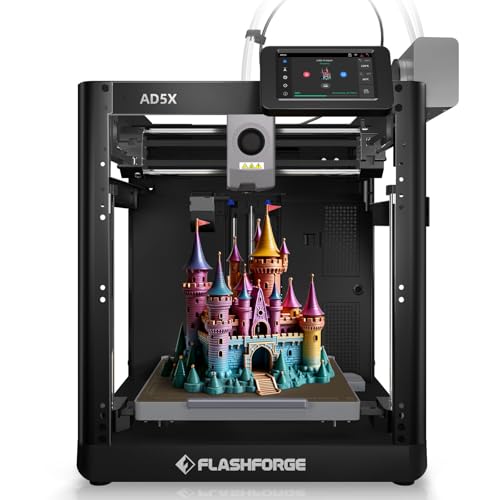
FLASHFORGE AD5X Multi-Color 3D Printer
This is the entry point for buyers who want CoreXY kinematics and genuine high-speed multicolor output without crossing the $400 line. The 300°C direct drive extruder handles engineering-grade materials, and the 1-click auto leveling removes the most common frustration for beginners upgrading from bed-slinger designs.
- Pro: CoreXY frame delivers stable results at 600mm/s rated speed.
- Pro: 300°C nozzle expands material choice beyond PLA and PETG.
- Con: The multicolor module is an add-on, not integrated, adding setup complexity.
Skip this if you want a single-box experience with zero accessory configuration. The value is real, but assembly time is the trade-off.
Bambu Lab P1S Combo
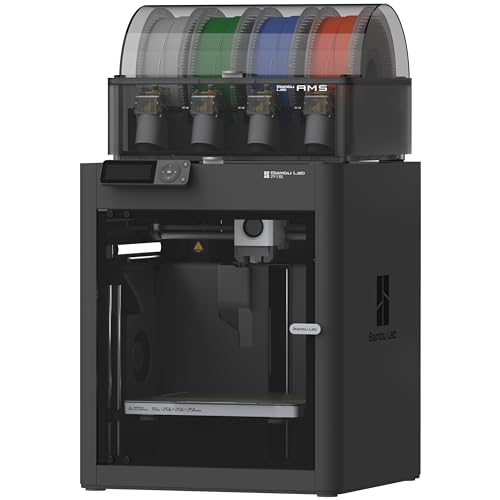
The P1S Combo bundles Bambu Lab’s enclosed CoreXY printer with the AMS (Automatic Material System), giving buyers a fully supported multicolor pipeline out of the box. Owner feedback consistently highlights the slicer software and the reliability of filament swaps across extended print runs. For anyone prioritizing a polished workflow over raw specs, this remains the ecosystem anchor.
- Pro: Mature software suite with minimal user-reported color-change failures.
- Pro: Enclosed chamber suits ABS and nylon alongside standard filaments.
- Con: At $549, it costs roughly $200 more than spec-comparable rivals.
Skip it if your budget is strictly under $400 or if you only ever print single-color functional parts.
Bambu Lab P2S Combo
The P2S Combo represents the refreshed generation, pairing the updated P2S platform with the AMS 2 Pro. The hardware refinements address earlier owner complaints around noise and purge management. If the P1S was the reliable default, the P2S is where the system gets quieter and slightly more efficient per swap—meaningful differences for anyone running multiple machines in a shared workspace.
- Pro: AMS 2 Pro reduces purge waste versus the first-generation module.
- Pro: Enclosed design with improved ventilation for mixed-material runs.
- Con: The $769 price makes this a commitment beyond casual hobby use.
Skip it if the P1S Combo already meets your throughput needs at a lower entry cost.
Anycubic Kobra X Multicolor 3D Printer
Anycubic’s pitch is simplicity: native 4-color capability without a separate modular add-on. The easy-setup positioning targets buyers who found other multicolor systems intimidating. Owner feedback praises the out-of-box experience but notes that the native system still produces purge waste comparable to modular competitors.
- Pro: Native 4-color means fewer components to manage or break.
- Pro: Lowest entry price in this roundup at $329.99.
- Con: Limited headroom for future material upgrades versus higher-temp nozzles.
Skip it if you need materials requiring 280°C or above, or if you want an enclosed build volume for warp-sensitive filaments.
FLASHFORGE AD5X Multi-Color & Material with IFS
This listing emphasizes the IFS (Integrated Filament System), positioning the AD5X as a cleaner multicolor solution where filament feeding is managed through a unified path rather than external tubes. For buyers who struggled with tangle issues on other add-on systems, the IFS approach reduces a common failure mode.
- Pro: Integrated filament routing lowers the chance of mid-print feeding errors.
- Pro: Same CoreXY speed and build volume as other AD5X variants.
- Con: Overlaps heavily with sibling AD5X listings, making comparison shopping confusing.
Skip it if you are already committed to a different brand ecosystem and do not want to manage a second slicer profile.
FLASHFORGE AD5X Multi-Material Productivity Booster
The “Productivity Booster” angle highlights full-auto calibration and filament backup—a feature that swaps to a spare spool if the active one runs out mid-print. For batch runners or anyone with irregular monitoring schedules, that single feature can save an entire print. The DIY IFS creations mention appeals to tinkerers who want to extend the system’s capabilities.
- Pro: Filament backup prevents ruined prints from empty spools.
- Pro: Full-auto calibration reduces first-layer failures.
- Con: The DIY IFS language implies a less polished, more user-assembled experience.
Skip it if you prefer a fully sealed, factory-integrated package with no modification steps.
FLASHFORGE AD5X Max Speed & Temperature
Identical hardware to the other AD5X variants but marketed on maximum capability: 600mm/s speed and 300°C nozzle temperature across a 220x220x220mm volume. This listing targets buyers comparing spec sheets where the headline numbers matter most. The practical reality is that sustained 600mm/s prints require lighter, simpler geometries to avoid ringing artifacts.
- Pro: Top-tier rated speed and temperature in the sub-$350 bracket.
- Pro: Fully auto leveling removes a persistent source of print failures.
- Con: Marketing overlap with three other AD5X listings creates genuine confusion.
Skip it if you cannot distinguish these four AD5X variants and want clarity on which listing includes which bundled accessories.
Creality K2 Combo
The K2 Combo brings a larger 260x260x260mm build volume and an AI camera for failure detection—features that matter when prints are large enough that a failed eighth hour costs a full spool. The 95% pre-assembly claim reduces setup anxiety, and the smart camera adds a layer of supervision absent from most competitors at this price.
- Pro: Largest build volume in this roundup at 260x260x260mm.
- Pro: AI camera catches failures early, saving filament and time.
- Con: CFS multicolor system has less community feedback than the AMS or IFS alternatives.
Skip it if print size is not a concern and you prefer an ecosystem with more established multicolor owner reports.
Buying Guide
Color-Change Architecture
Multicolor printers use one of two approaches: a modular add-on (like the AMS or IFS boxes) that feeds filament through a shared path, or a native system built into the machine. Modular designs let you upgrade or replace the unit independently, but they add complexity and occasional tube friction. Native systems reduce part count but lock you into the manufacturer’s future decisions. Evaluate how many colors you actually need per project—if it is consistently two, the extra purge waste from four-color swaps erodes your value.
Purge Waste and Cost Per Part
Every color change requires the printer to flush residual filament from the nozzle. This purge blob accumulates across a multicolor print, and the volume varies significantly between systems. Over a 50-part batch job, a poorly managed purge routine can waste an entire spool. Before buying, search owner forums for reported purge volumes on your specific model rather than trusting manufacturer marketing language.
Ecosystem and Slicer Compatibility
A multicolor printer lives or dies by its slicer software. The ability to assign colors per model, preview waste, and queue prints remotely determines whether the system stays productive or becomes a weekend experiment. Bambu Lab and Creality offer the most mature closed ecosystems; FLASHFORGE and Anycubic rely on hybrid setups that demand more user configuration but grant greater openness.
Our Verdict
Top pick: The Bambu Lab P1S Combo at $549 offers the most reliable multicolor workflow with the least friction, making it the best choice for anyone whose time is more valuable than the price difference over budget rivals.
Budget pick: The Anycubic Kobra X at $329.99 delivers native 4-color printing with the simplest setup path for under-$350 budgets.
Condition where another wins: If your prints exceed 220mm in any axis, the Creality K2 Combo becomes the default choice despite the less-proven CFS system, because no other option in this roundup offers a 260mm build volume.
FAQ
Can multicolor 3D printers use any filament brand?
Most support any standard 1.75mm filament, but proprietary multi-material systems sometimes perform best with the manufacturer’s recommended brands or profiles. Always check your specific model’s material compatibility list before investing in specialty filaments.
How much waste does a multicolor print produce?
Waste scales with the number of color changes, not the number of colors in the model. A design using five colors but with only three swaps produces far less purge waste than one requiring ten swaps. Software preview tools on platforms like Bambu Studio estimate this before printing.
Is an enclosed printer necessary for multicolor work?
Enclosures matter for warp-sensitive materials like ABS or PC, regardless of color count. If you print exclusively PLA or PETG, an open-frame machine works fine. For mixed-material multicolor runs, enclosure becomes a practical necessity.
What is the realistic speed difference between 600mm/s rated and actual print speed?
Rated speed applies to travel moves and simple geometric paths. On detailed prints with frequent direction changes and retraction events, effective throughput typically lands at a fraction of the advertised maximum. Compare reviews on real-world parts rather than trusting the headline number.