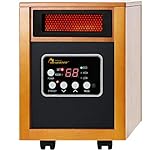
Key takeaways
- Small, occasionally used garage or workshop: A portable propane radiant heater in the 10,000–30,000 BTU range can provide spot heat, but it needs strict clearance, ventilation, and carbon-monoxide precautions.
- One- or two-car attached garage: A permanently mounted vented unit such as a ceiling-mounted garage heater is usually the safer, more comfortable choice. Look for roughly 30,000–60,000 BTU, depending on insulation and climate.
- Large or poorly insulated workshop: A suspended unit heater in the 60,000–125,000 BTU range can heat the whole space, but installation normally requires gas piping, electrical work, flue venting, and permits.
- Renters or shoppers avoiding installation: Choose a listed portable heater only if local rules permit its use in a garage. It should have automatic shutoff, tip-over protection where applicable, and a properly sized cylinder connection.
The best propane garage heaters are vented forced-air or infrared units matched to your garage’s square footage, ceiling height, insulation, and available gas supply—not simply the heater with the highest BTU rating.
Our top picks

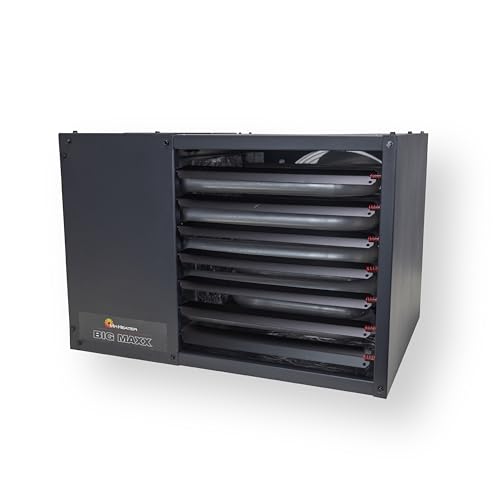


As an Amazon Associate we earn from qualifying purchases at no extra cost to you. Ratings are shown as listed on Amazon.
Quick picks by garage situation
- Small, occasionally used garage or workshop: A portable propane radiant heater in the 10,000–30,000 BTU range can provide spot heat, but it needs strict clearance, ventilation, and carbon-monoxide precautions.
- One- or two-car attached garage: A permanently mounted vented unit such as a ceiling-mounted garage heater is usually the safer, more comfortable choice. Look for roughly 30,000–60,000 BTU, depending on insulation and climate.
- Large or poorly insulated workshop: A suspended unit heater in the 60,000–125,000 BTU range can heat the whole space, but installation normally requires gas piping, electrical work, flue venting, and permits.
- Renters or shoppers avoiding installation: Choose a listed portable heater only if local rules permit its use in a garage. It should have automatic shutoff, tip-over protection where applicable, and a properly sized cylinder connection.
BTU output versus garage size
BTU ratings describe heat input, not a guarantee of room temperature. A drafty garage with an uninsulated overhead door may require much more capacity than a tightly sealed, insulated workshop. As a starting point, many garages fall near 25–45 BTU per square foot in a cold climate and 15–30 BTU per square foot in a mild climate. Ceiling height, door opening frequency, windows, and insulation can move the requirement substantially.
| Garage size and condition | Typical starting range | Heater type that usually fits | Important qualification |
|---|---|---|---|
| 10 × 12 ft, insulated, 8-ft ceiling | 12,000–25,000 BTU | Portable radiant or small vented unit | Best for one work zone; avoid oversizing a small enclosed space |
| 12 × 20 ft, moderately insulated | 30,000–60,000 BTU | Vented ceiling-mounted heater | Choose the higher end for cold regions or frequent door opening |
| 20 × 24 ft, insulated, 8–10-ft ceiling | 50,000–80,000 BTU | Forced-air unit heater | A ceiling fan or integrated blower helps distribute heat |
| 24 × 30 ft, drafty or poorly insulated | 80,000–125,000 BTU | Larger suspended unit heater | Have a qualified installer calculate heat loss before buying |
Do not use the table as a substitute for the manufacturer’s sizing instructions. An oversized heater can cycle frequently, create uneven temperatures, and waste fuel, while an undersized heater may run continuously without keeping the workbench area comfortable.
Head-to-head: the main propane garage-heater types
Vented forced-air unit heaters
These ceiling-mounted heaters burn propane in a sealed combustion chamber and send warm air into the garage through a blower. Brands such as Mr. Heater and Modine offer this general type, including product families commonly sold for garages and workshops. The combustion exhaust exits through a flue, which keeps combustion gases out of the occupied space when installed correctly.
Best for: whole-garage heating, regular winter use, and spaces with enough ceiling height for overhead mounting.
Trade-offs: installation is more involved and commonly requires a gas line, electrical connection, thermostat wiring, combustion-air provisions, and approved venting. A blower also produces more noise than a radiant heater. Allow the exact side, top, rear, and front clearances printed in the manual; do not assume that a unit can be installed directly above a vehicle or storage rack.
Infrared or radiant propane heaters
Radiant heaters warm people, tools, floors, and nearby surfaces rather than heating all of the air first. This can be efficient when one person works at a fixed bench in a large, leaky garage. Portable radiant models from Mr. Heater and similar manufacturers are available in lower-output sizes.
Best for: spot heating, short work sessions, and garages where whole-room heating would waste fuel.
Trade-offs: heat falls off quickly with distance, and the hot face or reflector needs generous separation from cardboard, sawdust, solvents, fabric, wood scraps, and vehicles. Radiant heaters do not make a crowded garage safer: combustible storage still needs to remain outside the listed clearance zone.
Portable forced-air “torpedo” heaters
These high-output heaters move a large volume of hot air and are often used for temporary construction or workshop heating. They can warm a space quickly, but many models are intended for well-ventilated areas and may add combustion moisture. They are a poor choice for unattended heating, finished attached garages, or rooms where people sleep.
Best for: temporary use in large, open, well-ventilated work areas.
Trade-offs: they are loud, create drafts, consume fuel quickly, and need careful placement away from dust and flammable materials. Follow the manual’s ventilation requirement exactly rather than treating an open garage door as automatically sufficient.
Fuel use: what a propane tank really provides
One gallon of propane contains about 91,500 BTU, but the heater cannot convert all of that energy into useful room heat. A simple estimate is:
Hours per gallon ≈ 91,500 × efficiency ÷ heater input BTU per hour.
| Heater input | Approximate consumption | Approximate runtime from a 20-lb cylinder |
|---|---|---|
| 20,000 BTU/hour | About 0.22 gallon/hour | Roughly 3.5–4.5 hours at continuous high output |
| 40,000 BTU/hour | About 0.44 gallon/hour | Roughly 1.75–2.25 hours at continuous high output |
| 60,000 BTU/hour | About 0.66 gallon/hour | Roughly 1–1.5 hours at continuous high output |
A 20-lb cylinder nominally holds about 4.7 gallons, but it is normally filled only to approximately 80% of its water capacity. Cold weather can also reduce vaporization performance, particularly when a high-BTU heater is connected to a small cylinder. For a permanently installed heater, a larger outdoor tank and correctly sized regulator may be more practical than repeatedly changing portable cylinders.
Venting, clearance, and garage safety
Venting is the most important distinction between heater categories. A vented unit sends combustion exhaust outdoors through an approved flue. An unvented heater releases combustion products into the garage, including carbon monoxide and water vapor. Local building and fire codes may restrict or prohibit unvented propane heaters in attached garages, workshops, or occupied structures.
- Check local code and the heater’s listing before buying; “indoor-safe” marketing does not override local requirements.
- Install carbon-monoxide alarms near adjoining living areas and test them regularly. An alarm is backup protection, not a substitute for venting.
- Keep the heater away from gasoline, paint thinner, aerosol cans, sawdust, rags, cardboard, and stored lumber. Use the manual’s clearance in every direction, including above and behind the unit.
- Never position a portable heater where a car door, garage door, ladder, or moving material can strike it.
- Do not dry clothing or gloves on the heater, and do not operate a portable unit while sleeping or when nobody is present.
- Have fixed gas piping, regulators, flues, and electrical connections installed or inspected by qualified professionals.
Remember that clearance is measured from the hottest part of the appliance, not necessarily from its outer handle or mounting bracket. A heater needing 3 ft of clearance from combustibles can consume a surprisingly large section of a small garage once shelves, workbenches, and vehicle doors are considered.
Which choice fits your workshop?
| Your situation | Most suitable direction | Why |
|---|---|---|
| Small garage, occasional weekend work | Low-output radiant heater or small vented heater | Lower fuel use and faster spot heating |
| Attached garage beside living spaces | Professionally installed vented unit | Exhaust is directed outdoors and thermostat control is practical |
| Large metal workshop with frequent door opening | High-output forced-air unit heater | Better air circulation and faster recovery after doors open |
| Garage packed with storage | Ceiling-mounted vented model, if clearances permit | Keeps the appliance away from floor-level clutter |
| Renter or temporary workspace | Approved portable model only | Avoids permanent alterations, but still requires code compliance and ventilation |
Installation and ownership realities
Before ordering, measure the ceiling height, the width of the garage door, the distance to the nearest combustible storage, and the route for a flue or gas line. A large ceiling heater may fit the room but still be difficult to carry through a narrow doorway or lift safely into position. Confirm the shipping weight and whether mounting brackets are included; a 60,000-BTU unit can require two-person handling or lifting equipment.
Dust is another practical concern. Filters, blower wheels, burner openings, and intake screens collect sawdust and oily residue. Schedule cleaning according to the manual and inspect hoses, connectors, and regulators on portable equipment before each heating season. The parts most likely to create trouble over time are clogged air passages, worn hoses, dirty burners, ignition components, and thermostat wiring—not the metal cabinet itself.
Bottom line
For a regularly used home garage, a correctly sized vented propane unit heater is usually the best balance of comfort, fuel control, and safety. For a small work zone, radiant heat can cost less to operate because it warms the person rather than the entire building. Portable forced-air models make sense mainly for temporary, well-ventilated workshop use. Compare BTU output with actual garage dimensions, calculate cylinder runtime, and treat venting and clearance requirements as purchase criteria rather than installation details to be solved later.