
Grip is not one property. A mat can hold well on a clean wood floor and slide on tile. It can grip beautifully dry and turn treacherous the moment your palms sweat. Natural rubber grips through moisture; PVC tends to get slick; TPE sits between the two. If your downward dog turns into a slow-motion slide fifteen minutes into a session, the mat is not necessarily bad — it may simply be the wrong material for how much you sweat and what your floor is made of.
The second half of the problem is durability. A 6 mm mat that feels luxurious under the knees compresses permanently under the balls of your feet within a year of daily practice, leaving two shiny divots exactly where you need traction most. The six options below include standard exercise mats, thicker cushioned models, and two microfibre towel solutions specifically for sweaty practice — evaluated on how they behave once wet and how long they hold their surface.
Our top picks


As an Amazon Associate we earn from qualifying purchases at no extra cost to you.
Quick Comparison
| Product | Best For | Standout Feature | Watch Out For |
|---|---|---|---|
| Amazon Basics Extra Thick Mat | Joint comfort | Extra cushioning, carry strap | Thickness reduces stability |
| Gruper Non-Slip Yoga Mat | All-round practice | Textured non-slip surface | Needs breaking in |
| Breling Suede Yoga Towels | Hot yoga | Three-pack, 26 by 73 inches | Slippery until damp |
| Gruper Pro Yoga Mat | Eco-conscious buyers | Eco-friendly construction | Marks show on light colours |
| CAP Barbell Yoga Mat | Mixed floor workouts | Half-inch high-density foam | Too soft for balance poses |
| LETSHAKE Hot Yoga Towel | Heavy sweaters | 500 GSM, dual-sided grip | Requires washing after use |
How to Choose
- Match material to your sweat level: If your hands are damp within ten minutes, a textured mat alone will not hold. Add a microfibre towel, which grips better wet than dry — the opposite of most mat surfaces.
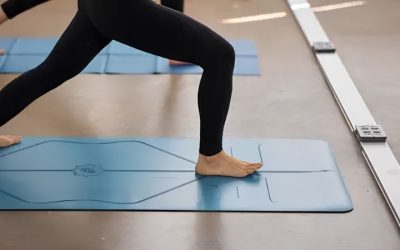
- Thicker is not better for yoga: Above about 6 mm, balance poses become unstable because the surface deforms under your foot. Save the extra cushioning for floor work and choose 4 to 6 mm for standing practice.
- Consider the floor underneath: Tile and polished concrete need a mat with a grippy underside. On carpet, almost anything stays put, but a soft mat over soft carpet becomes unstable in a different way.
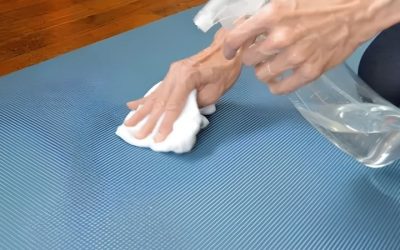
- Break-in is real: Many mats ship with a manufacturing residue that reduces grip. Wiping with a damp cloth and using the mat for a week usually transforms the surface.
- Plan for cleaning: Sweat degrades every mat material. Wipe after each session and let it dry fully before rolling; a rolled damp mat develops odour and surface breakdown within weeks.
Top Picks Reviewed
Best Overall: Gruper Non-Slip Yoga Mat
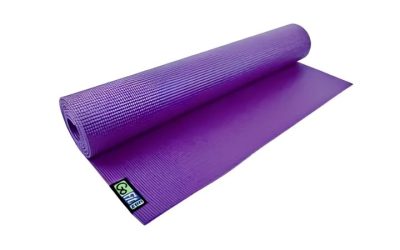
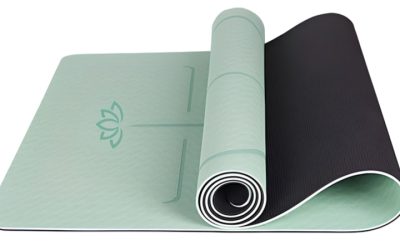
The textured surface holds well on both wood and tile, the eco-friendly construction avoids the strong initial smell of cheap PVC, and the included carrying strap makes it practical for classes as well as home use. For general practice it is the most balanced option here.
Grip improves after the first week — out of the box there is a slight surface film that reduces traction. Wipe it down before you judge it.
Best for Hot Yoga: LETSHAKE Hot Yoga Towel
At 500 GSM and 72 by 26.5 inches with dual-sided grip, this is engineered for the specific problem of practising in a puddle. The microfibre actively improves its hold as it absorbs, which is precisely backwards from how mats behave.
It needs washing after every session or it develops odour quickly, and it is a layer on top of a mat rather than a replacement for one.
Best for Sensitive Joints: Amazon Basics Extra Thick Mat
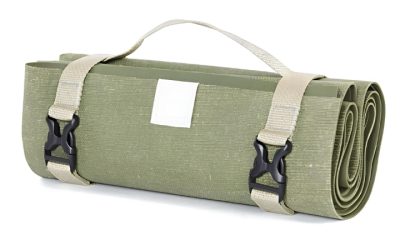
For anyone whose knees complain during kneeling poses or floor work, the extra thickness makes practice possible rather than merely comfortable. The carry strap is a small but genuinely useful inclusion at this price.
The cushioning that helps your knees hurts your balance. Standing poses on a very thick mat feel wobbly, so it suits restorative and floor-based practice better than a flowing sequence.
Best Value Towel Set: Breling Suede Yoga Towels
A three-pack at 26 by 73 inches means one in use, one in the wash, and one spare — which is exactly the rotation a regular hot yoga practice needs. The suede-finish microfibre is absorbent and soft against the skin.
Dry, the surface is slippery. It only reaches full grip once damp, so many people lightly mist it before starting rather than waiting to sweat.
Best Eco Option: Gruper Pro Yoga Mat
Same reliable textured grip and eco-friendly build as its sibling, in an alternative colourway and finish. For anyone who cares about material sourcing and wants a mat without the chemical odour of budget PVC, it is a straightforward choice.
Lighter colours show foot marks and sweat staining quickly. It stays functional, but it stops looking new sooner than a dark mat would.
Best for Mixed Training: CAP Barbell Yoga Mat
The half-inch high-density foam handles core work, stretching, and light equipment use as well as yoga, and the strap makes it easy to stow. If your mat serves several purposes, this is the more practical shape.
It is too soft for serious balance work. Tree pose and warrior three on half an inch of foam are noticeably harder than they need to be.
Frequently Asked Questions
Why does my yoga mat get slippery when I sweat?
Most mat surfaces rely on dry friction, which moisture destroys. Natural rubber handles it better than PVC, but the reliable fix is a microfibre towel that grips more as it gets wet.
What thickness should I choose?
Four to six millimetres for general practice with standing poses, and thicker only if joint comfort outweighs stability. Very thick mats make balance work meaningfully harder.
How do I clean a yoga mat?
Wipe with a diluted mild soap solution or a vinegar and water mix after sweaty sessions, then air dry completely before rolling. Avoid harsh cleaners, which strip the textured surface.
How long should a yoga mat last?
With daily practice, expect one to three years before compression marks and thinning appear at the hands and feet. Rotating the mat end to end periodically spreads that wear.
Final Thoughts
For most home practice the Gruper Non-Slip Yoga Mat is the right balance of grip, thickness, and price, and it holds up well over time. Anyone who sweats heavily should pair a mat with the LETSHAKE Hot Yoga Towel, while the Amazon Basics Extra Thick Mat remains the kinder choice for knees during floor-based sessions.
Write Your Review
No reviews yet. Be the first to share your experience!