Key takeaways
- Single vs. dual motor: A single motor links the back and footrest on one track, so you get preset positions only. Dual motor units drive each independently, which is what makes infinite positioning and true lay-flat possible. If you plan to nap in the chair or need a specific leg-elevated angle for circulation, pay for the second motor.
- Measure the recline arc, not the footprint: The stated width tells you nothing about clearance. A chair reclining to 165° needs real space behind it unless it’s a wall-hugger design. Mark the arc on your floor with painter’s tape before ordering, and account for baseboard depth and any trim.
- Weight capacity with a margin: Ratings between 250 and 350 lbs are common. Treat the number as a ceiling, not a target, and leave 20 percent of headroom. Sustained loading near the limit is what wears out scissor mechanisms and stresses weld points.
- Certifications tell you about the build: FSC certification points to responsibly sourced hardwood in the frame, and OEKO-TEX means the textiles have been tested for harmful substances. Neither guarantees longevity, but both suggest the manufacturer is documenting its supply chain rather than sourcing whatever’s cheapest that quarter.
- Plan for the electronics: USB and USB-C ports, heat elements, and massage motors all run off a transformer that will eventually fail. Check whether the hand control and power supply are replaceable modules with standard connectors. A chair you can fix with a $40 part beats one that becomes scrap when a board dies.
What's inside
Shopping for a recliner sounds simple until you’re standing in a showroom with a tape measure, trying to work out whether a chair that reclines to 165° will actually clear your baseboard, or whether the motor humming under the seat is a single-actuator unit that will strand you mid-tilt in five years. The listings don’t help much either. Weight capacities get buried, “dual motor” gets thrown around loosely, and the difference between a lift chair that genuinely helps someone stand and one that just tips them forward is rarely spelled out. If you’ve ever pulled the fabric skirt off a cheap recliner to see what’s underneath, you know the frame and the mechanism matter far more than the upholstery photo.
This guide looks at recliner brands the way you’d inspect one on a workbench: motor configuration, frame certification, wall clearance, real load ratings, and how serviceable the electronics are when something eventually fails. We’ve focused on power lift recliners and zero-gravity models, since that’s where the engineering differences show up most clearly, and where a bad buy is hardest to live with.
As an Amazon Associate we earn from qualifying purchases.


🛒 Best Price Today on Amazon
Prime members get fast, free shipping on everything above, plus member-only deals. New members get a 30-day free trial — cancel anytime.
How to Choose a Recliner Brands (2026)
- Single vs. dual motor: A single motor links the back and footrest on one track, so you get preset positions only. Dual motor units drive each independently, which is what makes infinite positioning and true lay-flat possible. If you plan to nap in the chair or need a specific leg-elevated angle for circulation, pay for the second motor.
- Measure the recline arc, not the footprint: The stated width tells you nothing about clearance. A chair reclining to 165° needs real space behind it unless it’s a wall-hugger design. Mark the arc on your floor with painter’s tape before ordering, and account for baseboard depth and any trim.
- Weight capacity with a margin: Ratings between 250 and 350 lbs are common. Treat the number as a ceiling, not a target, and leave 20 percent of headroom. Sustained loading near the limit is what wears out scissor mechanisms and stresses weld points.
- Certifications tell you about the build: FSC certification points to responsibly sourced hardwood in the frame, and OEKO-TEX means the textiles have been tested for harmful substances. Neither guarantees longevity, but both suggest the manufacturer is documenting its supply chain rather than sourcing whatever’s cheapest that quarter.
- Plan for the electronics: USB and USB-C ports, heat elements, and massage motors all run off a transformer that will eventually fail. Check whether the hand control and power supply are replaceable modules with standard connectors. A chair you can fix with a $40 part beats one that becomes scrap when a board dies.
The Best Recliner Brands (2026)s Reviewed
MCombo Oversized Power Lift Recliner R7510
Built for big-and-tall users, the R7510 pairs a wide seat with heat, massage, and both USB and USB-C charging in the arm. The faux leather wipes clean easily, which makes it a sensible pick for daily-use situations where spills are a fact of life.
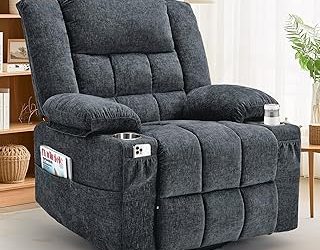
MCombo Dual Motor Zero Gravity Lift Recliner R7897
The dual-motor setup here is the real draw: back and footrest move independently, so you can dial in a genuine zero-gravity position rather than settling for a fixed preset. Fabric upholstery breathes better than vinyl over long sittings, and the infinite positioning makes it the strongest choice for extended recovery use.
MCombo Power Lift Recliner 7040 (Admiral)
An FSC-certified hardwood frame under breathable fabric puts this one ahead of most chairs at its size. The medium footprint suits smaller living rooms, and the heat and massage functions are well integrated rather than feeling bolted on.
MCombo Dual Motor Recliner 7666
The 165° lay-flat range and extended footrest make this closer to a bed than most recliners manage, and the 350 lb capacity gives useful structural margin. Pet-friendly fabric and a one-touch home button are practical touches that show someone thought about actual daily use.
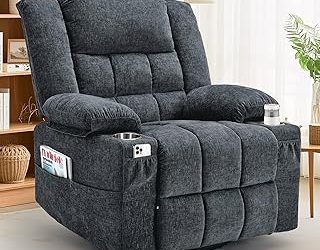
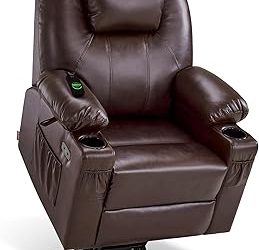
MCombo Power Lift Recliner 7040 (Dark Brown Faux Leather)
Same certified frame as the Admiral variant, finished in faux leather with cup holders and side pockets added. Both FSC and OEKO-TEX certified, and the multiple size options mean you can match the seat to the user rather than compromising.
Frequently Asked Questions
How much wall clearance does a power recliner need?
Non-wall-hugger designs typically need 12 to 18 inches behind them at full recline. Wall-hugger mechanisms slide the seat forward as the back drops and can work with 4 to 6 inches. Always measure from the wall face, including baseboard.
Is dual motor worth the extra cost?
If you want independent leg elevation, true lay-flat, or zero-gravity positioning, yes. For simple sit-and-recline use, a single motor is adequate and has fewer failure points.
What happens if the power goes out?
Most lift recliners include a battery backup, usually a 9V, that provides enough charge to return the chair to a seated position once. Test it when the chair arrives and replace the battery annually.
Can I assemble a lift recliner myself?
Generally yes. Most ship in two or three sections that clip together with steel brackets, then you connect the motor harness and transformer. Budget 30 minutes and a second person for the back section, which is heavier than it looks.
Final Thoughts
For most buyers, the MCombo R7897 dual motor zero-gravity chair offers the best balance of positioning control and breathable fabric, while the 7666 wins on sheer flat-out range and load capacity. If space is tight and you want certified materials without the oversized footprint, the 7040 in Admiral fabric is the smart middle ground.