Key takeaways
- Frame construction: Look for kiln-dried hardwood or welded steel rather than particleboard and softwood. If the listing mentions plywood, check the ply count — seven-ply or better in the seat deck resists the flexing that eventually splits a frame.
- Mechanism gauge and travel: Heavy-duty motion hardware uses thicker steel and wider pivot pins with sintered bushings. A slow, controlled recline stroke usually means better linkage geometry than a chair that snaps back under its own spring tension.
- Seat width and depth: Measure between the armrests at the seat cushion, not the outside dimensions. A 52-inch overall width can still deliver a cramped 22-inch seat. Aim for 24 to 28 inches of usable seat width and at least 21 inches of depth.
- Foam density: High-resilience foam at 2.0 pounds per cubic foot or better holds its shape far longer than standard 1.2-pound polyurethane. Pocketed coil seat bases under the foam add years of service for larger frames.
- Motor and power access: Single-motor lift chairs are simpler and cheaper to service; dual motors give independent footrest and backrest control. Either way, confirm the transformer is externally mounted so you can replace it without disassembling the chair.
What's inside
Pull the fabric off a failed recliner and the story is always the same: a stamped steel scissor mechanism with thin gauge linkages, staples where there should be corner blocks, and a foam core that has compressed into a shallow bowl under the seat. Most recliners are engineered around a 250-pound occupant and a gentle recline cycle. Put 350 or 400 pounds through that same geometry a few thousand times and the pivot points wear oval, the frame racks, and the chair starts leaning before the first year is out. Weight capacity numbers on the box tell you almost nothing about how the load is actually carried.
This guide looks at heavy-duty recliners the way you would inspect one on a shop floor: frame material and joinery, motor and lift mechanism quality, seat width and foam density, and whether the electronics are worth having or just marketing. Six chairs are covered below, spanning manual and power lift models rated from 400 to 450 pounds, with notes on which ones actually justify their capacity claims and which compromises you should expect at each price point.
As an Amazon Associate we earn from qualifying purchases.




🛒 Best Price Today on Amazon
Prime members get fast, free shipping on everything above, plus member-only deals. New members get a 30-day free trial — cancel anytime.
How to Choose a Recliner For Heavy Person (2026)
- Frame construction: Look for kiln-dried hardwood or welded steel rather than particleboard and softwood. If the listing mentions plywood, check the ply count — seven-ply or better in the seat deck resists the flexing that eventually splits a frame.
- Mechanism gauge and travel: Heavy-duty motion hardware uses thicker steel and wider pivot pins with sintered bushings. A slow, controlled recline stroke usually means better linkage geometry than a chair that snaps back under its own spring tension.
- Seat width and depth: Measure between the armrests at the seat cushion, not the outside dimensions. A 52-inch overall width can still deliver a cramped 22-inch seat. Aim for 24 to 28 inches of usable seat width and at least 21 inches of depth.
- Foam density: High-resilience foam at 2.0 pounds per cubic foot or better holds its shape far longer than standard 1.2-pound polyurethane. Pocketed coil seat bases under the foam add years of service for larger frames.
- Motor and power access: Single-motor lift chairs are simpler and cheaper to service; dual motors give independent footrest and backrest control. Either way, confirm the transformer is externally mounted so you can replace it without disassembling the chair.
The Best Recliner For Heavy Person (2026)s Reviewed
Large Power Lift Recliner with Massage and Heat
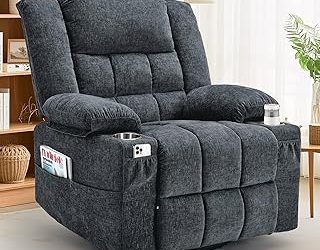
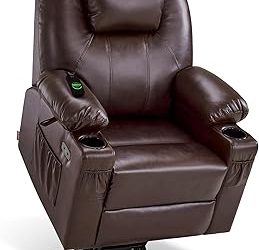
This one earns its place on frame integrity rather than gadgetry — the lift mechanism is properly braced and the overstuffed seat carries load across a wide deck instead of concentrating it at the front rail. Treat the massage motors and lumbar heat as a bonus; the cup holders, side pocket, and USB port are genuinely useful, but the reason to buy it is the assist function for anyone who struggles to stand from a seated position.
Euthymia Oversized Chenille Recliner
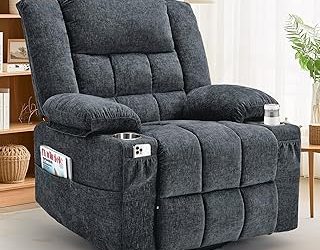
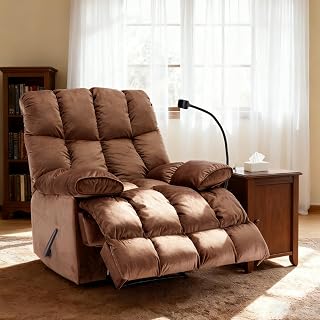
A manual chair rated to 400 pounds with a chenille cover that hides wear better than most microfibers, and a recline handle that engages without the harsh mechanical clunk you get in budget models. Assembly is straightforward — the back panel slides onto steel brackets — and with no motor or transformer in the loop, there is very little here to fail long-term.
Watson & Whitely Genuine Leather Power Recliner
The wall-hugger track is the standout feature: it reclines fully with roughly four inches of wall clearance, which matters enormously in a normal-sized living room. Genuine leather on the contact surfaces and a power headrest put this at the premium end, and the build quality — tight seams, solid arm caps, no frame flex under load — reflects that.
450lbs Oversized Power Recliner, 52″ Wide
The highest capacity rating in this lineup, and the 52-inch external width translates to real seat space rather than bulky padded arms. USB-A and USB-C ports are integrated cleanly into the arm panel, and the chenille upholstery over a reinforced base makes this the practical choice if you need maximum capacity without stepping up to leather pricing.
Large Power Lift Recliner with Anti-Skid Fabric
The anti-skid upholstery is a smarter detail than it sounds — it keeps you from sliding forward during the lift cycle, which is exactly when a heavier user is most vulnerable. Concealed cup holders keep the profile clean, and the heavy-duty motion mechanism handles repeated daily cycling better than the lightweight scissor assemblies found at similar prices.
Frequently Asked Questions
Do stated weight capacities include dynamic load?
Rarely. Most ratings are static, measured with the occupant seated still. Dropping into a chair generates two to three times your body weight in impact force, so buying a chair rated well above your actual weight is sensible headroom, not overkill.
How much clearance does a recliner need behind it?
Standard models need 12 to 18 inches. Wall-hugger designs like the Watson & Whitely reduce that to roughly four to six inches by moving the seat forward as the back tilts.
Is a lift recliner worth the extra cost?
If standing unassisted is difficult, yes. The lift function tilts the whole chair forward to bring you to a near-standing position, which reduces fall risk considerably compared with pushing off armrests.
Can I reinforce a recliner myself?
To a degree. Adding hardwood corner blocks with construction adhesive and screws, and swapping worn pivot bolts for grade 8 hardware, extends service life. You cannot fix an undersized mechanism, so start with a chair rated for the job.
Final Thoughts
For maximum capacity and usable seat width, the 450lbs 52-inch power recliner is the strongest value here. The Watson & Whitely leather wall hugger is the pick for tighter rooms and better long-term materials, while the Euthymia chenille manual recliner is the sensible choice if you would rather have nothing that can break electrically.