Key takeaways
- Seat depth first: Measure from the back of your knee to your tailbone while seated, then subtract two inches. Anything deeper than that number and the front edge cuts circulation behind your knees no matter how good the cushion is.
- Floor-to-seat height: Aim for 17 to 19 inches so your feet rest flat. Power lift models sit taller at rest, so check the specs for the seated height, not the lifted height.
- Footrest extension length: A footrest that overshoots leaves your calves unsupported mid-span. Extended footrest designs around 4.7 inches of additional reach are worth it only if the base seat depth already fits you.
- Motor count and what it buys: Single motor moves back and footrest together. Dual motor separates them for infinite position. Triple motor adds a power headrest, which matters most for shorter users because factory headrests usually sit too high.
- Fabric versus faux leather: Breathable woven fabric runs cooler over long sits and hides seam stress better. Faux leather wipes clean in seconds and holds shape at the arms, though it can feel slick if you’re repositioning often.
What's inside
If you’re under 5’4″, most recliners are a compromise you notice within the first ten minutes. Your feet dangle above the footrest, the seat pan pushes against the back of your knees, and the lumbar curve lands somewhere between your shoulder blades instead of your lower back. I’ve spent enough weekends shimming furniture legs and rebuilding seat decks to know the fix isn’t a throw pillow behind your spine. It’s buying a chair engineered around a shorter frame in the first place: seat depth around 18 to 20 inches, seat height low enough that your heels touch the floor, and a backrest whose support hits where your lumbar actually sits.
This guide walks through recliners built specifically for petite and shorter users, with a focus on the measurements that matter and the mechanisms worth paying for. I’ve flagged which models suit standing-assist needs, which lay genuinely flat, and where the extras (heat, massage, USB-C, cup holders) earn their keep versus padding the spec sheet. Every pick below is sized for shorter bodies rather than shrunk down from a full-size design.
As an Amazon Associate we earn from qualifying purchases.


🛒 Best Price Today on Amazon
Prime members get fast, free shipping on everything above, plus member-only deals. New members get a 30-day free trial — cancel anytime.
How to Choose a Recliner For Short People (2026)
- Seat depth first: Measure from the back of your knee to your tailbone while seated, then subtract two inches. Anything deeper than that number and the front edge cuts circulation behind your knees no matter how good the cushion is.
- Floor-to-seat height: Aim for 17 to 19 inches so your feet rest flat. Power lift models sit taller at rest, so check the specs for the seated height, not the lifted height.
- Footrest extension length: A footrest that overshoots leaves your calves unsupported mid-span. Extended footrest designs around 4.7 inches of additional reach are worth it only if the base seat depth already fits you.
- Motor count and what it buys: Single motor moves back and footrest together. Dual motor separates them for infinite position. Triple motor adds a power headrest, which matters most for shorter users because factory headrests usually sit too high.
- Fabric versus faux leather: Breathable woven fabric runs cooler over long sits and hides seam stress better. Faux leather wipes clean in seconds and holds shape at the arms, though it can feel slick if you’re repositioning often.
The Best Recliner For Short People (2026)s Reviewed
MCombo Power Lift Recliner 7141 (Small)
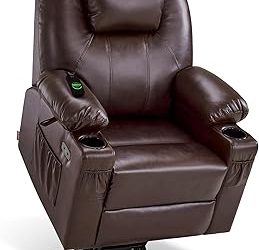
The small-size 7141 nails the fundamentals: a compact seat pan that doesn’t strand your legs, plus a lift mechanism smooth enough to trust for daily standing assistance. Heat and massage are genuinely useful here, and the USB-A plus Type-C ports mean you’re not running an extension cord across the room.
MCombo Dual Motor Lift Recliner 7893
Independent back and footrest control is the upgrade that makes a petite-sized chair feel custom, since you can dial in a shallow recline without launching your feet skyward. The zero-gravity and lay-flat positions are real, not marketing, and the faux leather cleans up fast if you eat or nap in it.
MCombo 3 Motor Lift Recliner 7631
The power headrest is what earns this one a spot for shorter users: you can drop the head support down to where your neck actually is instead of wedging a cushion behind it. The 4.7-inch extended footrest and infinite positioning give you a workable flat sleep position, and the fabric breathes well over multi-hour sits.
MCombo Triple Motor Recliner 7661 (Medium)
Pick the medium 7661 if you’re at the taller end of short, roughly 5’2″ to 5’5″, where small-size chairs start feeling cramped at the shoulders. Adjustable headrest, lay-flat travel, and cup holders make it the best all-rounder here for a shared living room.
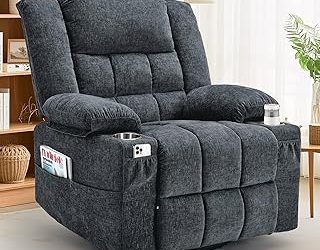
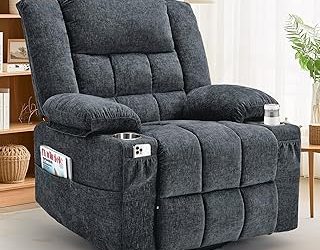
Sweetcrispy Massage Recliner
A manual-style option for anyone who doesn’t need lift assist and would rather put the budget into a smaller footprint. The lumbar support is well positioned for shorter torsos, and the compact frame fits apartments and bonus rooms where a power recliner’s rear clearance would be a problem.
Frequently Asked Questions
What seat height works best if I’m 5 feet tall?
Look for 17 to 18 inches from floor to the top of the compressed cushion. Cushions settle about an inch after a few months of use, so a chair advertised at 19 inches often lands right where you want it.
Do I need a lift recliner or just a small one?
Lift mechanisms are for standing assistance, not fit. If you get out of a normal chair without pushing off the arms, save the money and prioritize seat depth and back height instead.
How much wall clearance do power recliners need?
Plan on 4 to 12 inches behind the chair depending on the model, and measure before you commit. Many petite lift recliners are wall-hugger designs that need under 6 inches, which is worth confirming in the listing.
Can I modify a standard recliner to fit better?
You can add a firm 2-inch bolster at the seat back to shorten depth, which helps in the short term. What you can’t fix is a seat that’s too high or a headrest positioned for someone six inches taller, so buying the right size beats retrofitting.
Final Thoughts
For most shorter buyers who want lift assist, the MCombo 7141 in small is the straightforward pick, with the dual motor 7893 worth the step up if independent back and footrest control appeals. Choose the 3 motor 7631 if a properly positioned power headrest is your sticking point, or the Sweetcrispy if you need compact seating without a lift mechanism.