Key takeaways
- Seat depth first, always: Aim for 16–18 inches from backrest to front edge. You want two to three fingers of clearance behind your knees when your back is against the lumbar pad. Anything deeper and you’ll perch forward, losing the back support you paid for.
- Minimum seat height, not the range: Listings advertise the full travel of the gas cylinder, but only the bottom number matters to you. Look for a minimum under 17.5 inches so your feet plant flat with thighs roughly parallel to the floor.
- Lumbar pad position: On a shorter torso, a fixed lumbar bulge often lands too high. Adjustable-height lumbar support is worth paying extra for. If it’s fixed, check whether the whole backrest is short-back or mid-back rather than a tall executive shell.
- Armrests that get out of the way: Flip-up or fully adjustable arms let you tuck the chair under your desk and keep your shoulders relaxed. Fixed padded arms at a fixed height are the single most common complaint from shorter users.
- Cushion firmness over thickness: A thick soft foam seat compresses an inch or more under load, quietly raising your effective seat height and killing your foot contact. Denser double-layer cushions hold their loft far longer.
What's inside
If you’re under about 5’4″, the standard office chair is basically a piece of furniture designed for someone else. I found this out the hard way after spending a weekend shimming a chair base with plywood offcuts — the seat pan was two inches too deep, so the front edge dug into the back of my calves and cut off circulation no matter how I sat. Meanwhile my feet dangled, my lower back arched away from a lumbar curve positioned somewhere between my shoulder blades, and the armrests sat high enough to shrug my shoulders up toward my ears. No amount of cushion fixes geometry that’s wrong from the start.
The good news is that a handful of manufacturers now build chairs with genuinely shorter seat depths, lower minimum seat heights, and lumbar support that lands where a shorter torso actually needs it. I’ve pulled together six of the strongest options below, with notes on what each one gets right and where you might still need to make small adjustments yourself. I’ve also included a buying checklist based on the measurements that matter most — the specs that Amazon listings tend to bury or omit entirely.
As an Amazon Associate we earn from qualifying purchases.




🛒 Best Price Today on Amazon
Prime members get fast, free shipping on everything above, plus member-only deals. New members get a 30-day free trial — cancel anytime.
How to Choose an Office Chair For Short People (2026)
- Seat depth first, always: Aim for 16–18 inches from backrest to front edge. You want two to three fingers of clearance behind your knees when your back is against the lumbar pad. Anything deeper and you’ll perch forward, losing the back support you paid for.
- Minimum seat height, not the range: Listings advertise the full travel of the gas cylinder, but only the bottom number matters to you. Look for a minimum under 17.5 inches so your feet plant flat with thighs roughly parallel to the floor.
- Lumbar pad position: On a shorter torso, a fixed lumbar bulge often lands too high. Adjustable-height lumbar support is worth paying extra for. If it’s fixed, check whether the whole backrest is short-back or mid-back rather than a tall executive shell.
- Armrests that get out of the way: Flip-up or fully adjustable arms let you tuck the chair under your desk and keep your shoulders relaxed. Fixed padded arms at a fixed height are the single most common complaint from shorter users.
- Cushion firmness over thickness: A thick soft foam seat compresses an inch or more under load, quietly raising your effective seat height and killing your foot contact. Denser double-layer cushions hold their loft far longer.
The Best Office Chair For Short People (2026)s Reviewed
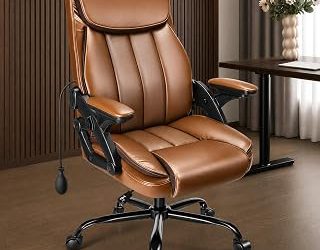
Leather Swivel Lumbar Support Chair for Short People (Brown)
This one leans executive in looks while keeping the seat pan compact, and the padded arms sit low enough that most shorter users won’t need to shrug. The lumbar shaping is the standout — it lands in the small of the back rather than midway up the spine, which is exactly the fix most tall-backed leather chairs miss.
PU Leather Home Computer Desk Chair with Adjustable Armrests
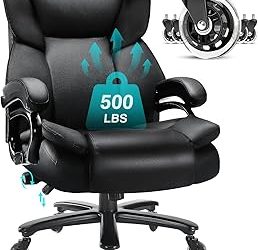
A genuinely small-footprint chair with a hybrid gaming-office silhouette, and the adjustable armrests give you real control over shoulder position. Best suited to lighter-duty desk work rather than eight-hour marathons, but the value here is hard to argue with.
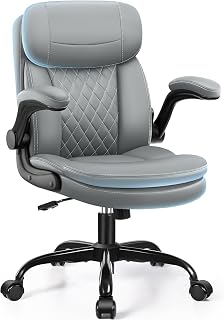
Upgraded PU Chair with Double-Layer Cushion and Neckrest (Grey)
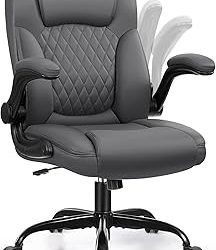
The double-layer seat cushion is the meaningful upgrade — it resists the slow sag that raises your seat height over months of use. The neckrest is a nice bonus for reclining, though shorter users should check that it clears their head rather than pushing it forward.
Executive Chair with Lumbar Support and Flip-Up Armrest (Black)
Flip-up arms make this the easiest pick if your desk has a low clearance or you like sitting close in. Solid lumbar support and a conservative black finish make it the safest bet for a shared or professional space.
Ylzyxal Office Desk Chair with Tilt Lock
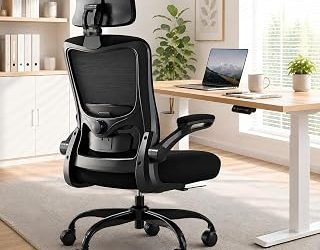
The adjustable lumbar support is the reason to choose this one — you can dial the pad to your actual spine curve instead of hoping the factory guessed right. Tilt lock and padded flip-up arms round out a well-specified package for the money.
Frequently Asked Questions
What seat height do I need if I’m 5’0″?
Roughly 15.5 to 16.5 inches, measured with your weight in the seat. Sit down, then check whether your heels rest flat on the floor. If the chair bottoms out above that, a sturdy footrest is the practical workaround.
Can I shorten a chair’s gas cylinder myself?
Replacement short-stroke cylinders exist and swap in with a rubber mallet and about ten minutes of work. Match the taper and diameter to your chair base before ordering, and never try to cut or drill an existing cylinder — they’re pressurized.
Is a footrest a real fix or a workaround?
It’s a legitimate ergonomic solution when the chair fits everywhere else. A footrest supports your feet but does nothing about a seat pan that’s too deep, so treat it as a complement to good geometry, not a substitute.
Do I need a headrest at my height?
Usually not, and sometimes it actively hurts. A headrest sized for a taller user often contacts the back of your skull and pushes your chin forward. Skip it unless you can adjust it or verify it clears your head.
Final Thoughts
If you want the best combination of fit and longevity, the Upgraded PU Chair with Double-Layer Cushion earns its place with a seat that won’t sag out of spec, while the Ylzyxal Office Desk Chair is the pick for anyone who wants to fine-tune lumbar height rather than accept a fixed pad. For tight desk clearance or a more formal room, the Executive Chair with Flip-Up Armrest is the most straightforward choice. Measure your seated knee-to-floor height before you order, and you’ll get this right on the first try.