Key takeaways
- Motor count and independence: A true power headrest runs on its own actuator, separate from the backrest and footrest. Verify the control pad has a dedicated headrest button rather than a shared toggle, or you lose the ability to fine-tune head angle mid-recline.
- Wall clearance: Zero-wall or wall-hugger designs slide the seat forward on a track instead of pivoting backward, needing only two or three inches behind. Standard mechanisms want a foot or more. Measure before you commit to a corner placement.
- Upholstery honesty: Genuine leather ages well and cleans easily but costs more. Performance faux leather resists claws and spills better than you would expect. “Leather match” means real hide on contact surfaces and vinyl elsewhere — fine for the money, just know what you are buying.
- Power delivery and cable routing: USB-A is fading. Look for USB-C with meaningful wattage, and check whether the transformer plugs into a serviceable connector or is hardwired into the frame. The former is a ten-minute repair; the latter is a warranty claim.
- Frame and weight capacity: Kiln-dried hardwood with steel reinforcement at the stress points beats particleboard every time. For big-and-tall builds, confirm the rated capacity and seat width rather than trusting the word “oversized.”
What's inside
Anyone who has ever taken a socket wrench to a recliner mechanism knows the frustration: the seat reclines beautifully, but your head keeps drifting into a position that pulls your neck forward. A fixed headrest is a compromise built into the frame. Power headrests solve it with an independent motor that tilts the upper cushion forward or back, letting you read upright while your legs stay elevated, or drop the whole thing flat for a nap. The catch is that adding a second motor introduces more wiring, more transformer boxes, and more places where a manufacturer can cut corners.
I have taken apart enough of these to know which construction details actually matter. This guide walks through the six power-headrest recliners worth considering in 2026, covering wall-hugger geometry, motor quality, upholstery durability, and the practical stuff nobody mentions in product listings — like whether you can reach the transformer if it ever fails. Below you will find selection criteria, individual assessments, and answers to the questions that come up most often once the box is open.
As an Amazon Associate we earn from qualifying purchases.


🛒 Best Price Today on Amazon
Prime members get fast, free shipping on everything above, plus member-only deals. New members get a 30-day free trial — cancel anytime.
How to Choose a Recliner With Power Headrest (2026)
- Motor count and independence: A true power headrest runs on its own actuator, separate from the backrest and footrest. Verify the control pad has a dedicated headrest button rather than a shared toggle, or you lose the ability to fine-tune head angle mid-recline.
- Wall clearance: Zero-wall or wall-hugger designs slide the seat forward on a track instead of pivoting backward, needing only two or three inches behind. Standard mechanisms want a foot or more. Measure before you commit to a corner placement.
- Upholstery honesty: Genuine leather ages well and cleans easily but costs more. Performance faux leather resists claws and spills better than you would expect. “Leather match” means real hide on contact surfaces and vinyl elsewhere — fine for the money, just know what you are buying.
- Power delivery and cable routing: USB-A is fading. Look for USB-C with meaningful wattage, and check whether the transformer plugs into a serviceable connector or is hardwired into the frame. The former is a ten-minute repair; the latter is a warranty claim.
- Frame and weight capacity: Kiln-dried hardwood with steel reinforcement at the stress points beats particleboard every time. For big-and-tall builds, confirm the rated capacity and seat width rather than trusting the word “oversized.”
The Best Recliner With Power Headrest (2026)s Reviewed
Watson & Whitely Oversized Genuine Leather Power Recliner, Navy Blue
This is the pick for larger frames — the seat is genuinely wide, the top-grain leather is thick enough to take daily use, and the wall-hugger track means it works in tight rooms. Assembly is straightforward with the back panel sliding onto steel brackets, and the charging ports sit in a reachable spot rather than buried under the arm.
Flexsteel Crew Power Recliner with Power Headrest and Lumbar
Flexsteel builds around a blue steel spring seat platform, and it shows in how the chair holds its shape after a few hundred cycles. The powered lumbar is the standout here — combined with the adjustable headrest, you get real postural control instead of one preset curve someone else decided on.
Watson & Whitely Swivel Recliner with Power Headrest, Khaki Fabric
A smart choice for smaller living rooms where a full-size recliner would dominate. The swivel and glider action are smooth on ball bearings, and the fabric is easier to live with than leather in hot climates. Footprint is compact without the seat feeling cramped.
Watson & Whitely Genuine Leather Swivel Glider, Grey
Essentially the leather sibling of the khaki model, with USB-C charging added. The glider motion is quiet, and the leather is applied over a properly padded substrate rather than stretched thin across foam. Good value for a chair that swivels, glides, and powers the headrest.
Pet Friendly Leather Power Recliner, Zero Wall Hugger
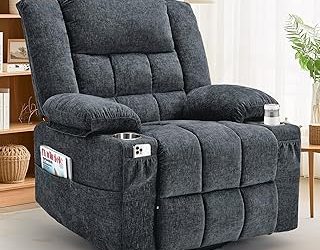
Built for households with animals or RVs, this one uses scratch-resistant waterproof faux leather that genuinely shrugs off claws and spilled drinks. The zero-wall design and side pockets make it practical in tight spaces, and the down-filled cushioning is more comfortable than the price suggests.
Frequently Asked Questions
Do power headrests need a separate outlet?
No. Both motors run off one transformer, so a single outlet handles the chair. If you want the USB ports powered too, they typically draw from the same supply.
What happens during a power outage?
Most models include a battery pack option — usually a 9V clip-in — that lets you return the chair to upright. Without it, a reclined chair stays reclined until power returns.
Can I replace a failed headrest motor myself?
Often yes. The actuators are usually bolted to the mechanism with two pins and connected by a quick-release plug. Order the part number from the manufacturer and budget about thirty minutes.
Is a lift chair the same as a power recliner?
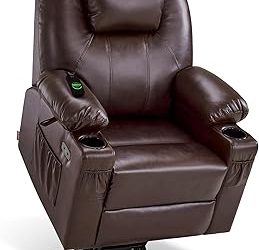
No. Lift chairs, like the Korser dual-motor model, tilt the entire base forward to help you stand up. Standard power recliners only move the back and footrest.
Final Thoughts
For most buyers, the Flexsteel Crew is the soundest long-term investment thanks to its steel seat platform and powered lumbar. If you need serious width and wall clearance, the Watson & Whitely Oversized Leather Recliner delivers, while households with pets or an RV should go straight to the Pet Friendly Zero Wall Hugger for its genuinely durable, wipe-clean upholstery.