Key takeaways
- Single vs. dual motor: A single motor moves the back and footrest together on a fixed arc. Dual motors control them independently, which unlocks infinite positions and true zero-gravity angles. If you plan to nap in the chair or need a lay-flat position, dual motor is worth the premium.
- Measure the swing, not the chair: Standard recliners need 12 to 18 inches behind them. Wall-hugger designs slide forward as they open and can sit within a few inches of the baseboard. Chalk the full open footprint on your floor first — I’ve seen too many chairs that technically fit and practically don’t.
- Serviceability of the electronics: Motors and transformer boxes are the first components to fail, usually around year three to five. Look for models with an accessible underside panel and standard connectors rather than sealed or proprietary assemblies. Replacement motors are cheap; replacing a whole chair is not.
- Frame and weight rating: Kiln-dried hardwood with corner blocking outlasts stapled particleboard every time. Check the stated capacity against your heaviest user plus margin, and treat lift-chair ratings as firm limits since the motor is doing the work.
- Upholstery you can maintain: Genuine leather takes conditioner and develops character. Faux leather is easier to wipe down but cracks at stress points and can’t realistically be repaired. Match the material to your household, not the showroom.
What's inside
Shopping for a power recliner is one of those purchases where the marketing photos tell you almost nothing useful. You can see the stitching and the color, but you can’t see how the mechanism is built, whether the transformer box is accessible when it eventually fails, or how much clearance the seat back needs before it kisses your drywall. As someone who has taken more than a few of these apart to swap a motor or re-run a pinched wiring harness, I can tell you the differences that matter are almost entirely under the upholstery.
This guide looks at power recliners through a builder’s lens: motor count, frame construction, serviceability, and the real-world footprint you need to measure before you click buy. I’ve focused on lift recliners and lay-flat models from MCombo, Watson & Whitely, Signature Design by Ashley, and a couple of strong dual-motor options, then broken down who each one actually suits. Bring a tape measure and a flashlight for the wall behind your chair — you’ll need both.
As an Amazon Associate we earn from qualifying purchases.


🛒 Best Price Today on Amazon
Prime members get fast, free shipping on everything above, plus member-only deals. New members get a 30-day free trial — cancel anytime.
How to Choose a Home Furnishings Power Recliner (2026)
- Single vs. dual motor: A single motor moves the back and footrest together on a fixed arc. Dual motors control them independently, which unlocks infinite positions and true zero-gravity angles. If you plan to nap in the chair or need a lay-flat position, dual motor is worth the premium.
- Measure the swing, not the chair: Standard recliners need 12 to 18 inches behind them. Wall-hugger designs slide forward as they open and can sit within a few inches of the baseboard. Chalk the full open footprint on your floor first — I’ve seen too many chairs that technically fit and practically don’t.
- Serviceability of the electronics: Motors and transformer boxes are the first components to fail, usually around year three to five. Look for models with an accessible underside panel and standard connectors rather than sealed or proprietary assemblies. Replacement motors are cheap; replacing a whole chair is not.
- Frame and weight rating: Kiln-dried hardwood with corner blocking outlasts stapled particleboard every time. Check the stated capacity against your heaviest user plus margin, and treat lift-chair ratings as firm limits since the motor is doing the work.
- Upholstery you can maintain: Genuine leather takes conditioner and develops character. Faux leather is easier to wipe down but cracks at stress points and can’t realistically be repaired. Match the material to your household, not the showroom.
The Best Home Furnishings Power Recliner (2026)s Reviewed
MCombo Power Lift Recliner 7040 (Medium)
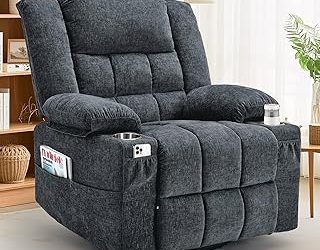
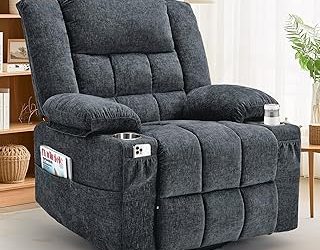
The MCombo 7040 is the most practical entry point into lift chairs, with FSC-certified framing, heat and massage, and a genuinely useful accessory set including USB-C, cup holders, and side pockets. Assembly is straightforward backrest-drop construction, and the underside gives you clean access to the motor and control box if you ever need to service it.
Watson & Whitely Oversized Genuine Leather Power Recliner
Built for big-and-tall users, this wall-hugger pairs a generous seat with a power headrest and real leather that will age well with occasional conditioning. The wall-hugger geometry is the standout feature here — it opens fully with minimal rear clearance, which makes it one of the few oversized chairs that works in a tight living room.
Watson & Whitely Lay Flat Power Recliner, Saddle
The lay-flat travel makes this a legitimate sleeping chair, and the saddle leather looks sharp in a home theater setup. Power headrest, cup holders, and dual charging ports are all integrated cleanly rather than bolted on as afterthoughts.
Signature Design by Ashley Boyington Zero Gravity Recliner
Ashley’s Boyington series delivers zero-gravity positioning with air massage and heat at a fair price, plus an extended ottoman that actually supports your calves instead of stopping at the ankle. The 250-pound capacity is the main constraint, so check that before committing.
Dual Motor Power Lift Recliner with Massage and Heat
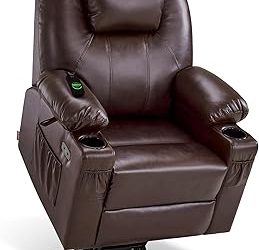
This oversized dual-motor lift chair hits the sweet spot for caregivers: infinite positioning, lay-flat capability, arm storage, and a frame sized for larger adults. Independent back and footrest control makes a real difference for anyone with circulation or mobility needs.
Frequently Asked Questions
Do power recliners need to be near an outlet?
Yes, though most include a transformer box with a cord long enough to reach a nearby wall. If you want the chair away from a wall, a battery backup pack handles power outages and buys you a little placement flexibility.
How hard is assembly?
Most arrive 90 percent assembled. You’ll typically slot the backrest onto steel brackets, connect two or three keyed wiring harnesses, and plug in the transformer — about 20 minutes with a second set of hands for the lifting.
Can I repair a power recliner myself?
Frequently, yes. Motors, hand controls, and transformer boxes are modular and inexpensive, and most failures trace back to one of those three. Photograph the wiring before you disconnect anything.
Is a lift recliner different from a regular power recliner?
A lift recliner tilts the entire base forward to help you stand, which a standard power recliner cannot do. If mobility is a factor, choose lift.
Final Thoughts
For most buyers, the MCombo 7040 offers the best balance of features and value in a lift chair, while the Watson & Whitely Oversized wall-hugger is the smarter pick if you need real leather and a larger seat without sacrificing wall clearance. If independent positioning and lay-flat comfort top your list, the dual-motor lift recliner with heat and massage earns its price through sheer adjustability.