Key takeaways
- Diameter vs. seating: Leave 16 to 18 inches between the table edge and your sofa cushions. A 30- to 31.5-inch top suits loveseats and apartment layouts; step up to 42 inches only if you have a sectional or a room wider than about 12 feet.
- Core material honesty: Solid rubberwood and oak veneer over engineered board are both legitimate; paper-thin foil laminate is not. Check the listed weight capacity as a proxy, and look for panel edges that show real grain rather than a printed seam.
- Storage mechanism: Sliding tambour and fluted doors are excellent for small rooms because nothing swings into your walking path. Ask whether the door rides on a groove or a track, and whether the interior shelf is fixed or removable for taller items.
- Base type and floor contact: Plinth and drum bases feel anchored and hide clutter, but they drag on rugs. Bun feet and splayed wooden legs make vacuuming easy and let you add felt pads. Either way, confirm the hardware threads into wood or metal, not bare fiberboard.
- Assembly reality: Most of these ship in one box and go together in 30 to 60 minutes with the included hex key. Cabinet-style tables with pre-built carcasses are fastest. Tighten fasteners in stages, working around the piece, and do the final snug-up once the table is upright on level floor.
What's inside
Anyone who has ever caught a hip on the corner of a rectangular coffee table knows the appeal of a circle. But shopping for one turns up a wall of look-alike drums and pedestals, and the photos rarely tell you what matters: whether the veneer is glued over particleboard or actual hardwood, whether that sliding door runs on a real track or just rides in a routed groove, and whether the legs bolt into a steel plate or into a threaded insert pressed into MDF. Those details decide whether the table still feels solid in year five.
I build furniture on weekends and I assemble a lot of flat-pack, so this guide looks at these tables the way you would in a workshop: joinery, hardware quality, panel thickness, and how forgiving the assembly is when you are working alone on a rug. Below are six round coffee tables worth your attention in 2026, followed by a buying checklist, honest notes on each pick, and answers to the questions readers send most.
As an Amazon Associate we earn from qualifying purchases.




🛒 Best Price Today on Amazon
Prime members get fast, free shipping on everything above, plus member-only deals. New members get a 30-day free trial — cancel anytime.
How to Choose a/an Round Coffee Table (2026)
- Diameter vs. seating: Leave 16 to 18 inches between the table edge and your sofa cushions. A 30- to 31.5-inch top suits loveseats and apartment layouts; step up to 42 inches only if you have a sectional or a room wider than about 12 feet.
- Core material honesty: Solid rubberwood and oak veneer over engineered board are both legitimate; paper-thin foil laminate is not. Check the listed weight capacity as a proxy, and look for panel edges that show real grain rather than a printed seam.
- Storage mechanism: Sliding tambour and fluted doors are excellent for small rooms because nothing swings into your walking path. Ask whether the door rides on a groove or a track, and whether the interior shelf is fixed or removable for taller items.
- Base type and floor contact: Plinth and drum bases feel anchored and hide clutter, but they drag on rugs. Bun feet and splayed wooden legs make vacuuming easy and let you add felt pads. Either way, confirm the hardware threads into wood or metal, not bare fiberboard.
- Assembly reality: Most of these ship in one box and go together in 30 to 60 minutes with the included hex key. Cabinet-style tables with pre-built carcasses are fastest. Tighten fasteners in stages, working around the piece, and do the final snug-up once the table is upright on level floor.
The Best Round Coffee Table (2026)s Reviewed
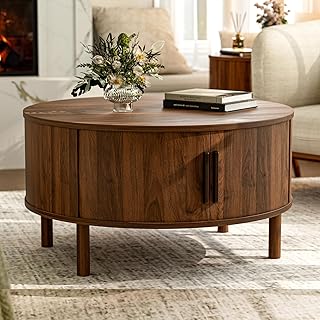
Mid-Century Round Table with Sliding Doors, Walnut
The 200-pound rating is the highest here, and it shows in the case construction: a proper enclosed cabinet with dual sliding doors instead of a hollow drum. At 30 inches across and 16.3 inches tall it sits low and reads as a genuine mid-century piece, and roughly 45 minutes of assembly gets you a table that will not creak when someone perches on the edge.
Furniture of America Carys 42″ Round Table
Solid rubberwood with oak veneer on the top, riding a chunky plinth base, gives this one real heft and the cleanest profile of the group. It is the pick for larger living rooms, though at 42 inches you should measure your walkways first and plan on a two-person lift.
JOINICE 31.5″ Round Table with Storage, Natural Oak
The turned bun feet lift the drum off the floor, which makes cleaning underneath painless and keeps the silhouette from feeling heavy. Hidden storage behind a fluted sliding door handles remotes and coasters, and the solid wood legs are a meaningful upgrade over the plastic-footed alternatives.
31.5″ Round Table with Hidden Compartments, Natural Oak
Essentially the same smart footprint with a warmer boho lean, and the compartments are usefully deep for board games and throws. Up to 110 pounds is plenty for trays and books; treat it as a table, not a bench.
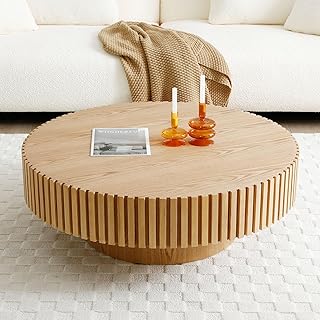
31.49″ Fluted Drum Table, Wood Oak
A clean open-drum design where the vertical fluting does all the visual work, no doors or fussy hardware to misalign. Assembly is genuinely quick, making it the low-effort choice if you want sculptural presence more than storage.
Frequently Asked Questions
How much clearance do I need around a round coffee table?
Aim for 16 to 18 inches from the sofa so people can reach a mug without leaning, and at least 24 to 30 inches of walking room on the open sides. Round tables tolerate tighter rooms than rectangles because there are no corners to navigate.
Is oak veneer as durable as solid wood?
For a horizontal surface, quality veneer over a stable core actually resists seasonal movement and warping better than a wide solid slab. The tradeoff is repair: you can sand a solid top many times, while veneer only tolerates light refinishing, so use coasters and wipe spills promptly.
Will a sliding door table work on thick carpet?
Yes, since nothing swings outward. Just check that the door track sits above floor level, and if the base is a full plinth, slide a hard coaster or furniture slider underneath so the weight does not compress the pile unevenly.
Can I improve a flat-pack table myself?
Absolutely. Add felt pads to every foot, rub a candle stub or paste wax along sliding door grooves for smoother travel, and apply a coat of hardwax oil to bare wood legs. Re-tighten all fasteners after two weeks of use; that single step prevents most wobble complaints.
Final Thoughts
If storage and structural strength matter most, the Mid-Century Walnut table with sliding doors is the strongest build of the bunch and the one I would put in a busy family room. For open-plan spaces with a sectional, the Furniture of America Carys 42-inch delivers solid rubberwood substance and a timeless plinth profile, while the JOINICE 31.5-inch on bun feet is the smartest small-apartment compromise between hidden storage and easy cleaning.