Key takeaways
- Wipe the glass after each use or use a squeegee to reduce mineral spots.
- Clean the bottom track with a small brush; track residue is the common complaint on sliding doors.
- Use non-abrasive cleaners, and check the maker’s care guide before applying vinegar or strong chemical cleaners to coated glass or metal finishes.
- Check rollers and seals periodically and replace worn parts.
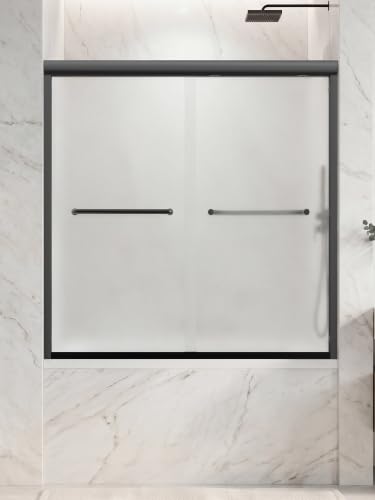
For a standard tub-shower, a framed or semi-frameless sliding door is the practical, budget-friendly pick, a fully frameless sliding or pivot door suits buyers who want a clean look and easier cleaning, and a fixed panel with a hinged door suits wider openings where access matters. The right door depends on your tub opening width, the wall or curb type, and whether you want a swing-out hinged door or a bypass slider. This guide compares the main door types, fit checks and what makers commonly state.
Our top picks



As an Amazon Associate we earn from qualifying purchases at no extra cost to you.
At a Glance: Tub Door Types
| Type | Best for | Typical maker notes | Limits |
|---|---|---|---|
| Framed sliding (bypass) | Standard tub openings, budget builds | Metal frame, rollers, tempered glass | Tracks collect residue; frames add visual weight |
| Semi-frameless sliding | Cleaner look with an adjustable fit | Frame on the outside, thick glass panels | Still has a bottom track |
| Frameless sliding | Modern bathrooms, easy glass cleaning | Thicker glass with minimal hardware | Higher cost; needs accurate measurement |
| Frameless pivot or hinged | Easy access and wider opening | Glass swings on hinges, needs swing space | Needs space in front of the tub to open |
| Tub screen or fixed panel | Keeping spray in with a clean, open look | Single glass panel, often with a return panel | Not a full enclosure; some splashing |
| Bi-fold | Tight bathrooms where swing space is limited | Folding glass panels | More hinges and seals to maintain |
Measure Before You Choose
A tub door depends on three measurements: the opening width between the walls, the height from the tub rim to the top of the door, and the condition of the walls. Measure at several heights, because tub walls are rarely perfectly plumb. Makers usually state an adjustment range for width, often a few inches either way, and a standard height. Tub rim shapes also matter, since some tubs have a sloped or rounded rim that affects the bottom track or seal.
Do not guess. If your opening falls outside the stated range, a custom glass door may be a better route. Check the maker’s installation guide and consider whether you want a professional glazier or installer, particularly for heavy frameless glass.
Glass Thickness and Safety
Shower door glass should be tempered or otherwise safety-rated, and makers typically state this on the product page. Thickness varies: lighter sliding doors use thinner glass, while heavier frameless designs use thicker panels that feel more solid. Thicker glass is heavier, so wall studs and mounting points need to be secure. Following the installation instructions and using wall anchors suitable for your wall type is essential. If your walls are tile over cement board, a drill bit and technique for tile are needed to avoid cracking.
Frames, Hardware and Finishes
Finishes include chrome, brushed nickel, matte black, oil-rubbed bronze and gold tones. Choose a finish that matches your faucets. Stainless steel hardware tends to resist corrosion better in damp spaces, and makers typically note whether rollers are made of stainless steel or plastic. Look for rollers that are adjustable and replaceable, since bypass doors can drift out of alignment over time.
Water Containment and Seals
Seals along the edges, bottom sweep and magnetic closure strips reduce leaks. Sliding doors work well because the panel stays within the tub footprint, while hinged doors can leak at the hinge side if the seal is poor. Some makers offer a clear coating on the glass to reduce water spots, which may help slightly with cleaning but does not eliminate the need to wipe down the glass. A squeegee after showers is often advised in care guides.
Cleaning and Maintenance
- Wipe the glass after each use or use a squeegee to reduce mineral spots.
- Clean the bottom track with a small brush; track residue is the common complaint on sliding doors.
- Use non-abrasive cleaners, and check the maker’s care guide before applying vinegar or strong chemical cleaners to coated glass or metal finishes.
- Check rollers and seals periodically and replace worn parts.
Makers and Lines to Compare
Several established companies sell tub doors, including DreamLine, Delta, Kohler, American Standard, Moen and Basco. Their lines usually span the types above, from budget framed sliders to premium frameless pivots. Compare stated height, width range, glass thickness, finishes, warranty and available replacement parts on each maker’s page. Reviewers who cover bathroom fixtures commonly note that fit accuracy and installation care matter as much as the brand name.
Budget Tiers
- Budget: framed sliding doors with standard finishes and thinner glass. Suitable for rentals and basic updates.
- Mid-range: semi-frameless or lightly framed doors with better rollers, thicker glass and more finishes.
- Premium: fully frameless sliding or pivot doors with thick glass, polished hardware and optional glass coatings. Professional installation is often wise.
Pick X If… Decision Table
| Pick this | If you… |
|---|---|
| Framed sliding door | want a low-cost, adjustable door for a standard tub |
| Semi-frameless sliding | want a cleaner look without a full frameless price |
| Frameless sliding | want minimal hardware and easy glass cleaning |
| Pivot or hinged door | need a wider entry and have swing space |
| Fixed tub screen | want an open feel and mostly shower with the curtain-free look |
| Bi-fold door | have limited clearance and cannot swing a door |
Alternatives
- Shower curtain with a liner: lowest cost and easy to replace.
- Glass tub screen: a single panel that keeps most splash in and is simple to clean.
- Tub-to-shower conversion: a larger project; consult a licensed contractor if you want a walk-in shower.
Installation Details That Affect the Choice
Bathtub walls are the main variable. Many tubs sit in alcoves with walls of fibreglass, acrylic surrounds or tile. Fibreglass and acrylic panels flex, so makers often supply special mounting instructions or wall-jamb systems to keep the door aligned. Tile walls need a masonry or glass-tile bit and patience to drill without cracking. If walls are visibly out of plumb, choose a door with a generous adjustment range or a wall-jamb that can be shimmed, and consider hiring a professional.
The tub rim also matters. Some tubs have a flat ledge that suits a standard bottom track, while others have a slope toward the inside, which affects water sealing. Makers often provide a drip rail or sweep to bridge the gap. If your tub has a curved or sloped rim, look for a door with a flexible bottom seal and read installation notes carefully.
Door swing is another consideration. A hinged door that opens outward needs clear floor space and can collide with a toilet or vanity. Some pivot doors open both ways, which is handy but increases the chance of leaks at the hinge side. Sliding doors avoid swing clearance but narrow the opening, which can make getting in and out less comfortable for taller users or anyone carrying a child.
Lastly, consider the surrounding finishes. A black or brushed-metal frame will stand out against white tile, while a clear frameless door lets the tile and tub shape show. Match the hardware to your faucet and towel bars for a consistent look.
Frequently Asked Questions
How do I measure for a tub shower door?
Measure the width between walls at the top, middle and bottom of the opening, then measure height from the tub rim. Use the smallest width measurement and compare it with the maker’s stated adjustment range. Check whether your tub has a sloped or curved rim.
Are frameless doors worth it on a tub?
They give a cleaner appearance and make glass easier to wipe. They also use thicker, heavier glass and need accurate measurement, so installation can be more demanding. Many buyers consider them a good fit where the budget allows.
Do sliding doors leak?
They can if the seals are worn or misaligned, particularly at the track. Good seals and correct installation help, and a squeegee after use reduces water around the edges. Replace worn seals according to the maker’s instructions.
Can I install a tub door myself?
Some framed doors are designed for confident DIYers, but glass panels are heavy and must be handled carefully. Follow the manual, use the right anchors for your walls and get a helper. Hire a professional for heavy frameless glass or if the walls are out of plumb.
What glass thickness should I choose?
Thinner glass suits lightweight framed sliders, while thicker glass gives a more solid feel in frameless designs. The right choice depends on the door type and maker design, so follow the product’s stated requirements. All shower glass should be safety-rated.
How do I stop soap scum and water spots on glass?
Wipe or squeegee the glass after each shower and clean it regularly with a non-abrasive cleaner. Some glass has a protective coating, but care guides still call for regular cleaning. Check the maker’s instructions before using acidic cleaners.
More from Amazon
Programs that pair well with the guide above. Offers and eligibility are set by Amazon and may change.
A free business account with business pricing and bulk-buying tools for work, shop or home office.
Create a business accountFree shipping on eligible items, Prime Video and more. Eligible new members can start with a free trial.
Start a Prime free trialAudiobooks and podcasts to listen to on the go. Eligible new members can start with a free trial.
Try Audible freeAd-free music streaming. Eligible new subscribers can start with a free trial.
Try Music Unlimited freeAs an Amazon Associate we earn from qualifying purchases.