Key takeaways
- Lumens versus coverage: A 30,000-lumen head array lights a whole two-car garage, but pointed at a workbench three feet away it will blow out every detail. Match output to distance: 10,000–15,000 lumens for bench and room work, 20,000 and up for exterior walls, framing, and driveway projects.
- Tripod footprint and lock quality: Check the leg spread and whether the height adjustment uses a friction collar or a proper cam lock. A wide stance matters more than weight — narrow tripods tip when a cord catches your boot. Anything you’ll extend past 60 inches needs legs you can spike or sandbag.
- Color temperature: 6500K daylight shows surface flaws and is the right call for sanding, drywall, and layout. Warmer 3000K is kinder for long sessions and photo-friendly. Selectable-CCT models let you switch mid-project, which is genuinely useful when you go from prep to inspecting a topcoat.
- Cord length and plug placement: Sixteen feet sounds generous until the only outlet is behind a workbench. Measure your worst-case run and buy longer than you think. A right-angle plug survives being pressed against baseboards far better than a straight one.
- IP66 and honest durability: IP66 handles rain and hose spray, which is what you want for exterior jobs and damp basements. Beyond the rating, look at foldable heads and a fully collapsing stand — a light that packs down actually gets carried to the job instead of living in a corner.
What's inside
Anyone who has tried to sand a door frame or stain a tabletop under a single ceiling bulb knows the frustration: half your work sits in shadow, and you only spot the drips and swirl marks after the finish cures. Overhead lighting in garages, basements, and spare rooms is almost always mounted in the wrong place for the work you’re actually doing. A clamp lamp helps until you need both hands, and headlamps throw shadows exactly where your tools are.
A standing work light solves the geometry problem. Put the light where the work is, raise it above your line of sight, and aim the heads at the surface instead of your eyes. This guide covers what actually matters when shopping in 2026 — real brightness versus marketing lumens, tripod stability, color temperature for finish work, and weather sealing — plus hands-on notes on six lights that cover everything from framing a deck to detail work at a bench.
As an Amazon Associate we earn from qualifying purchases.


🛒 Best Price Today on Amazon
Prime members get fast, free shipping on everything above, plus member-only deals. New members get a 30-day free trial — cancel anytime.
How to Choose a/an Standing Work Light (2026)
- Lumens versus coverage: A 30,000-lumen head array lights a whole two-car garage, but pointed at a workbench three feet away it will blow out every detail. Match output to distance: 10,000–15,000 lumens for bench and room work, 20,000 and up for exterior walls, framing, and driveway projects.
- Tripod footprint and lock quality: Check the leg spread and whether the height adjustment uses a friction collar or a proper cam lock. A wide stance matters more than weight — narrow tripods tip when a cord catches your boot. Anything you’ll extend past 60 inches needs legs you can spike or sandbag.
- Color temperature: 6500K daylight shows surface flaws and is the right call for sanding, drywall, and layout. Warmer 3000K is kinder for long sessions and photo-friendly. Selectable-CCT models let you switch mid-project, which is genuinely useful when you go from prep to inspecting a topcoat.
- Cord length and plug placement: Sixteen feet sounds generous until the only outlet is behind a workbench. Measure your worst-case run and buy longer than you think. A right-angle plug survives being pressed against baseboards far better than a straight one.
- IP66 and honest durability: IP66 handles rain and hose spray, which is what you want for exterior jobs and damp basements. Beyond the rating, look at foldable heads and a fully collapsing stand — a light that packs down actually gets carried to the job instead of living in a corner.
The Best Standing Work Light (2026)s Reviewed
Zetunlo 21000-Lumen 3-Head Work Light
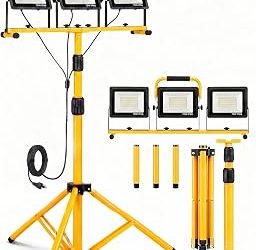
Three independently aimed heads on a 16-foot cord make this the most flexible option here for room-scale work — point two at the ceiling for bounce and one directly at your cut line. The IP66 housing and folding heads have held up through repeated garage-to-driveway trips without the aluminum arms loosening.
21000-Lumen Tripod Worklight, 48″–72″ Adjustable
The standout spec is the height range: 72 inches puts the array above your head, which eliminates the harsh eye-level glare that makes cheaper lights miserable to work beside. The 360-degree rotation is smooth enough to re-aim single-handed while you’re holding a level.
32000LM Tripod Light with 3 CCT Settings
Three 100W heads and switchable 3000K/5000K/6500K output make this the most versatile pick for anyone who finishes furniture — daylight for sanding, warm for evaluating stain color. The 43.7-to-65.4-inch telescoping stand collapses compact enough to fit behind a truck seat.
30000-Lumen Foldable Tripod Light
An 18-foot cord and 30,000 lumens of fixed 6500K daylight make this the brightest-per-dollar choice for exterior work, roof repairs, and pouring concrete after dark. It’s genuinely too much light for close bench work, so treat it as a flood, not a task lamp.
14000-Lumen 2-Head Work Light
Two heads and a lighter tripod make this the one I actually grab most often — enough output for a single-bay garage or a room repaint without the glare of the bigger arrays. It folds flatter than the three-head models, which matters if storage is tight.
Frequently Asked Questions
Are corded work lights better than battery models?
For stationary work, yes. Corded lights run all day at full output, while battery units dim as the pack drains and typically top out well below 10,000 lumens. Keep a battery light for crawlspaces and outages.
What height should I set the stand to?
Slightly above your eye level, aimed downward at the work surface. That keeps the heads out of your direct field of view while still filling in shadows.
Can I use IP66 lights in the rain?
IP66 handles rain and pressure spray, so yes for outdoor use. Pair it with a GFCI outlet or GFCI extension cord, and keep the plug connection off wet ground.
Is a floor lamp enough for craft and detail work?
For close, seated tasks it often is. The 18W/2000LM double-head gooseneck floor lamp is the right tool for lash work, model building, or hand-carving, where a 20,000-lumen flood would just create glare.
Final Thoughts
For most home shops, the 32000LM tripod with three color temperatures is the best all-rounder — it covers rough carpentry and finish inspection with one purchase. Choose the Zetunlo 21000-lumen three-head if you want maximum aiming flexibility on a long cord, or the 14000-lumen two-head if you value a light that’s easy to carry and store for everyday garage and repaint work.