Key takeaways
- Fourteen-inch grasp reaches clumps beyond a single fixed scoop.
- Two-and-a-half-inch paddles lift debris rather than sending it downstream.
- Eleven-ounce tool head limits added mass at the pole tip.
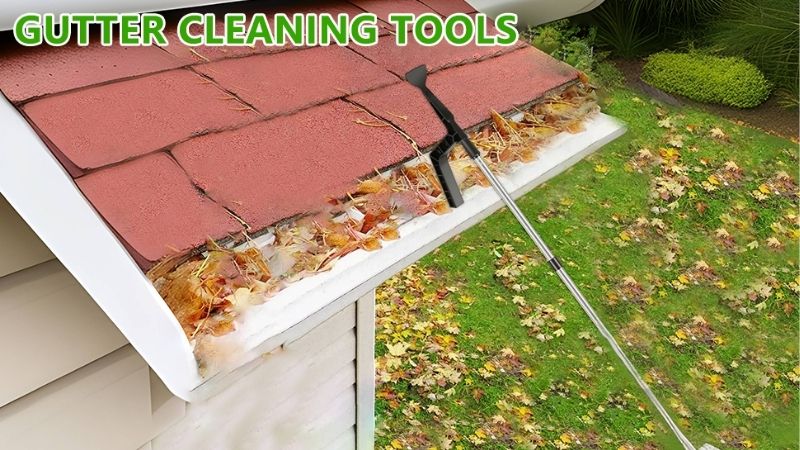
Removing soggy leaves from a clogged gutter and rinsing roof grit require different tools. The most useful gutter cleaning tools are not necessarily the longest: some lift debris out, while others merely move it toward a downspout. A ground-operated grabber can reduce ladder work, but a short scoop may still be more effective on compacted sludge. Before buying, identify your gutter height, nearby overhead wires, and where the dislodged debris will go.
Quick Verdict: For most owners of reachable one-story gutters, the Gutter Sense GT-SNS is the Best Overall pick. Its approximately 14-inch grab range lifts leaves from the channel rather than flushing them toward a blockage. The pole is separate. This editorial judgment draws on product documentation available as of October 2026, not our own detailed research. Check the current seller price and your pole’s connection before ordering.
As an Amazon Associate we earn from qualifying purchases.
By DIY Ideas 4 Home Editorial Team
6 Best Gutter Cleaning Tools Reviewed
Our selection covers removal, scraping and hose-assisted rinsing instead of treating every attachment as interchangeable. We compared maker descriptions, specified lengths, pole or hose requirements, published dimensions, and U.S. prices available in October 2026. Base tools in this comparison list from $3.98 to $33.99, but extension poles and specialist heads can raise the bill. The CDC’s January 2024 Ladder Safety guidance notes that falls occur at home as well as on jobsites; a long handle does not eliminate the need to assess the roofline or avoid overhead power lines.
| Product | Best For | Key Spec | Listed Price (as of October 2026) | Watch Out For |
|---|---|---|---|---|
| Gutter Sense GT-SNS | Best Overall | 14-in grab range, 2.5-in paddles | $33.99 maker | Extension pole not included |
| Orbit 58543 | Best for Hose Rinsing | 40 to 70-in wand, 180-degree nozzle | $22.99 maker | Rinses debris rather than lifting it |
| Amerimax Home Products 8300 | Best Budget Scoop | Approximately 1-ft handheld body, flexible tip | $3.98 Home Depot | Requires safe close access |
| The Wedge P-216 | Best for Wet Leaf Clumps | 15-in scoop, drainage grid | $8.99 Home Depot | Rigid teeth can catch on obstructions |
| The Gutter Tool WCR | Best for Gutter Hangers | 16-in hooked head, threaded pole mount | $19.55 Window Magic Supply | Moves debris; retrieval still required |
| Mr. LongArm Tele-Wash 8680 | Best Modular Water Pole | 3 to 5-ft water-fed pole, flow valve | $33.98 maker, pole only | Gutter angle adaptor sold separately |
Gutter Sense GT-SNS: Best Overall
Best For: One-story homeowners who want to lift loose leaves and pine needles from an accessible gutter while remaining on the ground.
The reason to choose Gutter Sense is its grasp-and-lift approach. Unlike a hose wand that pushes debris along the channel, the paired paddles can actually remove a clump and drop it onto a tarp. Its design also works around common gutter support brackets. You get better control over where material lands, provided the debris is light enough for the tongs and the pole stays manageable. It is less suitable for scraping adhered roofing grit or cleaning a downspout clog several feet below the outlet.
Gutter Sense’s product page lists the GT-SNS at $33.99 in October 2026 and identifies a grab span of approximately 14 inches. The maker’s How It Works specification gives each paddle a width of 2.5 inches, while the attachment fits an ordinary extension pole. The tool does not come with that pole. Its instructions specifically say not to use it from a ladder, and they warn against twisting, yanking or lifting heavy items by one paddle. Those limits matter more than broad claims that a product can clear every type of clog.
The physical tool measures 15 by 9 by 2 inches and weighs about 11 ounces, according to the manufacturer’s product dimensions. Its glass-reinforced nylon tongs, pull line and adjustable angle are potential maintenance points: check the line and tighten the wing nut before a fall cleanup. A long pole adds leverage and fatigue, so consider the actual vertical distance plus where you can stand. Wear safety glasses and collect falling leaves with a ground tarp rather than letting them scatter into planted beds.
Pros:
- Fourteen-inch grasp reaches clumps beyond a single fixed scoop.
- Two-and-a-half-inch paddles lift debris rather than sending it downstream.
- Eleven-ounce tool head limits added mass at the pole tip.
Cons:
- The $33.99 head still requires a separately purchased extension pole.
- Pull-line operation is poorly suited to compacted grit or heavy obstructions.
Who Should Buy It: Choose GT-SNS for repeat leaf collection from manageable ground positions; choose Orbit 58543 when the loose residue mainly needs water rinsing.
Orbit 58543: Best for Hose Rinsing
Best For: Owners with an open downspout who need to flush residual dirt after removing the bulky leaves by hand or tongs.
Orbit solves a different problem than a grabber: it redirects household hose water into a narrow, elevated channel. That is useful once the larger leaf mats have already been removed. Its adjustable head offers more control than a straight garden nozzle held overhead, but spraying a plugged gutter can drive more material into a downspout or wet siding. This is a finishing tool for flow testing and grit removal, not the first move against a packed, overflowing channel.
Orbit’s product page for the 58543 lists $22.99 as the October 2026 price, a telescoping reach from 40 to 70 inches, and a zinc nozzle that rotates through 180 degrees. The four-position head can angle the water stream without changing your whole body position. These are wand lengths, not guarantees that a user can safely clean a roof 70 inches above their standing reach. The maker lists a non-slip padded grip and lightweight corrosion-resistant construction; water pressure depends on the household supply.
At its shortest setting the wand is 40 inches long, and its full physical length is 70 inches. That collapsed size is worth considering in a small shed or garage cabinet. A hose must run to the work location, and the head’s moving joint should be rinsed clean of sediment after use. Start at a restrained flow and aim away from soffit vents, windows and electrical fixtures. Near overhead wires or high roofs, water-fed overhead work is a professional job rather than a reason to stretch farther.
Pros:
- Forty-to-seventy-inch adjustment fits a range of lower roofline positions.
- Rotating zinc nozzle provides 180 degrees of spray direction adjustment.
- Four head positions let users change the target without retipping the pole.
Cons:
- There is no retrieval bucket or grabber for wet leaf clumps.
- Spray water can wash debris toward an already obstructed downspout.
Who Should Buy It: Buy the 58543 if your channel is mostly clear; select Gutter Sense GT-SNS first if leaves must be lifted out.
Amerimax 8300: Best Budget Scoop
Best For: Homeowners with safely accessible lower gutters who need the cheapest dedicated hand tool for stubborn wet deposits.
For compacted mud and leaves within arm’s reach, a flexible scoop provides direct feedback that an overhead hose cannot. The Amerimax 8300 also avoids a telescoping joint or hose connection, making it a simple option for occasional seasonal work. Its curved leading end conforms to the gutter channel while the raised grip reduces hand contact with sharp edges. The obvious limitation is access: this is not a reason to lean farther sideways on a ladder or reach beyond a stable platform.
Home Depot’s product page for model 8300 listed $3.98 in October 2026 and describes a flexible PVC body intended to remove gutter debris. A Lowe’s product specification for the same model gives the tool a nominal 3.125-inch width and approximately one-foot length, with a narrow heel to help lift a loaded scoop past brackets. That Lowe’s listing is no longer sold there, so the current Home Depot offering is the purchase reference. The price difference versus a powered system leaves room in the budget for appropriate protective gear.
Its roughly 12-inch overall tool length makes the 8300 easy to store with hand trowels rather than long garden equipment. The flexible lip may follow a rounded gutter trough, but sharp screw ends and rough aluminum seams can abrade soft PVC over time. Dispose of heavy sediment into a bucket instead of dropping it onto shrubs. For high second-story runs, pay for safe access by a trained service rather than trying to turn this little scoop into an elevated system.
Pros:
- The $3.98 listing makes a purpose-built scoop inexpensive to replace.
- Flexible PVC tip follows curved channels with less scraping pressure.
- Elevated handle puts fingers above many protruding fastener edges.
Cons:
- The one-foot hand tool adds essentially no safe vertical reach.
- Soft leading edges can wear when pressed into abrasive roofing sediment.
Who Should Buy It: Get the Amerimax 8300 for low, reachable sections; use The Gutter Tool WCR for debris trapped beyond an obstruction.
The Wedge P-216: Best for Wet Leaf Clumps
Best For: Owners clearing soggy leaves who prefer a draining scoop with rigid teeth over a smooth flexible leading edge.
The Wedge P-216 addresses the messy moment when a bucket of soaked leaves brings a surprising amount of dirty water with it. Its open-grid body allows some water to drain before the debris moves to a bucket. The rigid front teeth are also designed to work into built-up material. This is a more aggressive approach than the Amerimax’s flexible lip, so the person controlling the scoop must keep the teeth away from vulnerable seams, coatings and fasteners.
Home Depot’s product page for model P-216 lists a $8.99 price, 15-inch tool length, rigid scraping teeth, and a grid designed for water drainage. Those are more meaningful details than promising a certain cleaning speed, which depends on how tightly leaves are packed. The model is a standalone handheld scoop; it does not include a pole or a hose. The retailer notes its own 90-day return window, which should not be confused with a manufacturer durability warranty.
At 15 inches long, the P-216 offers a little additional forward reach relative to shorter hand scoops, but it still requires secure close access. Inspect the grid after an autumn season for cracks near the rigid edges. Pine needles can catch in the openings and need manual clearing, especially after the scoop is rinsed. A small bucket on the work level is better than repeatedly carrying wet heaps down a ladder in one hand; OSHA’s portable ladder guidance emphasizes keeping hands available for climbing.
Pros:
- Fifteen-inch physical length gives a modest extended scraping surface.
- Open-grid design lets water drain from a wet leaf load.
- Rigid teeth can loosen debris a softer scoop may bend around.
Cons:
- Toothed edge needs caution around gutter joints and exposed screw heads.
- Open slots can retain narrow pine needles rather than releasing them.
Who Should Buy It: Choose P-216 for soaked leaf mats within safe arm’s reach; choose Amerimax 8300 when a softer gutter-contact edge matters more.
The Gutter Tool WCR: Best for Gutter Hangers
Best For: Experienced users who need to drag leaves from beneath support brackets before removing the pile at an accessible point.
A long gutter run can waste time when every bracket stops a conventional scoop. The hook on The Gutter Tool is designed to move material past those interruptions without repeatedly shifting the work position. It screws onto a common threaded extension pole and can pull a clump toward the user. That sounds similar to a retrieval tool, but it is not: the hooked head largely gathers and shifts material, so someone must still take the pile out. It is a specialty partner to a scoop, not a replacement for one.
Window Magic Supply’s product listing identified the black The Gutter Tool at $19.55 and in stock in October 2026. Retail documentation also describes its pole threading and hanger-reaching geometry. The WCR product listing available through another seller identifies a 16-inch body; independent published descriptions likewise state a 16-inch length. Do not read the retailer’s claim of cleaning a 20-foot gutter span from one position as 20 feet of vertical pole reach. The span depends on pole length, body position and available access.
With a physical head about 16 inches long and a hooked end, this tool needs storage space that prevents the end catching on hoses and cords. Repeatedly pulling a wet mass along painted aluminum can leave grit rubbing against the coating, so lift out the pile when possible rather than plowing it the entire run. Buy a pole that fits the threaded end and can be controlled without excessive flex. Prolonged sideways use strains wrists and shoulders even when the head itself is lightweight.
Pros:
- Sixteen-inch hooked head can reach under obstructing gutter hangers.
- Common threaded pole connection supports multiple handle lengths and arrangements.
- Separate hook surface gathers leaves from inaccessible small gutter sections.
Cons:
- It gathers material but still needs another way to remove it.
- A compatible extension pole adds cost and leverage-related handling fatigue.
Who Should Buy It: Consider WCR for bracket-heavy runs; choose Gutter Sense GT-SNS if actual ground-level extraction matters more than raking toward one point.
Mr. LongArm Tele-Wash 8680: Best Modular Water Pole
Best For: Owners building a reusable hose-fed cleaning system for gutters, siding and other low-reach exterior jobs.
Where Orbit provides a dedicated angled spray head, the Tele-Wash 8680 is a platform for fitting different brushes or directing water through a separate elbow. That versatility can make sense when one hose-fed pole will serve several outdoor maintenance tasks. Its purchase decision hinges on the complete accessory price, not the pole’s headline price. The basic 8680 does not ship as a ready-to-use gutter-clearing kit, and a straight water-fed pole cannot lift out decomposing leaf mats.
Mr. LongArm’s product page for the Tele-Wash 8680 lists $33.98 for the pole itself. Manufacturer documentation says the anodized aluminum handle extends from 3 to 5 feet, attaches to a conventional garden hose, and includes an on/off flow valve. A separate Flow-Thru Angle Adaptor is listed by the company at $14.07, while compatible flow-through brushes are additional purchases. For a gutter angle solution using the listed adaptor, the pole and adaptor are therefore two separately priced items rather than a single $33.98 bundle.
The 8680’s actual extended pole length tops out at 5 feet, and the manufacturer’s product page gives package dimensions of 42 by 5.63 by 3.38 inches. Those packaging figures should not be confused with the working footprint or exposed pole size. Its telescoping lock and water valve introduce more service points than an ordinary plastic scoop. Wash grit from the threaded fitting, drain water before freezing weather, and verify that each chosen brush or angle head accepts the manufacturer’s connection system before paying.
Pros:
- Three-to-five-foot aluminum pole adjusts for different low-height washing jobs.
- Built-in shutoff valve limits waste during pauses and head changes.
- Manufacturer offers a $14.07 angle adaptor for redirected gutter flow.
Cons:
- The $33.98 base listing excludes the gutter angle adaptor and brushes.
- Five-foot maximum pole length is inadequate for many upper-story eaves.
Who Should Buy It: Choose the 8680 if you will reuse water-fed heads; buy Orbit 58543 if a ready-made gutter wand is the only goal.
How to Choose Gutter Cleaning Tools
The critical shopping decision is whether debris must leave the gutter or merely be loosened and rinsed. A $3.98 scoop may be more effective on hardened muck than a longer water wand costing several times as much. Think through the job in the order the water flows: remove bulky leaves, clear the downspout entrance, and only then rinse the remaining sediment. That sequence also makes hidden clogs easier to spot before a heavy rainfall.
Choose How the Tool Actually Removes Debris
Grabbing tools and scoops physically lift material out. The GT-SNS grabs a roughly 14-inch range of loose debris, while a 15-inch slotted scoop such as P-216 lets water escape as it lifts wet leaves. The Gutter Tool’s hook is different again: it shifts debris beneath brackets but does not collect it. Water-fed Orbit and Tele-Wash models are most useful on loose dirt after larger clumps are gone. Distinguish those mechanisms before relying on descriptions that call everything a gutter cleaner.
If the bottom contains heavy roof grit, a short hand scoop offers controlled removal when access is safe. Pine needles may slip from coarse grabbers and lodge in slots. Dry leaves may be easy for several methods, but no one tool can guarantee removal of hardened downspout plugs. A clogged underground drain at the bottom of the downspout is a separate plumbing or drainage problem, not something solved by pointing more water at the roof.
Measure Reach, Not Advertised Height
The 58543 is a 40 to 70-inch wand; the 8680 pole adjusts from 3 to 5 feet. Neither number is the height of a building the operator can safely service. An extension pole adds reach, but a curved roof edge, gutter guards, trees and uneven grade may make the tool ineffective even when it technically reaches the line. Head size matters too: Gutter Sense occupies about 15 by 9 inches, so it cannot always enter a narrow channel crowded by hardware.
Take measurements from the safe standing surface to the gutter lip and note nearby power lines. Check the working angle needed to see or control the tool and the route by which leaves will fall. When the gutter is beyond comfortable control, the proper next purchase may be professional service rather than an even longer pole. OSHA’s portable ladder guidance calls for inspection, secure placement and three-point contact during climbing, not overstretching sideways to finish one last section.
Price the Entire Working Setup
These six base products occupy a remarkably wide budget range, from Amerimax’s $3.98 scoop to the $33.99 Gutter Sense head in the October 2026 U.S. listings. But those prices cannot be compared as if all were complete systems. Gutter Sense requires an ordinary extension pole, The Gutter Tool WCR requires an appropriate threaded pole, Orbit needs a garden hose, and the Tele-Wash 8680 needs at least an angle accessory for practical gutter-directed flushing. Price the missing pieces before calling one item a bargain.
If you already have a sturdy, compatible pole, a grabber or raking head may be a reasonable addition. If you have no safe access and no hose reach, a cheap scoop will not solve the overall job. Check return terms for the exact retailer because a pole-thread mismatch may not be obvious until assembly. Avoid unlisted adapters presented as universal: threaded diameters, proprietary quick connections and flow-through water channels are not interchangeable just because they look similar.
Protect the Gutter and the Person Cleaning It
Painted aluminum, vinyl and copper gutter systems can respond differently to rigid scraping edges. The Wedge’s teeth may loosen stuck leaf material, while Amerimax’s soft PVC lip is a gentler contact surface. Start with controlled pressure around sealant, seams, brackets and gutter guards. Rinsing with a hose does not justify forcing water behind the fascia or into soffit vents. Stop if the gutter separates from its hangers, sags under water or contains an unexpected nest or sharp debris.
Eye protection and gloves are sensible for loose grit and sharp fasteners, and wet roof edges become slippery. A ground-based tool reduces the number of ladder climbs only when its reach and setup are suitable. According to the CDC’s 2024 Ladder Safety guidance, home ladder falls are a real hazard; OSHA’s ladder safety QuickCard also warns about overhead electrical lines. Do not position water jets, aluminum poles or ladders near energized wiring. For steep ground, upper stories or complicated downspout routing, hire someone equipped for the elevation.
Frequently Asked Questions
Most problems with gutter cleaning come from the setup rather than the tool label. These answers address a few decisions that can affect the job after you have selected a scoop, grabber or water-fed system.
Do Gutter Guards Need to Be Removed for Cleaning?
Sometimes. Solid covers and fine-mesh guards can prevent a scoop or tong from entering the channel, but some products are designed to open or lift for maintenance. Follow the gutter-guard maker’s removal instructions rather than prying at fasteners with a scraper. If debris is sitting on top of the mesh, clean the accessible surface first and inspect the outlet before deciding whether the guards need to come off.
Can I Clean Gutters During Freezing Weather?
Avoid forcing frozen leaf masses loose with rigid metal or plastic tools. Ice bonds to coatings, brackets and seals, so a hard pull can damage the assembly. Water-fed poles also carry a freezing risk in valves and tubes. If ice has formed near the eaves or water is entering the building, seek a qualified contractor rather than climbing onto an icy roof or applying extreme heat to the gutter.
How Do I Tell If the Gutter Has the Wrong Slope?
Standing water after visible debris has been removed can indicate a low spot, inadequate slope or a sagging hanger. It can also occur if the outlet remains partly blocked. Observe the channel after a small, controlled rinse and look for repeated puddles well away from the downspout. Do not bend or pull the trough with your cleaning pole to change the slope; correcting the hangers usually needs a separate repair plan.
Should I Wash Gutters With Bleach or Strong Cleaner?
Usually not for ordinary leaf removal. Physical extraction and a modest water rinse address most seasonal accumulation without risking damage to painted metal or nearby planting. If staining remains, consult the gutter finish manufacturer’s cleaner recommendations before applying chemicals. Never mix bleach with ammonia or acidic cleaners, and do not let an unknown cleaning solution run into landscape beds or storm drains.
Final Thoughts
For the first cleanup on a typical reachable one-story house, buy the Gutter Sense GT-SNS if your main problem is fallen leaves and you already have, or can obtain, a controllable compatible pole. It remains the Best Overall recommendation because it physically extracts material. Here is the condition that reverses the decision: if the gutters are already clear of big debris and you only need to wash remaining grit toward a functioning outlet, the less expensive Orbit 58543 is the more logical buy. Before checking out, identify where you can stand safely and confirm what the package actually includes.