Key takeaways
- Mechanism type: Manual levers and pull-handles have fewer failure points and cost less, but require decent core strength and a free hand. Power units run on a motor and transformer — smoother, easier on stiff joints, and repairable if you can source the actuator. If you lose power often, look for a battery backup port.
- Wall clearance: Standard recliners need eight to sixteen inches behind them to fully extend. Wall-hugger designs slide the seat forward instead, dropping that to roughly four inches. Measure before you buy, not after the delivery truck leaves.
- Upholstery honesty: Faux leather (PU or bonded) looks sharp on day one and delaminates under body heat and friction over two to five years. Genuine leather ages into patina. Woven fabric breathes best and resists cracking entirely, but shows stains. Pick based on your climate and household chaos level.
- Frame and reach-through access: Kiln-dried hardwood or heavy-gauge steel beats engineered board. More practically, check whether the underside is stapled shut or accessible — if you can reach the mechanism without cutting fabric, you can tighten a loose bolt yourself instead of paying a tech.
- Extras that earn their keep: Cup holders and USB ports are genuinely useful. Flip-down consoles let you convert a three-seater into a loveseat with a tray. LED accent lighting is fun in a media room and pointless in a formal living room. Storage drawers under the seat are underrated.
What's inside
Shopping for a reclining sofa is one of those purchases where the showroom floor lies to you. Everything feels great for the ninety seconds you sit in it. What you don’t learn until month six is whether the mechanism squeaks, whether the frame is kiln-dried hardwood or stapled particleboard, and whether that “leather” starts flaking off the headrest like old paint. I’ve torn down enough furniture to reupholster it — and rebuilt a few recliner mechanisms with nothing but a socket set and stubbornness — so I look at these sofas the way I’d look at a project car: what’s underneath, and can I fix it when it fails?
This guide covers six reclining sofas across manual and power configurations, from budget faux leather three-seaters to genuine leather power units with USB and hidden storage. I’ll flag what each one does well, where the compromises live, and which construction details actually predict longevity. No fluff about “luxurious comfort” — just the stuff you’d want a friend who’s disassembled furniture to tell you before you commit.
As an Amazon Associate we earn from qualifying purchases.



How to Choose a Recliner Sofa Best (2026)
- Mechanism type: Manual levers and pull-handles have fewer failure points and cost less, but require decent core strength and a free hand. Power units run on a motor and transformer — smoother, easier on stiff joints, and repairable if you can source the actuator. If you lose power often, look for a battery backup port.
- Wall clearance: Standard recliners need eight to sixteen inches behind them to fully extend. Wall-hugger designs slide the seat forward instead, dropping that to roughly four inches. Measure before you buy, not after the delivery truck leaves.
- Upholstery honesty: Faux leather (PU or bonded) looks sharp on day one and delaminates under body heat and friction over two to five years. Genuine leather ages into patina. Woven fabric breathes best and resists cracking entirely, but shows stains. Pick based on your climate and household chaos level.
- Frame and reach-through access: Kiln-dried hardwood or heavy-gauge steel beats engineered board. More practically, check whether the underside is stapled shut or accessible — if you can reach the mechanism without cutting fabric, you can tighten a loose bolt yourself instead of paying a tech.
- Extras that earn their keep: Cup holders and USB ports are genuinely useful. Flip-down consoles let you convert a three-seater into a loveseat with a tray. LED accent lighting is fun in a media room and pointless in a formal living room. Storage drawers under the seat are underrated.
The Best Recliner Sofa Best (2026)s Reviewed
Genuine Leather Power Recliner Sofa (3-Seater)
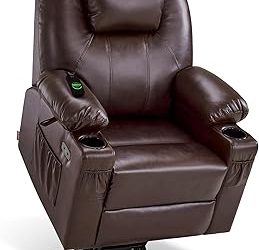
This is the pick if you want the sofa to outlive the trend cycle — real leather softens rather than cracks, and the power mechanism eliminates the awkward one-armed lever wrestle. The hidden cup holders and USB port are cleanly integrated rather than bolted-on afterthoughts, and the padded arms hold their shape better than the foam-wrapped cardboard you find in budget builds.
Dresegmt Flip-Middle 3-Seat Recliner with Storage
The flip-down center backrest is the smartest feature here: fold it forward and you get a console with drink holders, fold it back and it’s a full three-seater. The under-seat storage drawer is the kind of practical detail furniture designers usually skip, and the blue upholstery is a welcome break from the endless brown.
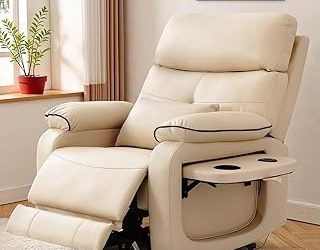
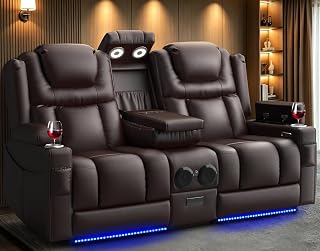
Power Loveseat Recliner with Flip-Back Console
Built for media rooms and RVs — the wall-hugger design means you can push it within a few inches of drywall and still recline fully. LED accent lighting under the base is genuinely useful for finding your seat mid-movie, and the powered mechanism plus dual USB ports make it a legitimate home theater unit rather than a gimmick.
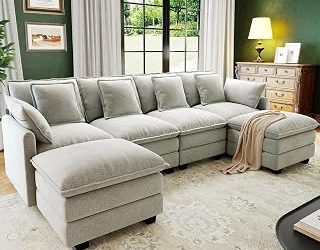
Extra Wide Overstuffed Fabric Recliner Sofa
The breathable woven fabric is the honest choice if you live somewhere humid or hot, where faux leather turns tacky and eventually peels. Extra-width seating and overstuffed padding make this the most forgiving option for taller or broader frames, though you’ll want a fabric protector applied before it sees its first spill.
Faux Leather Manual Reclining Sofa (3 Seat)
Straightforward manual three-seater at the accessible end of the market, and the simplicity is part of the appeal — fewer motors and wires mean fewer things to fail. Expect the faux leather to show wear at the headrests first; keep it out of direct sun and away from heat vents to stretch its life considerably.
Frequently Asked Questions
Can I assemble a reclining sofa myself?
Most ship in two or three modules that slide together on steel brackets — usually a fifteen-minute job with no tools. The heavy lifting is the real challenge; recruit a second person rather than a furniture dolly and a prayer.
How much space do I need behind the sofa?
Budget eight to sixteen inches for standard recliners and about four for wall-huggers. Measure from the wall to the back of the frame with the sofa fully reclined, and remember baseboards and outlet covers eat into that gap.
Is power worth the extra cost over manual?
If anyone in the household has back, shoulder, or knee issues, yes — manual levers demand real leverage. If everyone’s mobile and you’d rather not run a cord to the middle of the room, manual is more reliable and cheaper to own.
Can a sagging recliner seat be repaired?
Often, yes. Sagging usually means stretched sinuous springs or compressed foam, both replaceable if you can access the underside. Check whether the base fabric is stapled (removable) or sewn shut before assuming a repair is possible.
Final Thoughts
If you want one sofa to buy and forget about, the Genuine Leather Power Recliner earns it — real hide plus a serviceable motor is the combination that survives a decade. For flexibility on a tighter budget, the Dresegmt Flip-Middle with its storage drawer and convertible console does more per dollar than anything else here. And if you’re building a dedicated media room, the Power Loveseat with the flip-back console and wall-hugger geometry is purpose-built for exactly that job.