Key takeaways
- Use cold, filtered water for cleaner-tasting ice and less mineral buildup. Avoid carbonated, sugary, or flavored liquids in the reservoir.
- Leave ventilation space around the appliance and keep it away from ovens, direct sun, and other heat sources.
- Make ice ahead of parties, then store it in an insulated cooler; the basket is generally for temporary holding, not long-term freezing.
- Run the cleaning cycle regularly, and drain the machine before leaving home for more than a day or two.
What's inside
Nugget ice is the kind that makes a cold drink feel finished: soft, chewable, and easy to crunch rather than hard and glassy. A countertop machine can bring that texture to a kitchen, home bar, office, or party without the plumbing and installation required by a built-in appliance. The catch is that “nugget ice maker” covers machines with noticeably different capacities, noise levels, water systems, and cleanup routines.
This guide takes a hands-on DIY-maker approach to choosing one. I’ll explain which specifications matter in everyday use, how to size a machine for your counter and household, and what to check before buying. The models below are useful starting points, but the best choice depends on how quickly you need ice, how often you will refill the reservoir, and whether portability or easy maintenance matters most.
As an Amazon Associate we earn from qualifying purchases.


🛒 Best Price Today on Amazon
Prime members get fast, free shipping on everything above, plus member-only deals. New members get a 30-day free trial — cancel anytime.
Start With Ice Texture and Daily Output
Most countertop nugget machines produce compressed flakes or pellets rather than traditional freezer cubes. The result should be soft enough to chew and porous enough to absorb flavor. Texture varies slightly between models, so treat phrases such as “sonic,” “pebble,” and “nugget” as broad descriptions rather than a guarantee of one exact style.
Next, consider output claims realistically. A machine advertised at 34 to 44 pounds per day is reporting an idealized maximum, not a continuous bucket of ice ready all day. Room temperature, water temperature, ventilation, and how often the basket is emptied all affect production. For a couple who wants ice for evening drinks, a 34- or 35-pound unit may be plenty. For a busy family or regular entertainer, a higher-rated machine gives you more breathing room.
Match the Machine to Your Counter
Measure the intended location before ordering, including space above and behind the appliance. Countertop ice makers need airflow and should not be pressed tightly against a wall or tucked beneath a cabinet with no clearance. Also measure the path from the delivery box to the counter; a compact appliance can still be awkward to carry when filled with water.
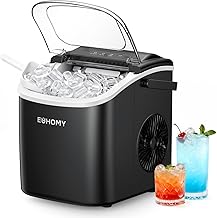
Portability is particularly useful if you move the machine between a kitchen, bar, RV, or outdoor serving area. The EUHOMY model with a handle is designed with that use in mind, while the compact Kismile and smaller EUHOMY options may suit a permanent counter better. A handle helps, but always empty and dry the reservoir before carrying an ice maker.
Look Beyond the Headline Capacity
“First ice in six or seven minutes” is useful when you need to start a batch quickly, but it does not mean the machine will fill its basket in that time. Early production is usually a small amount, followed by repeated cycles. If you are hosting, switch the machine on well ahead of serving time and transfer finished ice to an insulated cooler or freezer-safe container.
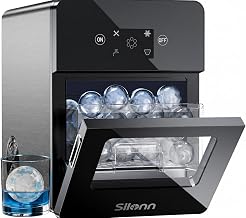
Basket size also matters. A generous daily output does not necessarily mean a large storage bin. Many countertop machines make ice faster than the insulated basket can hold it, then pause until you remove some. That is normal operation. Models such as the Silonn self-dispensing version can be convenient when you want to serve directly, while a removable basket is easier to empty into a cooler or pitcher.
Prioritize Water Access and Cleaning
A front-access water tank is a practical design choice if the machine sits beneath cabinets or against a backsplash. The Silonn 44-pound model has a front pull-out tank and removable basket, which can make routine refilling less fiddly. Other machines require access to a top or rear reservoir, so check your counter layout before choosing.
Self-cleaning is helpful, but it is not a substitute for cleaning by hand. Ice makers contain damp, enclosed areas where mineral scale and biofilm can develop. Look for a removable basket, accessible drain, and clear cleaning cycle. After each use, drain leftover water, wipe the interior with a clean cloth, and leave the lid open until the reservoir is dry. Follow the manufacturer’s instructions for sanitizer or descaling products rather than improvising with harsh chemicals.
Choose the Features You Will Actually Use
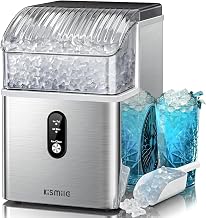
Noise is easy to overlook in a product listing. A rating around 43 decibels, as listed for the Kismile, may be comfortable in a kitchen, but the compressor and water pump can still be noticeable in a quiet room. If the unit will sit in a home office or open-plan living area, place it on a level, vibration-damping mat and avoid running it beside a microphone or bedside table.
Stainless-steel finishes are attractive and can wipe clean, though they do not automatically make a machine more durable. Useful extras include an ice scoop, a removable basket, a drain plug, a water-level indicator, and an automatic shutoff when the bin is full. Spend less time comparing decorative controls and more time checking whether the parts you must wash can actually be removed.
Tips
- Use cold, filtered water for cleaner-tasting ice and less mineral buildup. Avoid carbonated, sugary, or flavored liquids in the reservoir.
- Leave ventilation space around the appliance and keep it away from ovens, direct sun, and other heat sources.
- Make ice ahead of parties, then store it in an insulated cooler; the basket is generally for temporary holding, not long-term freezing.
- Run the cleaning cycle regularly, and drain the machine before leaving home for more than a day or two.
Frequently Asked Questions
Is nugget ice the same as crushed ice?
No. Crushed ice is made by breaking solid cubes or larger pieces, so it tends to be sharper and melts differently. Nugget ice is formed from compacted ice flakes or small pellets, producing a softer, more porous texture.
How much nugget ice does a household need?
For everyday drinks, a machine rated around 34 to 35 pounds per day is often adequate. Choose a higher-capacity 40- to 44-pound model if several people use ice throughout the day or you regularly host gatherings. Remember that advertised output depends on operating conditions.
Can a countertop ice maker keep ice frozen?
Usually, no. The storage area is commonly insulated rather than freezer-powered. Ice will gradually melt and the water may be reused by the machine, depending on its design. Move surplus ice to a freezer or insulated cooler when you need it to last.
What is the easiest nugget ice maker to maintain?
Choose one with a self-cleaning cycle, removable basket, accessible drain, and a water tank that is easy to reach. The cleaning cycle reduces effort, but every model still benefits from regular wiping, draining, and descaling according to its manual.
Conclusion
The best nugget ice maker for 2026 is not simply the one with the largest daily number. It is the machine that fits your counter, produces enough ice for your routine, and is convenient enough to clean consistently. Compare output with basket and reservoir design, treat speed claims as starting times rather than full-batch promises, and favor accessible parts over flashy controls. For a portable setup, consider a handled EUHOMY; for higher output or easier serving, examine the larger EUHOMY and Silonn options; and for a quieter, compact everyday appliance, the Kismile is a sensible place to begin.