Key takeaways
- Upstreman 7.1 Cu.Ft BM71 — apartment and dorm scale with a bottom freezer, adjustable thermostat, no plumbing required. Pair it with a standalone ice machine.
- 16 Cu. Ft. French Door with Ice Maker — frost-free with auto defrost and a bottom freezer drawer, sized for tighter galley kitchens.
- Antarctic Star 17.5 Cu Ft — built-in automatic ice maker, inverter compressor, multi-air flow, LED touch display.
- KoolMore 22.5 Cu.Ft counter-depth 4-door — the flush-front look with real volume behind it.
What's inside
I’ve pulled apart three ice makers on my garage bench and rerouted water lines through two kitchen remodels, and the pattern is always the same: the ice system is the first thing to fail on a refrigerator, and it’s almost never the compressor’s fault. It’s a kinked quarter-inch line, a clogged inlet valve screen, or a fill tube that froze because the freezer door gasket had a gap you could slide a business card through. Understanding that before you buy changes what you look for on the spec sheet.
This guide walks through how ice makers actually work inside a fridge, what the install really demands from your kitchen, and where the trade-offs hide between built-in units and standalone machines. I’ll point to specific models along the way, with an eye toward what’s serviceable and what’s sealed shut.
As an Amazon Associate we earn from qualifying purchases.


Our recommended picks are shown above.
🛒 Best Price Today on Amazon
Prime members get fast, free shipping on everything above, plus member-only deals. New members get a 30-day free trial — cancel anytime.
Know Which Ice System You’re Buying
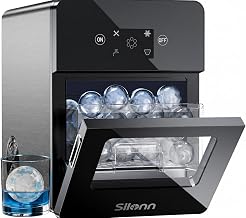
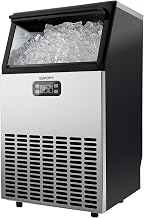
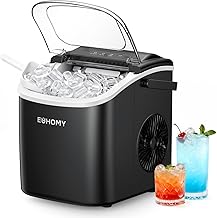
Most refrigerator ice makers are mold-and-heater units: water fills a tray, freezes over a couple hours, then a small heater loosens the cubes so a motorized rake pushes them into the bin. Simple, cheap to replace, and the reason cheap ice tastes faintly of freezer. Premium units use a separate evaporator plate that grows clear, dense cubes by flowing water over a chilled surface. The Samsung 26 cu. ft. Mega Capacity RF27CG5400SR takes this furthest with four ice types including cubed, crushed, and its Ice Bites format, which means multiple mechanisms in one cabinet. More capability, more parts. Standalone countertop and undercounter machines like the Commercial Ice Maker Machine 100 Lbs/24H use the same flow-over-plate method commercial bars rely on, which is why it turns out 36 cubes in 9 to 15 minutes while a built-in fridge maker manages maybe 3 to 5 pounds a day.
Check Your Water Situation Before You Shop
This is where DIY installs go sideways. You need a cold water line within reach, a shutoff valve you can actually turn, and enough slack behind the fridge to avoid crushing the tube when you push the unit back. Skip saddle valves that pierce the pipe — they clog and weep. Install a proper quarter-turn compression tee instead, and run braided stainless or copper rather than the flimsy poly tubing that ships in the box. If plumbing isn’t happening, the Commercial Ice Maker Machine gives you dual water inlet options, meaning you can pour into a reservoir or hook it to a line, which is a genuinely useful escape hatch for renters and finished basements with no supply nearby.
Match Capacity to Your Actual Footprint
Measure the opening, then subtract. Doors need swing clearance, hinges need overhead room, and counter-depth models trade interior volume for a flush front. A few real reference points:
- Upstreman 7.1 Cu.Ft BM71 — apartment and dorm scale with a bottom freezer, adjustable thermostat, no plumbing required. Pair it with a standalone ice machine.
- 16 Cu. Ft. French Door with Ice Maker — frost-free with auto defrost and a bottom freezer drawer, sized for tighter galley kitchens.
- Antarctic Star 17.5 Cu Ft — built-in automatic ice maker, inverter compressor, multi-air flow, LED touch display.
- KoolMore 22.5 Cu.Ft counter-depth 4-door — the flush-front look with real volume behind it.
Weigh Serviceability Against Convenience
Ask one question of any model you’re considering: can the ice maker assembly be pulled out as a module? On most bottom-freezer French door units, including the Antarctic Star and KoolMore builds, the maker sits in the fresh food compartment or upper freezer bay and unclips with a couple of screws and a wiring harness. That’s a 20-minute repair with a $60 part. Through-door dispensers with augers and crushers are harder to reach and involve more failure points, so decide whether you’ll use crushed ice enough to justify it.
Plan for Drainage and Ambient Heat
Standalone undercounter machines melt and refreeze constantly, so they either need a gravity drain or a bin you empty by hand. Check which one you’re getting before you frame it into cabinetry. Also give any ice machine breathing room — these units dump heat, and a tight enclosure without a ventilation gap will slow production dramatically and shorten compressor life. Inverter compressors, like the one in the Antarctic Star, handle warm ambient conditions more gracefully because they modulate rather than cycling hard on and off.
Tips
- Flush and discard the first two or three ice batches after install — they’ll carry tubing residue.
- Add an inline sediment or carbon filter even if the fridge has one; it protects the inlet valve screen, which is the most common clog point.
- Level the cabinet with a torpedo level on the floor, not the top. An out-of-level fridge causes overfill and freeze-ups in the fill tube.
- Twice a year, empty the bin completely and wipe it dry. Old ice absorbs odors and welds into a solid block.
Frequently Asked Questions
Why is my ice maker producing hollow or half-formed cubes?
Low water pressure, almost always. You need roughly 20 to 120 psi at the valve. Check for a partially closed shutoff or a kinked line behind the unit before assuming the maker failed.
Is a standalone machine better than a built-in ice maker?
For volume, yes, and by a wide margin. A unit like the 100 lbs/24H commercial machine outproduces any residential fridge maker several times over. For everyday convenience and zero extra footprint, built-in wins.
Can I add an ice maker to a fridge that doesn’t have one?
Only if the freezer has the factory mounting bosses and a wiring harness stub behind an access panel. Look up your model number and check for a manufacturer ice maker kit. If there’s no harness, don’t improvise it.
Why does my ice smell bad?
Usually absorbed odors from unwrapped food, or a stale carbon filter. Replace the filter every six months, dump the bin, and wash it with warm water and a little baking soda.
Conclusion
The best refrigerator with an ice maker is the one whose ice system you can reach, feed clean water, and service without a technician. Sort out your water line and clearances first, then pick capacity — a compact Upstreman paired with a standalone machine, a mid-size 16 or 17.5 cubic foot French door, or the Samsung Mega Capacity if you want four ice formats and have the wall to give it.