Key takeaways
- Two-person household, occasional iced drinks: 2–3 lbs/day is plenty.
- Family with cold-brew and smoothie routines: aim for 4+ lbs/day and a bin over 4 lbs.
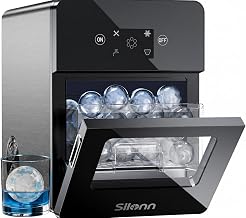
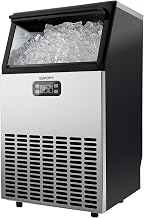
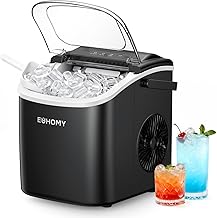
- You host regularly: stop asking the fridge to do it alone. A dedicated unit like the 2-in-1 Ice Maker & Beverage Fridge produces up to 120 lbs in 24 hours with 30 lbs of storage, which no built-in maker will approach.
What's inside
An ice maker is the one part of a refrigerator you interact with every single day, and it’s also the part most likely to make you regret a purchase. Anyone who has pried a fused block out of a bin with a butter knife knows the difference between a fridge that has an ice maker and one that actually keeps up. The good news: ice performance is predictable if you know what to look at. It comes down to the mechanism inside, the bin volume, and how well the water line was installed, and that last one is entirely in your hands.
Below, we break down the three ice-making mechanisms you’ll encounter in 2026, how to read output ratings without getting fooled, and the plumbing details that separate a trouble-free install from a slow leak behind the toe kick. If you’re comfortable with a drill and a wrench, you can handle most of this yourself. Here are the models we keep coming back to, followed by the buying logic behind them.
As an Amazon Associate we earn from qualifying purchases.


🛒 Best Price Today on Amazon
Prime members get fast, free shipping on everything above, plus member-only deals. New members get a 30-day free trial — cancel anytime.
Understand the Three Ice Mechanisms
Almost every refrigerator ice maker falls into one of three designs, and the design dictates the ice you get. Twist-tray and mold-heater makers are the workhorses: water fills a tray, freezes solid, then a small heater or motor releases crescent or half-moon cubes. They’re simple, cheap to repair, and standard on straightforward models like the 16 Cu. Ft. French Door Refrigerator and the LRAIN 16 Cu. Ft. version. Nugget (chewable) makers use a chilled cylinder and an auger that scrapes and compresses flakes into soft pellets. That’s a genuinely different machine with more moving parts, and it’s why a unit like the 20 Cu Ft French Door with Side Freezer stands out by offering nugget and cube from one cabinet. Multi-format systems go furthest: the Samsung 26 cu. ft. RF27CG5400SR produces four ice types, including nugget and craft-style cubes, from separate compartments.
Read the Output and Storage Numbers Correctly
Manufacturers list production in pounds per 24 hours, but daily output only matters if the bin can hold it. A fridge making three pounds a day with a two-pound bin will constantly hover near empty during a party. Look at both figures together and match them to your habits:
- Two-person household, occasional iced drinks: 2–3 lbs/day is plenty.
- Family with cold-brew and smoothie routines: aim for 4+ lbs/day and a bin over 4 lbs.
- You host regularly: stop asking the fridge to do it alone. A dedicated unit like the 2-in-1 Ice Maker & Beverage Fridge produces up to 120 lbs in 24 hours with 30 lbs of storage, which no built-in maker will approach.
Plumb It Properly the First Time
Ice quality problems are usually water problems. Skip the self-piercing saddle valve, even if the old install used one; they clog and weep over time. Tap into the cold supply with a proper quarter-turn compression stop, then run 1/4″ braided stainless or PEX tubing rather than the soft poly coil that came in the box. Verify supply pressure sits in the 20–120 psi window most makers specify. If you’re on reverse osmosis, check the manual first, since low RO pressure starves some valves and produces hollow, undersized cubes. Leave a gentle service loop behind the cabinet so you can pull the fridge out without stressing the fitting, and dry-fit everything before pushing it back into place.
Measure the Opening, Not Just the Cabinet
Counter-depth models solve a real aesthetic problem but eat interior volume, so measure before you commit. Account for door swing, handle projection, and the extra inch or two the hinges need to open past 90 degrees for crisper-drawer removal. The KoolMore Counter Depth French Door with Ice Maker packs 22.5 cu. ft. into a shallower footprint, which is a good compromise if your kitchen has a tight walkway. Also confirm the ice bin’s location: in-door bins free up freezer space but add a failure point in the door, while freezer-drawer bins are quieter and easier to service.
Check Serviceability Before You Buy
Pull up the parts diagram for any model you’re considering. You want the ice maker module accessible by removing a few screws and a wiring harness, not buried behind a sealed panel. Confirm the water inlet valve and filter housing are reachable from the front or the bottom grille. Models with modular ice assemblies let you swap a $60 part in twenty minutes instead of booking a service call.
Tips
- Toss the first two or three batches after installation or a filter change; they carry plastic taste and manufacturing residue.
- Level the cabinet with a torpedo level on the freezer floor. A fridge tilted back even slightly causes uneven fill and hollow cubes.
- Vacuum the condenser coils twice a year. Warm coils mean longer harvest cycles and noticeably less ice.
- Empty the bin completely once a month. Old ice absorbs freezer odors and clumps as it sublimates.
Frequently Asked Questions
Why does my ice taste like the freezer?
Ice absorbs volatile compounds from uncovered food. Seal leftovers, replace the water filter on schedule, and clear the bin monthly. A box of baking soda in the freezer helps but won’t fix an unsealed container.
Is nugget ice worth the added complexity?
If you drink it daily, yes. The auger assembly adds parts that can fail, so favor a model with cube backup, like the 20 Cu Ft French Door, so you’re never fully without ice.
Can I add an ice maker to a fridge that doesn’t have one?
Sometimes. Check whether your model has a factory-installed water valve, wiring harness, and a fill tube port in the freezer liner. If those aren’t present, a standalone unit is cheaper and simpler.
How long should a built-in ice maker last?
Expect eight to twelve years with clean water and regular filter changes. Hard water shortens that considerably by scaling the fill tube and mold.
Conclusion
The best ice maker for you is the one matched to your actual consumption, installed on a clean water line, and built so you can service it without a technician. Multi-format models like the Samsung RF27CG5400SR cover the widest range of needs, simpler French door units handle everyday cubes reliably, and a dedicated undercounter maker is the honest answer for high-volume households. Measure carefully, plumb it right, and the daily annoyance disappears.