Key takeaways
- Buying by running watts only. A 2,000-watt generator with 1,600 running watts can technically supply a 1,500-watt saw, but the 4,000-watt startup surge stalls it or trips its breaker every time.
- Ignoring the compressor’s induction motor. Compressors surge harder than saws. A 12-amp compressor rated 1,440 running watts may need 4,000 to 5,000 starting watts, especially in cold weather.
- Running two motors at once on a small unit. Even if each tool fits individually, starting a saw while the shop vac is running exceeds the combined rating on anything under 5,000 watts.
- Forgetting altitude and heat. Engines lose about 3 percent of output per 1,000 feet of elevation and more on hot days. A generator sized exactly at sea level falls short in the mountains.
- Using a thin extension cord. A 16-gauge, 100-foot cord can drop voltage 8 to 10 percent under a 15-amp load, making the generator seem underpowered. Use 12 gauge to 50 feet and 10 gauge to 100.
- Trusting “peak” numbers on power stations. A 300-watt power station may advertise a 600-watt surge, but a saw’s startup is far above that and the unit will simply shut down. Power stations under 1,500 watts are for chargers and lights.
- Oversizing for a single tool. A 10,000-watt generator to run one circular saw wastes fuel and money and runs dirty at 15 percent load. For most home projects in 2026, 3,500 to 5,000 watts is the sweet spot.
The Short Answer
To run one corded power tool at a time, you need a generator rated for at least 3,500 starting watts and 3,000 running watts. That covers a 15-amp circular saw, a miter saw, or a jobsite table saw, all of which draw 1,500 to 1,800 running watts and two to three times that for a fraction of a second at startup. To run two tools at once, such as a table saw and a shop vac, or a compressor and a saw, plan on 5,000 to 7,000 starting watts. A 2,000-watt inverter generator is enough for drills, sanders, battery chargers, and lights, but not for any saw with a 15-amp motor. Size by the starting watts of your largest tool plus the running watts of everything else that will be on at the same time.
Standard Sizes
Generators are sold by peak (starting) watts, with running watts typically 10 to 15 percent lower. The table matches generator classes to the tools they will actually run, along with the physical footprint you will be lifting into a truck.
Our top picks


As an Amazon Associate we earn from qualifying purchases at no extra cost to you.
| Generator class | Starting / running watts | Runs reliably | Typical size | Weight | Price range |
|---|---|---|---|---|---|
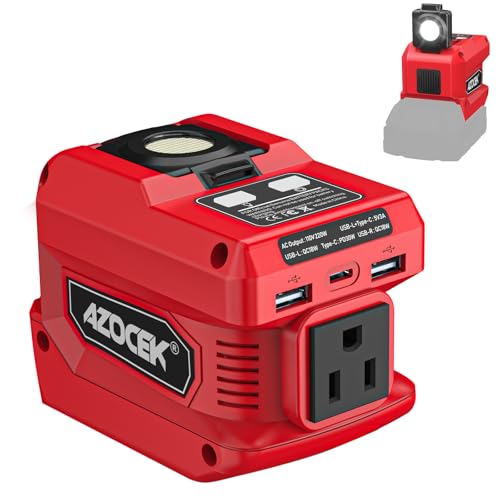
| Battery inverter (tool-battery powered) | 200 to 300 W continuous | Phone and laptop chargers, LED work lights, small battery chargers, soldering iron | 6 x 4 x 3 in (15 x 10 x 8 cm) | 0.5 to 1 lb (0.2 to 0.5 kg) without battery | $25 to $40 |
| Portable power station | 300 to 600 W, 250 to 500 Wh | Chargers, lights, small fans, a cordless-tool battery charger, a jigsaw briefly | 9 x 6 x 7 in (23 x 15 x 18 cm) | 6 to 12 lb (2.7 to 5.4 kg) | $120 to $400 |
| 2,000 W inverter generator | 2,000 to 2,200 / 1,600 to 1,800 W | Drill, sander, jigsaw, reciprocating saw, angle grinder, small compressor, chargers | 20 x 12 x 17 in (51 x 30 x 43 cm) | 40 to 50 lb (18 to 23 kg) | $450 to $1,100 |
| 3,500 to 4,500 W | 3,500 to 4,500 / 3,000 to 3,600 W | One 15-amp saw at a time, a 6-gallon compressor, plus lights and chargers | 24 x 18 x 20 in (61 x 46 x 51 cm) | 60 to 100 lb (27 to 45 kg) | $500 to $1,300 |
| 5,000 to 7,000 W | 5,000 to 7,000 / 4,000 to 5,500 W | Table saw plus shop vac, or compressor plus saw; a 240 V tool through a twist-lock outlet | 28 x 22 x 24 in (71 x 56 x 61 cm) | 110 to 180 lb (50 to 82 kg) | $700 to $1,800 |
| 8,000 to 12,000 W | 8,000 to 12,000 / 6,500 to 9,500 W | Full jobsite: two saws, compressor, welder or 240 V cabinet saw | 32 x 26 x 28 in (81 x 66 x 71 cm) | 200 to 300 lb (91 to 136 kg) | $1,200 to $3,500 |
The extremes are worth understanding. At the small end, a 220-watt inverter that clips onto a Milwaukee 18V or DEWALT 20V tool battery (about $30 to $32) turns a spare pack into a wall outlet for a light or a phone, but it will not start any motor tool. A 300-watt portable power station with about 280 watt-hours (around $130) does the same job for a few hours without needing tool batteries. At the practical end for a serious DIYer, a dual-fuel inverter generator in the 6,800-watt class such as the WEN DF680iX (about $800) delivers clean power for sensitive electronics, starts with a button, and runs on gasoline or propane; that size handles a saw and a compressor together with room to spare.
How to Measure Your Space
- List every tool that will run at the same time. Be realistic: on most home projects it is one saw plus a shop vac or a compressor, plus a work light and a charger.
- Find running watts for each. Multiply the nameplate amps by 120 volts. A 15-amp saw is 1,800 watts; a 10-amp shop vac is 1,200 watts; a 12-amp compressor is 1,440 watts. Chargers and LED lights are 50 to 150 watts each.
- Estimate starting watts for the largest motor. Universal-motor tools such as circular and miter saws surge to roughly 2 to 3 times running watts. Induction motors in compressors and some table saws can surge 3 to 4 times. A 15-amp saw therefore needs 3,600 to 5,400 starting watts for a fraction of a second.
- Add it up. Starting watts of the biggest tool plus running watts of everything else equals your minimum peak rating. Add 20 percent for headroom, altitude, and heat.
- Measure where the generator will sit. It must be outdoors, at least 20 feet (6 m) from any door, window, or vent, on level ground, with 3 to 4 feet (1 m) of clearance on the exhaust side. Pace off the cord run from that spot to the work and buy a 12-gauge cord long enough to reach; a 10-gauge cord for runs over 50 feet.
- Check the outlets you need. Standard 120 V 20-amp duplex outlets handle single tools. For a 240 V tool or a transfer switch, you need an L14-30 twist-lock, which starts around the 5,000-watt class.
- Weigh it against how you will move it. Anything over 100 pounds needs a wheel kit and, realistically, two people to lift into a truck bed.
By Room or Use Case
Backyard fence, deck, or shed build
A 3,500- to 4,500-watt open-frame or inverter generator is the workhorse. It runs a circular saw or miter saw with a work light and a battery charger plugged in, and a 6-gallon compressor for a framing nailer when the saw is idle. Expect 8 to 12 hours per tank at half load.
Cordless-first jobsite
If your saws and drills are all battery powered, the generator only needs to keep chargers going. A 2,000-watt inverter runs three or four rapid chargers at 150 to 250 watts each with capacity left for a light and a radio, and it does so quietly at 50 to 60 dB. A 300-watt power station covers one charger for a few hours if the noise of an engine is unwelcome.
Remote cabin or property with a workshop
A 5,000- to 7,000-watt unit with a 240 V outlet powers a table saw and dust collector together, or a small welder, and can also run a well pump or refrigerator when the tools are off. Dual-fuel models let you keep propane on hand indefinitely instead of managing stale gasoline.
Storm backup that doubles as a shop generator
Size for the house first: furnace blower, refrigerator, sump pump, and lights usually total 4,000 to 6,000 starting watts. A 6,500- to 8,000-watt generator covers that and will run any single shop tool on a normal weekend. Inverter types protect electronics and modulate engine speed to save fuel.
Light repair and maintenance around the yard
Drills, sanders, string trimmers, and hedge trimmers all fall under 1,000 watts. A 2,000-watt inverter at 40 to 50 pounds is easy to carry, starts on a pull cord, and sips about a gallon of fuel over 6 to 8 hours.
Charging in the truck or on a ladder
A 220-watt battery inverter running off a spare 18V or 20V pack is not a generator in any real sense, but it keeps a phone, a laptop, or a small light powered where nothing else will. It is the right tool for its size and a poor substitute for anything larger.
Common Sizing Mistakes
- Buying by running watts only. A 2,000-watt generator with 1,600 running watts can technically supply a 1,500-watt saw, but the 4,000-watt startup surge stalls it or trips its breaker every time.
- Ignoring the compressor’s induction motor. Compressors surge harder than saws. A 12-amp compressor rated 1,440 running watts may need 4,000 to 5,000 starting watts, especially in cold weather.
- Running two motors at once on a small unit. Even if each tool fits individually, starting a saw while the shop vac is running exceeds the combined rating on anything under 5,000 watts.
- Forgetting altitude and heat. Engines lose about 3 percent of output per 1,000 feet of elevation and more on hot days. A generator sized exactly at sea level falls short in the mountains.
- Using a thin extension cord. A 16-gauge, 100-foot cord can drop voltage 8 to 10 percent under a 15-amp load, making the generator seem underpowered. Use 12 gauge to 50 feet and 10 gauge to 100.
- Trusting “peak” numbers on power stations. A 300-watt power station may advertise a 600-watt surge, but a saw’s startup is far above that and the unit will simply shut down. Power stations under 1,500 watts are for chargers and lights.
- Oversizing for a single tool. A 10,000-watt generator to run one circular saw wastes fuel and money and runs dirty at 15 percent load. For most home projects in 2026, 3,500 to 5,000 watts is the sweet spot.
FAQ
Will a 2,000-watt generator run a circular saw?
Marginally. Most 15-amp circular saws need 1,500 to 1,800 running watts and surge to 3,000 or more at startup. Many 2,000-watt inverters will start a small 12-amp saw under no load but stall or trip when the blade is in the cut. A 3,500-watt unit is the realistic minimum for saws.
What size generator runs a table saw and shop vac together?
A 15-amp table saw (1,800 running, up to 5,000 starting watts) plus a 10-amp shop vac (1,200 running, about 2,000 starting) calls for a generator rated at least 5,000 to 6,000 starting watts. Start the vac first, then the saw, so only one surge happens at a time.
Do I need an inverter generator for power tools?
Not for tools alone; brushed motors are indifferent to power quality. Inverter generators matter if you also charge tool batteries, run a laptop, or plug in anything with electronics, and they are quieter and more fuel efficient at partial load. For a mixed jobsite, the premium of $200 to $500 is usually worth it.
Can a tool-battery inverter or a small power station run a drill?
A corded drill, no. A 220-watt battery inverter or a 300-watt power station cannot supply the 600- to 1,000-watt surge of a corded drill motor. They are meant for chargers, lights, phones, and laptops. To run a drill without an engine, use a cordless drill and let the power station recharge its batteries.