Key takeaways
- Putting a bigger breaker on the same wire. Swapping a tripping 15-amp breaker for a 20-amp on 14-gauge wire is a fire hazard. The wire must be upsized to 12 gauge at the same time.
- Sizing by horsepower. “6 HP peak” compressors that plug into a 120 V outlet are really 1.5 to 2 HP. Use the amperage on the nameplate.
- Sharing the circuit with a refrigerator or freezer. Two motors starting at once will trip a 20-amp breaker and can shorten the life of both.
- Ignoring the long run to a detached building. Voltage drop over 100 feet of 12-gauge wire at 15 amps is about 4 to 5 percent, enough to cause hard starts. Use 10 gauge for runs over 75 feet.
- Bypassing the thermal overload. Wiring around a tripping reset button instead of replacing a $8 to $10 protector or fixing the cause (low voltage, clogged intake filter, worn pump) leads to a burned-out motor.
- Using a standard breaker where the manual asks for a specific type. Some 240 V compressors specify a particular breaker rating or a time-delay fuse for the motor’s inrush; use what the manufacturer lists.
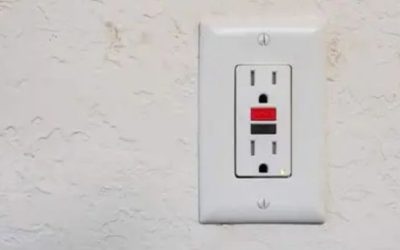
- Skipping GFCI where required. Garage receptacles need GFCI protection in most jurisdictions. If a compressor nuisance-trips a GFCI, the fix is a different GFCI breaker or checking the motor for a ground fault, not removing the protection.
The Short Answer
Most garage air compressors that plug into a standard outlet need a dedicated 20-amp, 120-volt circuit with 12-gauge wire. Small pancake and hotdog units drawing 8 to 12 amps will run on a 15-amp circuit if nothing else is on it, but they trip breakers as soon as a refrigerator or shop light shares the line. Compressors of 26 to 30 gallons with a 1.5- to 2-horsepower motor generally pull 13 to 15 amps running and two to three times that on startup, which is why they want their own 20-amp breaker. Anything 60 gallons and up is almost always 240 volts and needs a 20- or 30-amp double-pole breaker on 12- or 10-gauge wire. Read the nameplate, size the breaker at 125 percent of the running amps rounded up to the next standard size, and give the compressor its own circuit.
Standard Sizes
Breaker size follows the motor’s full-load amps (FLA), which is printed on the compressor’s data plate. The table matches typical garage compressors to the circuit they need, along with the physical footprint you will need to plan for.
Our top picks


As an Amazon Associate we earn from qualifying purchases at no extra cost to you.
| Compressor class | Motor | Running amps | Breaker | Wire gauge | Receptacle | Typical footprint |
|---|---|---|---|---|---|---|
| 1 to 6 gal pancake or hotdog | 0.8 to 1.0 HP, 120 V | 7 to 12 A | 15 A (dedicated) or 20 A | 14 AWG (2.1 mm²) or 12 AWG (3.3 mm²) | NEMA 5-15 | 18 x 18 x 20 in (46 x 46 x 51 cm), 30 to 40 lb |
| 8 to 20 gal portable | 1.5 HP, 120 V | 12 to 14 A | 20 A dedicated | 12 AWG (3.3 mm²) | NEMA 5-20 | Horizontal 20 gal: 44 x 18 x 30 in (112 x 46 x 76 cm), 75 to 110 lb |
| 26 to 30 gal vertical | 1.5 to 2 HP, 120 V | 13 to 15 A | 20 A dedicated | 12 AWG (3.3 mm²) | NEMA 5-20 | 24 x 20 x 48 in (61 x 51 x 122 cm), 100 to 160 lb |
| 30 gal dual-voltage | 2 HP, 120/240 V | 15 A at 120 V or 7.5 A at 240 V | 20 A at 120 V or 15 A double-pole at 240 V | 12 AWG (3.3 mm²) | NEMA 5-20 or 6-15 | 26 x 22 x 52 in (66 x 56 x 132 cm), 130 to 200 lb |
| 60 gal single-stage | 3 to 3.7 HP, 240 V | 15 to 17 A | 20 A double-pole (some makers specify 30 A) | 12 AWG (3.3 mm²); 10 AWG (5.3 mm²) for 30 A | NEMA 6-20 or hardwired | 30 x 28 x 70 in (76 x 71 x 178 cm), 250 to 400 lb |
| 80 gal two-stage | 5 HP, 240 V | 21 to 24 A | 30 A double-pole | 10 AWG (5.3 mm²) | Hardwired to disconnect | 33 x 30 x 78 in (84 x 76 x 198 cm), 400 to 600 lb |
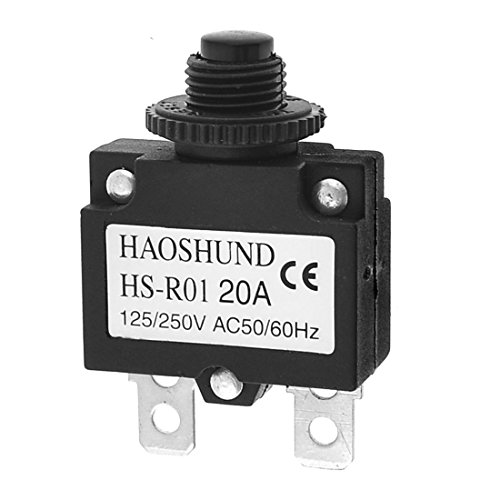
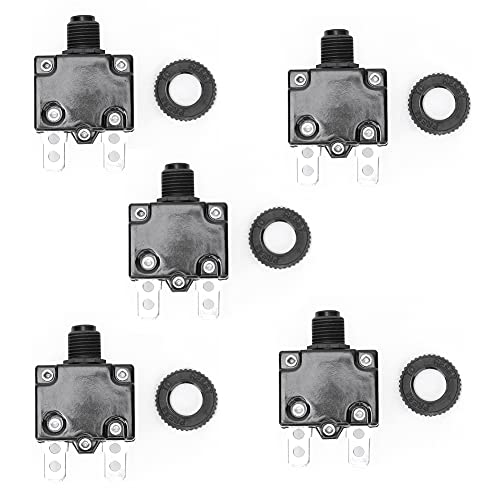
Do not confuse the panel breaker with the small reset button on the compressor itself. That button is a thermal overload protector built into the motor housing or pressure switch, and it trips when the motor overheats. Replacements are inexpensive and sold by amperage: 20-amp overload protectors from uxcell run about $8, and 12-amp versions for smaller units sell for around $10 singly or about $10 for a 5-pack from brands like Ycauty. Matching that protector to the motor’s rated amps matters just as much as matching the panel breaker, because a 20-amp protector on a 12-amp motor will let the windings cook before it trips.
How to Measure Your Space
- Read the nameplate. Find the running amps (often labeled FLA or “Amps”) and voltage. Ignore “peak horsepower.” A label reading 120 V, 15 A tells you everything you need.
- Size the breaker. Multiply running amps by 1.25 and round up to the next standard breaker: 15, 20, 25, or 30 amps. A 13-amp compressor becomes 16.25, so a 20-amp breaker. Never exceed the maximum breaker size printed on the compressor label or in the manual.
- Match the wire to the breaker. 15 A uses 14 AWG, 20 A uses 12 AWG, 30 A uses 10 AWG. If the run from panel to outlet exceeds 50 feet (15 m), go one size heavier to limit voltage drop, which causes hard starts and hot motors.
- Measure the distance to the panel. Pace off the actual cable route along walls and ceilings, not the straight line. Add 10 feet (3 m) for connections and drops. This determines both the wire cost and whether you need to upsize.
- Check the panel for space. A 120 V circuit needs one open slot; a 240 V circuit needs two adjacent slots for a double-pole breaker. If the panel is full, a tandem breaker or subpanel may be required.
- Locate the receptacle. Place it within 6 feet (1.8 m) of where the compressor will sit so the factory cord reaches without an extension. Mount it at 48 inches (122 cm) so it stays above a rolling cart and out of splash range.
- Plan the compressor’s footprint. Leave at least 12 inches (30 cm) of clearance around the pump and motor for cooling airflow and access to the tank drain valve underneath.
By Room or Use Case
Attached garage with a pancake compressor for nailers and tires
A 6-gallon unit at 8 to 12 amps can share a 20-amp garage receptacle circuit as long as you are not running a shop vac or a freezer on the same circuit at the same time. Code in most areas already requires garage receptacles to be GFCI protected and, in newer homes, on a 20-amp circuit, so many garages are ready without any panel work.
Detached garage or shop on a single 20-amp feed
If the whole building runs on one 20-amp circuit, a 26- to 30-gallon compressor at 13 to 15 amps will trip it every time the lights and a saw are also on. Either run a dedicated 20-amp circuit from the house panel, or install a small subpanel (60 amps is typical, $150 to $300 in parts) to give the compressor and tools their own breakers.
Home shop with a 60-gallon compressor
This class needs 240 volts. A 3- to 3.7-horsepower motor at 15 to 17 amps takes a 20-amp double-pole breaker on 12-gauge wire in most cases; some manufacturers call for 30 amps and 10-gauge, so follow the manual. Install a disconnect switch within sight of the compressor. An electrician typically charges $300 to $700 for a new 240 V circuit in 2026, depending on the run length.
Compressor in a cold garage
Below about 40 degrees Fahrenheit (4 degrees Celsius), oil thickens and startup current spikes and lasts longer. Compressors that run fine in summer on a 15-amp breaker trip it in January. Upgrade to a 20-amp circuit, switch to synthetic compressor oil, and let the unit warm up with the tank drain open for a minute.
Compressor on a generator or extension cord
Startup draw of 30 to 45 amps for a fraction of a second is normal for a 1.5 to 2 HP motor. A generator needs roughly 3,000 to 4,000 starting watts for a 30-gallon compressor. If an extension cord is unavoidable, use 12 gauge up to 50 feet or 10 gauge up to 100 feet; a 16-gauge cord will cause the breaker to trip on startup and can overheat.
Common Sizing Mistakes
- Putting a bigger breaker on the same wire. Swapping a tripping 15-amp breaker for a 20-amp on 14-gauge wire is a fire hazard. The wire must be upsized to 12 gauge at the same time.
- Sizing by horsepower. “6 HP peak” compressors that plug into a 120 V outlet are really 1.5 to 2 HP. Use the amperage on the nameplate.
- Sharing the circuit with a refrigerator or freezer. Two motors starting at once will trip a 20-amp breaker and can shorten the life of both.
- Ignoring the long run to a detached building. Voltage drop over 100 feet of 12-gauge wire at 15 amps is about 4 to 5 percent, enough to cause hard starts. Use 10 gauge for runs over 75 feet.
- Bypassing the thermal overload. Wiring around a tripping reset button instead of replacing a $8 to $10 protector or fixing the cause (low voltage, clogged intake filter, worn pump) leads to a burned-out motor.
- Using a standard breaker where the manual asks for a specific type. Some 240 V compressors specify a particular breaker rating or a time-delay fuse for the motor’s inrush; use what the manufacturer lists.
- Skipping GFCI where required. Garage receptacles need GFCI protection in most jurisdictions. If a compressor nuisance-trips a GFCI, the fix is a different GFCI breaker or checking the motor for a ground fault, not removing the protection.
FAQ
Can I run a 30-gallon air compressor on a 15-amp circuit?
Usually not reliably. A 1.5- to 2-HP, 120 V motor draws 13 to 15 amps running and 30 amps or more for an instant at startup. On a 15-amp breaker shared with anything else, it will trip. A dedicated 20-amp circuit with 12-gauge wire is the correct setup.
What is the difference between the breaker in my panel and the reset button on the compressor?
The panel breaker protects the wiring in your walls from overcurrent. The reset button on the compressor is a thermal overload protector that shuts the motor off when it gets too hot from a stalled pump, low voltage, or too many start cycles. Both must be sized to the motor. Overload protectors are rated in amps (12 A and 20 A are common) and cost $8 to $10 to replace.
Do I need a 240-volt circuit for a garage compressor?
Only for 60-gallon and larger units, or dual-voltage 30-gallon models you choose to wire for 240 V. Running a dual-voltage compressor at 240 V halves the current, so it starts easier and runs cooler, but it requires a double-pole breaker and a NEMA 6-15 or 6-20 receptacle. Compressors 30 gallons and under that ship with a standard plug are designed for 120 V.
Why does my compressor trip the breaker only in winter?
Cold oil and cold air raise the load on the motor at startup, stretching the inrush current from a fraction of a second to a second or more. That is enough to trip a 15-amp breaker that holds in summer. Solutions are a 20-amp dedicated circuit, synthetic oil rated for low temperatures, and opening the tank drain briefly so the pump starts with no back pressure.