Key takeaways
- Best Ladder Storage Hooks for Safe Garage Organization The best ladder storage hooks are heavy-duty steel hooks rated for at least 50–75 pounds per pair, with 4–6 inches of usable arm depth, padded contact surfaces, and mounting hardware that matches…
Best Ladder Storage Hooks for Safe Garage Organization
The best ladder storage hooks are heavy-duty steel hooks rated for at least 50–75 pounds per pair, with 4–6 inches of usable arm depth, padded contact surfaces, and mounting hardware that matches the wall structure rather than relying on drywall anchors alone.
That specification suits most household extension ladders and step ladders, but the right choice depends on the ladder’s folded width, actual weight, storage height, and how often you need to take it down. A compact step ladder can use a shallow utility hook, while a 24-foot extension ladder generally needs two widely spaced, deeply supported hooks or a purpose-built horizontal rack.
Our top picks


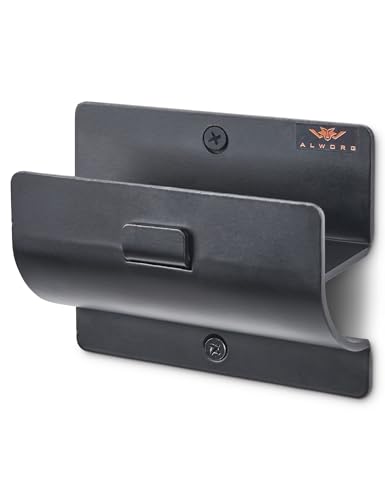

As an Amazon Associate we earn from qualifying purchases at no extra cost to you. Ratings are shown as listed on Amazon.
Quick comparison: which ladder hook fits your situation?
| Storage situation | Recommended hook type | Minimum useful specifications | Important clearance |
|---|---|---|---|
| Lightweight step ladder | Single or paired utility hooks | 30–50 lb pair rating; 3–4 in arm depth | At least 2 in above the ladder’s highest obstruction |
| 6–12 ft extension ladder | Paired padded storage hooks | 75 lb pair rating; 4–6 in arm depth | 6–8 in below the ceiling or garage door path |
| 16–24 ft extension ladder | Heavy-duty horizontal rack or four-hook layout | 100–150 lb total rating; 6 in or deeper arms | 12 in from tracks, lights, vehicles, and door mechanisms |
| Finished or painted ladder rails | Vinyl-, rubber-, or foam-coated steel hooks | Protective coating covering every contact edge | Allow extra room for coating thickness and easy removal |
| Rental or non-structural wall | Freestanding rack or floor-supported system | Base rated for the ladder’s full weight | Keep a stable footprint of roughly 18–24 in deep |
What to look for in the best ladder storage hooks
Weight rating: judge the pair, not just one hook
Manufacturers may state a rating per hook, per pair, or for the entire rack. Check which one applies before comparing numbers. A ladder weighing 45 pounds should not be stored on hooks with a 50-pound maximum if that figure refers to the complete system. A useful margin is at least 25 percent above the ladder’s actual weight; for frequently moved ladders, a 50 percent margin is more reassuring.
Remember that a ladder can impose more than its static weight. Pulling one end off the hook, bumping the wall, or placing the ladder onto only one hook briefly concentrates the load. For a 35-pound aluminum extension ladder, choose a pair rated for at least 50–75 pounds total. For a heavy fiberglass ladder or a long multi-section ladder, look for 100 pounds or more and use additional support when the manufacturer permits it.
Arm depth and shape prevent roll-off
Arm depth is the horizontal distance from the wall plate to the inside of the hook. A 3-inch arm may hold a narrow step ladder, but it can be marginal for a thick extension ladder with bulky end caps or rope-and-pulley hardware. Four to six inches is a more versatile range for household ladders.
The hook should cradle the ladder rail instead of supporting it on a sharp point. A shallow, open J-hook can allow a round rail to roll outward. A deeper U-shaped cradle or hook with a retaining lip is safer, provided you can still lift the ladder free without excessive force. Measure the folded ladder’s thickest point, then select a hook with roughly 1 inch of spare depth rather than an oversized opening that lets the ladder shift.
Protective coatings matter more than appearance
Powder-coated steel resists ordinary garage humidity and is usually more durable than thin painted steel. It does not, however, protect a ladder from scuffs where metal meets metal. For painted aluminum, fiberglass, or ladders stored near a finished wall, choose hooks with molded vinyl, rubber, or dense foam sleeves.
Inspect the coating at the hook’s front lip and inside bend. Those areas wear first. A removable sleeve is convenient to replace, while a permanently bonded coating is less likely to slide off during removal. Avoid exposed screw heads or rough welds at contact points; they can scratch rails and gradually damage fiberglass surfaces.
Mounting hardware and stud requirements
The wall structure is more important than an impressive load rating. In a typical framed garage wall, mount the hooks into the centers of wall studs using structural wood screws of an appropriate length—often 2½ to 3 inches after accounting for the hook plate and drywall. Do not substitute ordinary drywall screws.
For a pair of hooks, placing each hook on a separate stud can distribute the load well, but the spacing must support the ladder without bending it. A 6–8 foot ladder commonly works with hooks 24–48 inches apart, depending on the manufacturer’s instructions and the ladder’s rail construction. Long extension ladders may need three or four support points, especially if stored horizontally.
If the desired location does not align with studs, attach a substantial wood mounting board across two or more studs first. Then fasten the hooks to that board. This is generally more dependable than using hollow-wall anchors for a heavy ladder. Toggle bolts may be suitable for some light step ladders when the hook manufacturer allows them, but they are a poor default for long, heavy extension ladders because repeated loading can loosen the wall surface.
For concrete or masonry walls, use anchors specifically rated for the substrate and load. The required drill bit, embedment depth, and spacing vary by anchor type. A masonry installation that is close to a garage door, electrical conduit, or plumbing also deserves extra caution before drilling.
Clearance: measure the storage route, not just the wall
Before installing anything, measure the ladder folded and mark its complete swing path. Leave at least 12 inches from garage-door tracks, openers, light fixtures, and sprinkler piping. Keep the ladder clear of the vehicle’s doors and mirrors; a practical target is 24–30 inches beyond the vehicle’s parked envelope where you need to walk or unload.
For ceiling-adjacent storage, preserve enough room to lift the ladder onto the hooks. A ladder mounted only 2 inches below the ceiling may technically fit but can be frustrating or unsafe to remove. Allow about 6–8 inches above the ladder for a normal lift, and more if the ladder is long or awkward. If a sectional ladder must be tilted during removal, calculate the diagonal clearance to the nearest obstruction.
Never place a wall-mounted ladder where it could block an electrical panel, water shutoff, furnace access, or the required clearance around a garage door. A stored ladder should be restrained against accidental sliding, but the restraint must release without climbing on a vehicle or unstable box.
Head-to-head: common ladder storage approaches
| Storage method | Strengths | Limitations | Best use |
|---|---|---|---|
| Two padded wall hooks | Low cost, compact, quick to install | Requires accurate stud placement and careful spacing | Most 6–12 ft household ladders |
| Four-hook wall layout | Spreads weight and limits sagging | More drilling; removal can require two people | Long or heavy extension ladders |
| Horizontal ladder rack | Better cradle support and predictable load distribution | Projects farther from the wall and costs more | Large fiberglass or multi-section ladders |
| Ceiling-mounted rack | Uses otherwise wasted overhead space | Harder access and more demanding installation | Low-traffic garages with tall ceilings |
| Freestanding ladder stand | No wall drilling; movable | Uses floor space and can tip if poorly loaded | Renters or garages with unsuitable walls |
Installation checklist for a secure result
- Weigh the ladder or confirm its manufacturer-listed weight, including accessories that remain attached.
- Measure the folded width, thickest rail section, overall length, and any protruding feet or end caps.
- Locate studs or identify the masonry substrate. Plan a mounting board if the hook positions will not align with studs.
- Mark the hook height and spacing while checking door tracks, vehicles, lights, and walking clearance.
- Install the hooks with the specified structural screws or masonry anchors, keeping the plates flat against the wall.
- Check that every fastener is tight and that the hooks do not flex, twist, or pull away from the wall.
- Lift the ladder into place with a second person for long models, then add a strap or retaining clip if the hook design supports one.
- After several days, recheck the fasteners and inspect the wall, coating, and hook bends for movement or damage.
Final buying recommendation
For most garages, the best ladder storage hooks are a pair of padded, powder-coated steel hooks with 4–6 inch arms, a clearly stated 75-pound-or-higher pair rating, and mounting holes designed for structural screws. Choose a deeper horizontal rack or additional support points for heavy fiberglass and long extension ladders. If you cannot reach studs or masonry safely, use a floor-supported rack instead of weakening the installation with undersized drywall anchors.
The safest system is not necessarily the hook with the largest published capacity. It is the one whose rating, arm depth, coating, fasteners, stud layout, and removal clearance all match the specific ladder and the real constraints of your garage.