Key takeaways
- Moisture: Tape a 2-by-2-foot plastic sheet tightly to the slab for at least 24 hours. Condensation or darkening beneath it indicates a moisture issue that should be investigated before applying a film-forming coating. This is only a screening test; follow the coating manufacturer’s moisture-vapor test requirements for a definitive result.
- Concrete profile: New or power-troweled concrete may be too smooth for reliable coating adhesion. Mechanical grinding or an approved acid-etching process may be required. Grinding is generally more predictable because it removes laitance and exposes a consistent profile.
- Cure and temperature: Confirm the slab’s age, surface temperature, air temperature, humidity limits, recoat window, and vehicle-return time. Cold concrete can extend curing dramatically.
- Coverage: Measure length times width, subtract only areas that truly will not be coated, and add at least 10% for waste and absorption. A 12-by-24-foot two-car garage is 288 square feet before expansion joints, edges, and irregularities are considered.
- Safety: Choose a slip-resistant additive or broadcast aggregate if the floor will become wet. A very glossy, smooth coating can be hazardous when rain or snow is tracked indoors.
The best garage floor sealer depends on what you need to prevent: penetrating silane/siloxane for moisture, acrylic for a low-cost dust and stain barrier, polyurethane for stronger chemical and tire resistance, or epoxy for the most complete hard-wearing garage-floor system.
For most attached garages, the practical choice is a two-part epoxy coating with a compatible primer and topcoat; choose polyurethane instead when UV exposure, flexibility, and abrasion resistance matter more than maximum film thickness. If you mainly want to reduce concrete dust without changing the floor’s appearance, use a penetrating sealer.
Our top picks

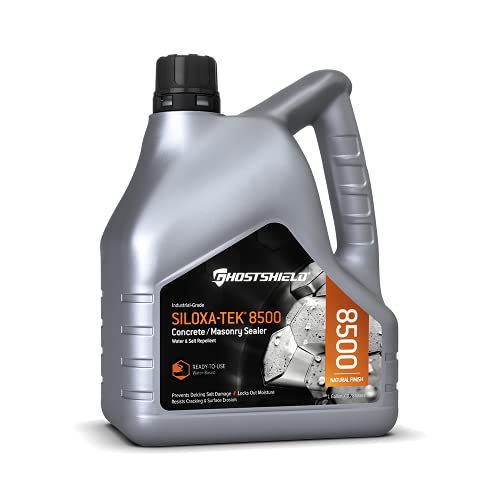
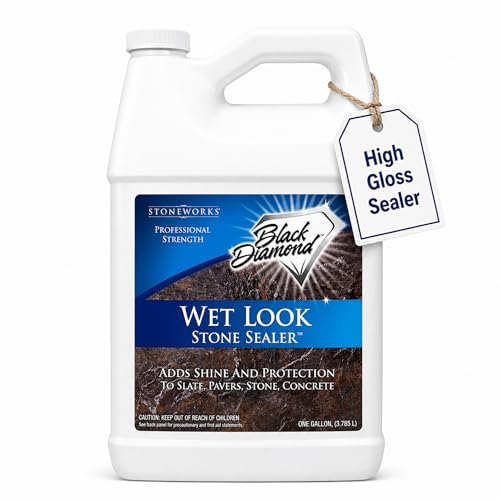
As an Amazon Associate we earn from qualifying purchases at no extra cost to you. Ratings are shown as listed on Amazon.
Best garage floor sealers by situation
| Garage situation | Best choice | Why it fits | Main compromise |
|---|---|---|---|
| Damp slab or moisture vapor concern | Breathable penetrating silane/siloxane | Repels liquid water while allowing some vapor movement | Does little for oil stains, tire marks, or appearance |
| Dusty concrete and light household storage | Penetrating densifier or acrylic sealer | Inexpensive way to bind dust and simplify cleaning | Limited resistance to hot tires and solvents |
| Daily parking, oil drips, and winter road salt | Two-part epoxy system | Creates a thick, seamless, stain-resistant surface | Moisture or poor preparation can cause peeling |
| Hot tires and frequent abrasion | Epoxy base with polyurethane topcoat | Combines adhesion and thickness with a tougher wearing surface | More expensive and time-sensitive to install |
| Unheated garage with temperature swings | Flexible polyurethane, or a properly specified epoxy system | Better tolerance for movement and abrasion than basic acrylic | Requires careful substrate and product compatibility checks |
| Quick cosmetic improvement on a sound slab | Water-based acrylic or single-component coating | Fast application and relatively simple cleanup | Usually the shortest service life under parked vehicles |
How the four sealer types compare
1. Penetrating sealers: best for moisture management
Penetrating sealers soak into the concrete rather than forming a thick visible film. Silane and siloxane products are commonly used to reduce water absorption on porous masonry and concrete. They are useful where rainwater, melting snow, or humidity reaches the slab and where preserving a natural concrete appearance is important.
A penetrating sealer can help reduce dampness-related staining and make spills easier to clean, but it is not a substitute for drainage, vapor control, or crack repair. It will not provide the glossy, colored finish associated with garage floor coatings. It also offers only limited protection from gasoline, motor oil, brake fluid, and long-term tire contact.
Use this category when the concrete is structurally sound, you want vapor permeability, and the primary problem is water absorption or dust. Check the product data sheet carefully: some water-repellent sealers are unsuitable for floors that will receive paint, epoxy, or another film-forming coating.
2. Acrylic sealers: best for low cost and easy application
Acrylic sealers form a relatively thin film that can make concrete look darker, slightly glossier, or more uniform. Water-based acrylics generally have lower odor and easier cleanup, while solvent-based versions may deepen the color more strongly but require greater ventilation and fire-safety care.
Acrylic is a reasonable choice for a lightly used garage, workshop, or utility slab. It helps control dust and provides some resistance to water and staining. The trade-off is wear: vehicle traffic, grit under tires, and repeated chemical exposure can dull or remove the film sooner than they would a thicker epoxy or polyurethane system.
Do not confuse “dry to the touch” with ready for parking. Follow the manufacturer’s cure time for foot traffic and vehicle traffic, which may differ substantially with temperature and humidity. A garage that is 10 by 20 feet has 200 square feet of floor, but buying exactly 200 square feet of coverage leaves no allowance for the porous edges, roller loss, or a second coat.
3. Polyurethane: best for abrasion and chemical resistance
Polyurethane coatings are usually thinner than epoxy but can provide excellent resistance to abrasion, chemicals, and tire contact. Aliphatic polyurethane generally holds color and gloss better in sunlight than many basic epoxies, making it useful near open garage doors or in garages with strong daylight.
Polyurethane is often used as a topcoat over epoxy rather than as the only layer. The epoxy supplies adhesion and film build; the polyurethane adds a harder-wearing surface and can improve resistance to ultraviolet light and hot-tire marking. Some polyurethane systems are moisture-sensitive during application, so the slab must be dry and the air conditions must remain within the stated temperature and humidity range.
The limitations are application complexity and cost. A thin, smooth coating reveals grinding marks, pinholes, and contamination. It may also provide less crack-bridging and less visual hiding than a broadcast-flake system. Use a product designed for concrete floors, not a general-purpose wood or industrial coating selected without checking its substrate requirements.
4. Epoxy: best for a complete garage floor finish
Two-part epoxy is the leading choice when the goal is a substantial, stain-resistant garage floor coating. Resin and hardener react to form a dense film that can tolerate vehicle traffic, oil drips, dropped tools, and regular washing better than a basic acrylic sealer.
Epoxy’s key weakness is not normal wear but adhesion failure. Moisture vapor rising through the slab, curing compound left on the surface, oil contamination, smooth unprofiled concrete, and installation outside the product’s temperature window can lead to bubbling, peeling, or delamination. A garage floor may look dry while still transmitting enough vapor to defeat a coating.
Epoxy also becomes less forgiving as the system becomes more decorative. Decorative flakes improve grip and hide dirt, but they require a clear topcoat if you want better resistance to abrasion and chemicals. Broadcast quartz or aggregate can improve traction, although excessive texture makes sweeping and squeegeeing harder.
Moisture, stains, tire pickup, and wear: the real trade-offs
| Performance concern | Penetrating | Acrylic | Polyurethane | Epoxy |
|---|---|---|---|---|
| Liquid-water repellency | Very good for porous concrete | Good while film remains intact | Good | Good, but failures can trap or admit moisture at weak spots |
| Vapor permeability | Usually highest | Varies by formula | Usually limited | Usually limited |
| Oil and chemical stains | Low to moderate | Moderate | High | High when fully cured |
| Hot-tire pickup | Not a meaningful protective film | Fair to poor depending on formula | Very good | Good; better with a compatible topcoat |
| Resistance to traffic wear | Does not wear as a film | Fair | Very good | Very good |
| Repairability | Usually simple reapplication | Relatively simple | Requires careful recoat preparation | Repairs may remain visible and require mechanical preparation |
What to check before buying
- Moisture: Tape a 2-by-2-foot plastic sheet tightly to the slab for at least 24 hours. Condensation or darkening beneath it indicates a moisture issue that should be investigated before applying a film-forming coating. This is only a screening test; follow the coating manufacturer’s moisture-vapor test requirements for a definitive result.
- Concrete profile: New or power-troweled concrete may be too smooth for reliable coating adhesion. Mechanical grinding or an approved acid-etching process may be required. Grinding is generally more predictable because it removes laitance and exposes a consistent profile.
- Cure and temperature: Confirm the slab’s age, surface temperature, air temperature, humidity limits, recoat window, and vehicle-return time. Cold concrete can extend curing dramatically.
- Coverage: Measure length times width, subtract only areas that truly will not be coated, and add at least 10% for waste and absorption. A 12-by-24-foot two-car garage is 288 square feet before expansion joints, edges, and irregularities are considered.
- Safety: Choose a slip-resistant additive or broadcast aggregate if the floor will become wet. A very glossy, smooth coating can be hazardous when rain or snow is tracked indoors.
A sensible installation sequence
- Remove vehicles, shelving, floor mats, and anything attached to the slab. Plan an exit route so you do not walk across wet coating.
- Repair cracks and spalled areas with materials compatible with the chosen system. Flexible crack sealants may not accept epoxy.
- Degrease repeatedly, rinse thoroughly, and allow the concrete to dry. Oil can migrate back to the surface after the first cleaning.
- Mechanically profile the floor or use the specified etching method, then remove all dust with a commercial vacuum and final cleaning.
- Apply primer, base coat, flakes, and topcoat within each product’s recoat window. Keep a wet edge and mix only the amount that can be applied during its working time.
- Protect the finished floor from water, dirt, foot traffic, and vehicles for the full stated cure period—not merely until it feels hard.
Bottom line
Choose a penetrating silane or siloxane sealer for moisture management and natural-looking concrete, acrylic for economical dust and light-duty protection, polyurethane for superior abrasion and hot-tire performance, and epoxy for the most complete decorative garage-floor system. For a frequently used garage, the strongest all-around specification is usually a properly prepared slab, a compatible two-part epoxy base, and a polyurethane topcoat with measured slip resistance. The preparation and moisture assessment matter as much as the sealer chemistry, so the “best” product cannot compensate for oil-soaked or vapor-prone concrete.