Key takeaways
- 456 CFM and 15.8 N back up its demanding-cleanup positioning.
- Auxiliary handle helps guide the tube around tight property features.
- Cruise-control throttle offers a steadier setting for extended passes.
A gas leaf blower still makes practical sense when repeated battery changes would interrupt a yard-cleanup session, but not every gas machine handles wet leaves or long sessions equally well. A handheld model is maneuverable around cars and planting beds; a backpack unit shifts weight to your shoulders for a different workload. This roundup focuses on five named handheld blowers, with special attention to airflow measured at the nozzle, airspeed, carrying weight, fuel preparation, and whether you can actually buy the model in your state.
Quick Verdict: The ECHO PB-2620 is our Best Overall handheld pick because its maker lists 456 CFM at the nozzle, 172 MPH with the round pipe, and 15.8 N of blowing force, plus useful throttle controls. The less expensive ECHO PB-2520 is more sensible when an 8.6-pound dry weight matters more than extra handles. These are editorial recommendations based on published information as of October 2026, not in-house testing. Check current local pricing and gas-equipment rules before purchasing.
As an Amazon Associate we earn from qualifying purchases.
By DIY Ideas 4 Home Editorial Team
The 5 Best Gas-Powered Handheld Blowers Reviewed
We selected these machines from current U.S. manufacturer product pages, specifications, and operator documentation, using independent editorial reporting only as supplementary context. Published manufacturer prices range from $199.99 for the ECHO PB-2520 to $349.99 for the STIHL BG 86 C-E as of October 2026. Nozzle CFM is particularly important: Husqvarna’s 125B is advertised with 470 CFM inside the housing, but its pipe output is 425 CFM. The table uses pipe or round-nozzle figures wherever documented, rather than equating different measurement locations.
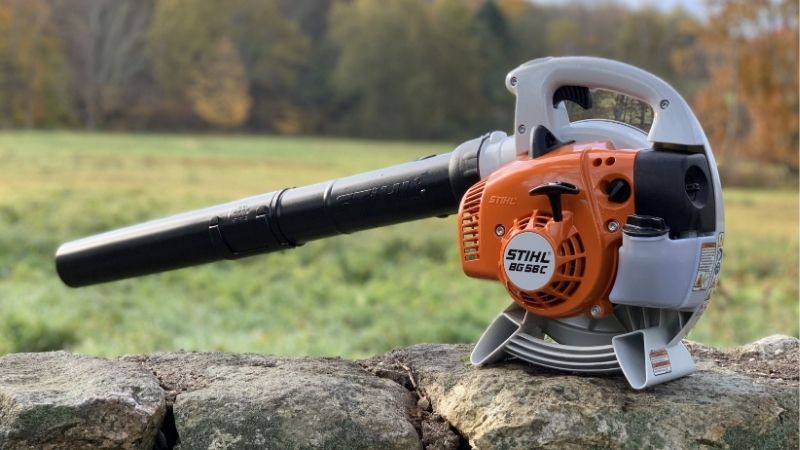
| Product | Best For | Key Spec | Listed Price (as of October 2026) | Watch Out For |
|---|---|---|---|---|
| ECHO PB-2620 | Best Overall: demanding handheld cleanup | 456 CFM at round nozzle; 172 MPH; 15.8 N; 9.8 lb dry | $329.99 MSRP | Standard recoil start and mixed fuel |
| ECHO PB-2520 | Best Budget: repeated lighter passes | 453 CFM at nozzle; 170 MPH; 15.8 N; 8.6 lb dry | $199.99 MSRP | Fewer handling features than PB-2620 |
| Husqvarna 125B 952711925 | Best for nozzle control near landscaping | 425 CFM in pipe; 130 MPH round, 170 MPH flat; 12.5 N | $219.99 MSRP | 470 CFM housing claim is not nozzle output |
| STIHL BG 86 C-E 42410111764US | Best for frequent restarts | 444 CFM round nozzle in legacy catalog; 170 MPH round; 15 N | $349.99 selected U.S. price | Not available for purchase or delivery in California |
| Shindaiwa EB262 | Best for dusty professional work | 456 CFM at nozzle; 172 MPH; 15.8 N; 9.8 lb dry | $329.99 MSRP | Dealer access matters more than a spec-sheet tie |
ECHO PB-2620: Best Overall Handheld Power
Best For: Homeowners and working crews needing high nozzle output without carrying a full backpack rig.
For a property with several driveways, paved paths, and leaf-filled corners, the PB-2620 is the handheld option we would price first. Its secondary handle can help when directing a stiff air stream low across the ground, and cruise control avoids holding the trigger in one position through longer passes. Pro Tool Reviews also selected this model as its gas-handheld favorite in its published buying guide. That external assessment supports the pick, but it does not replace measuring the specific model’s published performance.
ECHO’s PB-2620 product page lists a 25.4 cc two-stroke engine, 456 CFM at the round nozzle, 172 MPH, and 15.8 N. The manufacturer’s MSRP is $329.99 in October 2026. Its detailed PB-2620 Specifications document distinguishes the round outlet from the flat pipe, which is rated at 428 CFM and 180 MPH. The nozzle change is useful for shifting from broad leaf movement to a more concentrated stream, but the air volume and speed figures must not be combined across nozzles as though they came from one configuration.
With the pipes attached, ECHO lists a 9.8-pound dry weight, 38.3-inch overall length, and 11.1-inch body width. That makes the PB-2620 portable beside a parked car but a noticeable load when held one-handed for a prolonged session. Its fuel tank holds 20.3 fluid ounces; the company’s specifications call for 50:1 gasoline-to-two-stroke oil with at least 89 octane fuel. Budget for proper fuel storage and routine air-filter attention, rather than treating the purchase price as the entire ownership cost.
Pros:
- 456 CFM and 15.8 N back up its demanding-cleanup positioning.
- Auxiliary handle helps guide the tube around tight property features.
- Cruise-control throttle offers a steadier setting for extended passes.
Cons:
- Traditional recoil starting lacks STIHL’s spring-assisted Easy2Start mechanism.
- Greater carrying weight than the lighter PB-2520 becomes noticeable over time.
Who Should Buy It: Choose it for repeated leaf-clearing work with room to maneuver; buy the ECHO PB-2520 instead when lower price and less dry weight matter most.
ECHO PB-2520: Best Budget for Homeowners
Best For: Cost-conscious buyers clearing ordinary leaves from walks, decks, and residential lawns several times a season.
The interesting thing about the PB-2520 is how little raw blowing force you give up compared with the more expensive ECHO model. Its 15.8 N published figure matches the PB-2620, while the lower dry weight makes it easier to move from front steps to a backyard path. The compromise is not a dramatic loss of quoted power; it is a simpler control package without the professional model’s secondary handle. For a household that stores the blower between short weekly cleanups, that may be an excellent trade.
ECHO’s U.S. PB-2520 product page currently shows $199.99 MSRP, 453 CFM at the nozzle, 170 MPH, and a 25.4 cc two-stroke engine. The curved blower pipe is intended to help control rotational movement at the user’s wrist. This model has an 18.6-fluid-ounce fuel tank and tool-free access to the air filter. In a direct comparison, the PB-2520 and PB-2620 have similar published air figures, but do not assume that means identical feel when holding them under load.
According to ECHO’s PB-2520 Specifications page, the machine weighs 8.6 pounds dry with pipes and measures 37.7 inches long in operating configuration. It uses a 50:1 fuel mixture, and the manufacturer specifies 89-octane unleaded gasoline. This is a useful starting point for first-time gas-tool owners, provided they are comfortable with carburetor care, winter storage, and the need to keep a clean supply of mixed fuel rather than filling from the lawn mower’s regular gas can.
Pros:
- $199.99 maker price creates a substantial gap below premium handhelds.
- 8.6-pound dry weight limits the burden during repeated repositioning.
- Curved pipe and double-grid intake address control and clothing interference.
Cons:
- No separate auxiliary handle for guiding heavier debris piles.
- Smaller fuel tank than the PB-2620 can mean more refill stops.
Who Should Buy It: Prefer it for short residential sessions; move to the STIHL BG 86 C-E when an easier repeated starting procedure is worth the higher price.
Husqvarna 125B: Best for Targeted Airflow
Best For: Yard owners who switch between broad clearing and precise work beside mulch, gravel, or flower beds.
Husqvarna provides unusually clear data on how much airflow changes between the fan housing and the working pipe. That transparency matters when you intend to blow leaves along an edge without sending mulch across a walkway. The 125B includes both round and flat nozzles, along with an air-purge primer and an automatically resetting stop switch. The flatter tip can concentrate air to dislodge damp patches, while the round tip is a more predictable starting setup for gentle clearing.
The Husqvarna 125B U.S. product page shows a $219.99 MSRP for SKU 952711925. Its support specifications identify a 28 cc engine, 425 CFM airflow in the pipe, and 12.5 N maximum blowing force. The same document reports 130 MPH with the round nozzle and 170 MPH with the flat nozzle, rather than a single speed that applies to both. The manufacturer’s 470 CFM headline belongs to airflow measured in the housing; using it as a nozzle figure would make a comparison with ECHO or Shindaiwa misleading.
Husqvarna’s 125B support specifications state that the unit weighs 9.4 pounds and has an 18.5-fluid-ounce tank. For storage, note that its open intake and tubes need a dry, protected place away from loose yard debris; the included two nozzle shapes also need to remain together. The company’s June 2026 operator’s manual is the right place to check fuel instructions and filter-service steps for this exact SKU. Also, its 94 dB(A) operator-ear sound-pressure figure cannot be compared directly with ECHO’s published 70 dB(A) reading at 50 feet.
Pros:
- Round and flat nozzles suit different surface and leaf conditions.
- Clear 425 CFM pipe specification prevents inflated shopping comparisons.
- Air-purge primer and returning stop switch streamline ordinary starting.
Cons:
- 12.5 N blowing force trails the professional handheld options.
- Round-nozzle velocity is lower than its 170 MPH flat-tip headline.
Who Should Buy It: Choose it for frequent nozzle changes and around-the-house precision; consider the Shindaiwa EB262 if thicker seasonal leaf piles are the bigger challenge.
STIHL BG 86 C-E: Best for Easier Starting
Best For: Landscapers or homeowners who repeatedly turn a blower off between separate work areas.
Repeated restarts are a genuine annoyance when clearing scattered driveways or working around neighbors who do not want an engine idling between stops. STIHL’s BG 86 C-E addresses that specific friction with the Easy2Start spring-assisted recoil system and a semi-automatic choke. Its anti-vibration features and HD2 air filter add comfort and dust-management considerations, although neither should be mistaken for a guarantee against fatigue or maintenance. It is the premium starting-convenience option here, rather than our default choice on price.
STIHL’s U.S. product page for part 42410111764US shows a selected price of $349.99 as of October 2026, with dealers setting final prices. The page lists 15 N blowing force, a 27.2 cc engine, and current speeds of 170 MPH with the round nozzle and 199 MPH with the flat nozzle. STIHL’s earlier U.S. product literature and Northern Tool’s current listing give 444 CFM at the round nozzle; because published revisions differ in some speed values, confirm which literature your dealer supplies with the current machine rather than mixing years of test figures into one claim.
The BG 86 C-E weighs 9.9 pounds without fuel according to STIHL’s product documentation, while its instruction manual identifies a 14.9-fluid-ounce fuel tank. Expect more fuel stops than with the 20.3-fluid-ounce ECHO PB-2620 under otherwise comparable working conditions, although real fuel use depends on throttle and engine condition. STIHL explicitly says this gasoline model is not available for purchase or delivery in California. A local dealer can also explain approved accessories and parts availability before you invest in a gas platform.
Pros:
- Easy2Start mechanism is designed for a slower, gentler recoil pull.
- Published 15 N force supports serious handheld debris removal.
- HD2 filtration and anti-vibration design address frequent-use annoyances.
Cons:
- $349.99 selected price is the highest among these five models.
- California purchase restriction rules it out for some prospective buyers.
Who Should Buy It: Pay for its convenient starting system if restart frequency is high; the Husqvarna 125B is a lower-cost alternative for occasional work.
Shindaiwa EB262: Best for Dusty Work Sites
Best For: Operators clearing dusty hardscapes or gritty debris who prioritize accessible filtration and dealer service.
The EB262 shares the headline airflow and force figures of ECHO’s PB-2620, but a purchase decision should not stop at a spec tie. Shindaiwa emphasizes a pleated paper main filter backed by a foam prefilter, a double-grid intake, and both round and flared tubes. Those details deserve attention when cleaning parking edges, dry soil paths, and paved work areas where debris can be dusty rather than simply leafy. Dealer coverage and replacement-filter availability may matter more over several seasons than a marginal number on the box.
Shindaiwa’s EB262 Handheld Blower product page lists a $329.99 MSRP in October 2026, with 456 CFM at the nozzle, 172 MPH, and 15.8 N from a 25.4 cc two-stroke engine. Its variable-speed cruise control and secondary handle provide options for controlling direction while the engine runs at a steady setting. The manufacturer’s page states a five-year consumer and two-year commercial warranty, subject to the applicable warranty terms, making the documentation worth comparing with other brands before checkout.
Shindaiwa’s EB262 product page specifies a 9.8-pound dry weight and a 20.3-fluid-ounce tank. Its product documents also identify shoulder-harness attachment points, but the harness itself is an additional purchase, so assess whether that added expense is worthwhile for repeated cleanups. The split paper-and-foam filtration system can be practical for servicing, though it also introduces two elements to inspect. If your nearest Shindaiwa dealer is far away while a local ECHO dealer stocks parts, the service trade may favor the PB-2620 despite the published specification match.
Pros:
- Dual-stage filtering targets grit before it reaches the engine intake.
- Round and flared tubes provide flexibility on hardscape and lawn.
- Published five-year consumer warranty supports a long ownership horizon.
Cons:
- Optional shoulder harness adds cost to the listed machine price.
- Performance figures do not decisively outpace the similarly priced ECHO.
Who Should Buy It: Buy it when a nearby Shindaiwa dealer and dusty surfaces make filtration support valuable; select the ECHO PB-2620 if its controls and local service fit better.
How to Choose a Gas-Powered Leaf Blower
The right machine depends less on engine displacement alone than on what happens at the nozzle and how often the tool must be carried, started, and serviced. Every model in this comparison uses a gasoline engine, so each requires outdoor operation, fuel precautions, and advance checks of local noise rules. California Air Resources Board guidance distinguishes regulations for new small off-road engines from ownership of previously compliant units; an existing engine’s legal status does not prove that a new replacement can be purchased locally.
Compare CFM, MPH, and Blowing Force
CFM describes the volume of air moved, which matters when gathering a wide layer of dry leaves into a windrow. MPH describes outlet speed, relevant when a focused stream must lift debris out of grass seams or nudge wet leaves from pavement. Newtons describe blowing force under the manufacturer’s rating method. For example, ECHO specifies 456 nozzle CFM and 172 MPH for the PB-2620, while Husqvarna records 425 pipe CFM and 130 MPH using the 125B’s round nozzle.
A large housing-airflow number does not mean the same thing as delivered nozzle flow. The 125B is an especially useful warning: Husqvarna quotes 470 CFM inside the housing, but 425 CFM in the pipe. STIHL’s 444 CFM documentation is older than the most recent U.S. product page, so shoppers should ask for current dealer specifications when numbers do not match. Use ratings to narrow candidates, then check whether the supplied nozzle can direct air without blowing mulch into places you just cleaned.
Match Weight and Controls to Cleanup Time
Dry weights here run from ECHO’s 8.6-pound PB-2520 to STIHL’s 9.9-pound BG 86 C-E. Fuel, nozzle choice, and how far the tube extends affect real carrying comfort. A second grip can distribute control effort, but it does not make a heavy blower weightless. People working along a long fence may value cruise control more than someone who starts and stops every few feet around patio furniture.
Recoil-start design also matters when turning off the engine between locations. STIHL’s Easy2Start is a specific spring-assisted feature, whereas the ECHO PB-2620 uses conventional recoil starting. If holding the tool causes wrist strain during a normal trial at a dealer, a backpack unit might be more suitable for that workload. The separate backpack guide covers harnessed alternatives rather than treating them as directly interchangeable with a handheld model.
Budget for Fuel, Service, and Dealer Access
For this set, published purchase prices form a broad entry-to-premium band of about $200 to $350 as of October 2026. A price gap is meaningful only when you know what it buys: the ECHO PB-2520 retains strong published airflow at $199.99, while the $349.99 STIHL variant adds spring-assisted starting. Every one of these machines will also need fuel and basic upkeep. The brand’s specified mixture, air-filter procedure, and storage instructions matter more than a generic online recommendation for all gas engines.
ECHO’s PB-2520 and PB-2620 specification documents call for 50:1 fuel mixed with approved two-stroke oil and 89-octane unleaded gasoline. Other models should be fueled according to their own current operator manuals; never assume a household’s older trimmer uses the same mixture. Store fuel in an approved container and follow the manual when cleaning a clogged filter or preparing the blower for winter. A conveniently located dealer with parts in stock can reduce downtime more effectively than choosing between two machines with nearly identical published CFM.
Check Noise, Exhaust, and Local Restrictions
Sound ratings must be compared under matching test conditions. ECHO states 70 dB(A) at 50 feet for its PB-2620, while Husqvarna gives 94 dB(A) as the 125B’s sound pressure at the operator’s ear. Those measurements are not a valid head-to-head loudness ranking. Gasoline exhaust is also a practical drawback around open windows, people, and pets. Run these engines outside only, and wear eye and hearing protection according to the operator’s instructions.
Before buying, check your city or homeowners association’s rules on operating hours and gas blowers, not just state-level policy. STIHL states that the BG 86 C-E cannot be purchased or delivered in California, and individual municipalities can impose additional limits on using gas-powered equipment. Allow the machine to cool before refueling, keep the air stream away from people and loose gravel, and do not use an engine-driven blower in a garage or enclosed shed. If those limits make gas impractical, a cordless blower may be the better purchase despite its battery management.
Frequently Asked Questions
Gas tools involve some ownership questions that rarely show up in a CFM comparison. These answers address fuel age, damp leaves, accessories, and storage rather than repeating the rankings above.
Can a Gas Handheld Blower Move Wet Leaves?
Yes, particularly when the leaves are damp rather than packed into a thick, muddy layer. Direct the stream beneath the edge of the leaf mass and work in smaller sections. A narrow flat nozzle may loosen stuck debris, while a round nozzle often moves a broader pile more predictably. If large wet piles recur across an extensive property, a harnessed backpack machine may be a better workload match, provided local rules permit it.
Will a Leaf Blower Vacuum or Mulch Leaves?
Not automatically. The five machines reviewed here are primarily blowers, and a collection bag is not included simply because a model runs on gas. STIHL offers vacuum accessories for compatible models, but confirm the precise conversion kit, local availability, and operator instructions before purchasing. If your main challenge is disposing of leaves after gathering them, a separate leaf vacuum or mulcher may save more time than a stronger blower.
Can I Store Mixed Gasoline Until Next Fall?
Do not assume old premixed gasoline will remain suitable through an entire off-season. Fuel age, ethanol content, temperature, and stabilizer use all affect storage guidance, and the engine manufacturer’s manual should take precedence over a general rule. Empty or stabilize fuel only as the relevant manual instructs, keep containers approved and labeled, and avoid storing gasoline near ignition sources. Fresh, correctly prepared fuel is especially important for engines that are difficult to start after storage.
Are Gas Leaf Blowers Allowed Everywhere in the U.S.?
No. State emission standards, local noise ordinances, and outright operating restrictions vary widely. California’s rules for new small off-road engines are distinct from conditions governing existing compliant equipment, and STIHL expressly excludes California sales and delivery of the BG 86 C-E. Ask your city about permissible equipment and hours before paying for a blower that may be inconvenient or unlawful to operate where you live.
Final Thoughts
The ECHO PB-2620 remains our Best Overall gas leaf blower for buyers who want high published nozzle output and professional handheld controls without moving up to a backpack machine. But location can overturn that ranking: if your municipality restricts gas blowers, if accessible servicing is unavailable, or if repeated lifting strains your shoulder, paying more for the PB-2620 will not solve the real problem. First confirm that gas equipment is permitted at your address; then ask a local dealer to demonstrate the exact starting procedure and fuel requirements before checking the current price. For a lighter and less expensive gas option that still publishes nearly the same air figures, the ECHO PB-2520 is the clearest alternative.