Key takeaways
- Ten-minute initial update without waiting for a laboratory report
- Phone-based historical record for recurring checks
- Small plug-in body that can remain in a basement
A radon detector is worth buying when it makes a long-term trend easy to see, not when it promises that one number will settle a home-safety question. Radon is an invisible radioactive gas that enters buildings from the ground; the U.S. Environmental Protection Agency recommends taking action at 4 pCi/L and considering fixes at 2 to 4 pCi/L. These four current monitors suit different ways of checking that risk.
Quick Verdict: The Ecosense EcoQube is our Best Overall choice: its first reading arrives in about 10 minutes and 2.4 GHz Wi-Fi allows ongoing phone-based tracking for $149. Choose the Airthings Corentium Home 223 instead for battery-powered monitoring without an app. Check the current price and whether your room has suitable power and wireless coverage before buying.
As an Amazon Associate we earn from qualifying purchases.
By DIY Ideas 4 Home Editorial Team
The Best Radon Detectors Reviewed
We prioritize recognizable US-market models with documented measurement methods, power requirements and concrete prices. The comparison below separates the ability to view trends from the practical work of monitoring a home; none of these products is described as a substitute for a licensed radon inspection.
| Product | Best For | Key Spec | Listed Price (as of October 2026) | Watch Out For |
|---|---|---|---|---|
| Ecosense EcoQube | Best Overall for connected radon trends | 10-minute initial reading; Wi-Fi; plug-in | $149, Ecosense | Requires power and 2.4 GHz Wi-Fi |
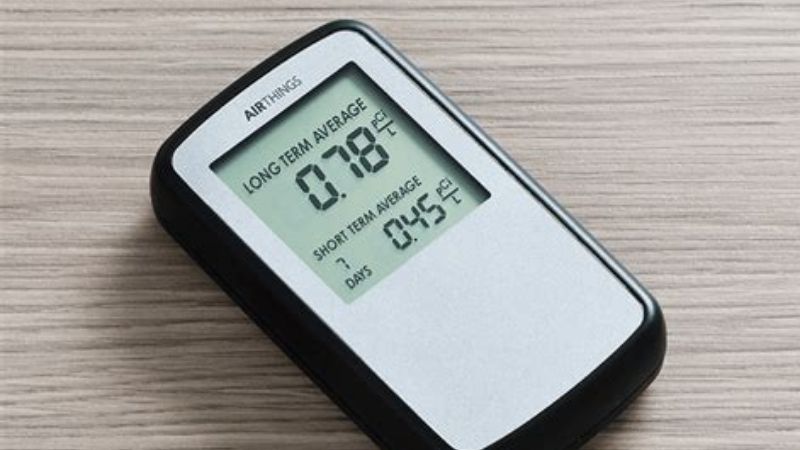
| Airthings Corentium Home 223 | Best battery-operated, no-app monitor | 3 AAA batteries; 0 to 500 pCi/L range | $149.99, Airthings | No remote alerts or Wi-Fi |
| Ecosense EcoBlu | Best visible plug-in alarm | First reading in 10 minutes; visual and audible alert | $119, Ecosense | Outlet required; no smartphone dashboard |
| Airthings View Radon 2989 | Best Wi-Fi monitoring with battery flexibility | 6 AA batteries or USB; Wi-Fi; radon, temperature, humidity | $219.99, Airthings | Costs more and does not measure PM2.5 |
Ecosense EcoQube
Best For: Best Overall for connected radon trends. This model turns repeated readings into a record you can inspect after weather or ventilation changes.
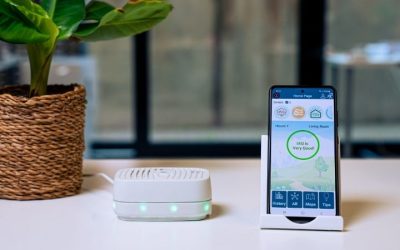
EcoQube is the strongest match for a household that wants to notice changing radon patterns rather than walk downstairs to check a display. Its continuously updating readings can be viewed on the Ecosense app. That matters because an unusually low number one evening cannot represent every season: indoor pressure, openings and weather can all affect radon entry. The connected history gives you a better reason to investigate a pattern while preserving the distinction between a homeowner monitor and a formal real-estate test.
Ecosense lists the EcoQube at $149 on its US product page as of October 2026. That is a mid-range entry into connected monitoring, with neither batteries to replace nor a separate display to position at eye level. The compromise is dependence on an electrical outlet and compatible 2.4 GHz wireless coverage; a detached basement or a concrete utility room may require checking signal strength first. Before paying for connectivity, decide whether you will actually review the results beyond the first few days.
The EcoQube measures approximately 2.56 by 2.56 by 3.17 inches, so it needs little shelf space but must remain in a location consistent with its manual. Ecosense describes a first reading after around 10 minutes, not a finished long-term assessment after 10 minutes. Its product documentation is also the right place to confirm the power adapter and app setup. If your main priority is a simple visible number without an account, consider the Ecosense EcoBlu, which avoids the Wi-Fi dependency entirely.
Pros:
- Ten-minute initial update without waiting for a laboratory report
- Phone-based historical record for recurring checks
- Small plug-in body that can remain in a basement
Cons:
- Wireless setup is unnecessary complexity for an offline household
- No onboard radon number to read when a phone is unavailable
Who Should Buy It: Choose EcoQube if app trends will inform whether you seek confirmatory testing; choose the Airthings Corentium Home 223 if uninterrupted offline use matters more.
Airthings Corentium Home 223
Best For: Best battery-operated, no-app monitor. Its dedicated screen makes readings available without a phone, home network or nearby outlet.
Corentium Home 223 is the practical alternative for a property where connectivity is unreliable or a screen feels more useful than another notification. It operates independently and provides short- and long-term readings. That approach fits an older house with a finished basement, a guest residence that is not occupied every day or a homeowner who simply wants to revisit the same instrument periodically. It is not a smart-home sensor and cannot message you when the reading moves.
Airthings shows a $149.99 US list price for the Corentium Home in October 2026. Unlike the EcoQube, no Wi-Fi service or outlet is needed during measurement, which helps preserve placement flexibility. The device runs on three AAA batteries; Airthings advertises battery life of up to two years under its stated usage assumptions. Budget for replacement batteries over time and do not confuse long runtime with the accuracy of a measurement started only yesterday. Longer observations are more informative than a single fresh screen.
According to the Corentium Home 223 product specification sheet and user guidance, the housing is approximately 4.7 by 2.7 by 1.0 inches. The manufacturer lists a detection range extending to 500 pCi/L and describes how precision improves with measurement duration. Keep the instrument away from drafts or conditions prohibited by its manual, and record its location before comparing results from different floors. Because this is an indoor radon monitor rather than a combination air-quality dashboard, it will not show particulate pollution or carbon dioxide levels.
Pros:
- Runs without Wi-Fi or a power outlet
- On-device short- and long-term radon information
- AAA-powered body is easy to reposition
Cons:
- No app history for reviewing results remotely
- Does not measure PM2.5, CO2 or humidity
Who Should Buy It: Buy the Corentium Home 223 for low-maintenance offline readings; use the Airthings View Radon 2989 if battery operation and wireless reporting are both essential.
Ecosense EcoBlu
Best For: Best visible plug-in alarm. It puts the current result and alert where occupants can notice them without opening an app.
EcoBlu makes sense when someone wants a dedicated radon station in a frequently visited space. Its large LED display and integrated audible and visual alarm distinguish it from the screenless EcoQube. That is valuable for a home office or basement workshop, where a number visible from across the room is more likely to be checked than a tucked-away device. The alarm is a prompt to inspect and verify the issue, not a substitute for testing or mitigation advice.
At $119 on Ecosense’s US store in October 2026, EcoBlu is the least expensive of these four listed models. The price covers an AC-powered instrument rather than an app service, so it is a sound purchase if you do not need charts or connected features. Ecosense states that five display or monitoring modes are available. A reader hoping to send results to a family member in another city should not pick this version based on the similar EcoQube branding; the two devices solve different everyday problems.
Ecosense’s product page for EcoBlu lists a body of about 2.83 by 2.83 by 2.44 inches. It describes radon readings beginning after roughly 10 minutes and monitoring modes that support longer observation. Position the unit where its power cable will not be tugged or disconnected by routine storage work. If you rely on an audible alert, follow the product instructions for configuring it and check the display regularly. For a remote cabin without dependable power, the Corentium Home 223 is a better purchase.
Pros:
- Large LED reading visible without a phone
- Built-in audible and visual alert
- Lower published price than the connected picks
Cons:
- No Wi-Fi-based history or remote check-in
- Cannot monitor during a power outage without external backup
Who Should Buy It: Choose EcoBlu for an at-a-glance radon display and local alert; choose the Ecosense EcoQube if retrieving longer trends on your phone will be more useful.
Airthings View Radon 2989
Best For: Best Wi-Fi monitoring with battery flexibility. Its display and optional wireless features appeal when radon is the main concern but outlet placement is awkward.
View Radon 2989 occupies the middle ground between a portable reading screen and a connected household dashboard. It shows radon information alongside indoor temperature and humidity, which can provide useful environmental context without claiming that those extra values predict radon. Wi-Fi reporting is available, while battery operation lets the user avoid routing an exposed cord through a room. This is a better reason to buy it than assuming a larger price guarantees a radically different radon result.
Airthings lists View Radon at $219.99 in October 2026. That premium over the Corentium Home pays for the screen, connectivity and additional climate sensors, not a professional testing certificate. Six AA batteries or USB power are supported. If you need particulate matter, VOCs and carbon dioxide in the same device, the separate View Plus 2960 would be the broader model; it should not be confused with this radon-focused 2989 configuration. Confirm the exact product name before checking out.
The View Radon is approximately 6.7 by 3.5 by 1.3 inches according to Airthings’ View-series technical specifications. The screen is useful on a bookcase where you can see it without lifting the device, although the placement requirements for reliable radon monitoring still govern. Account for a larger footprint than the compact EcoQube and for periodic battery replacements if using cordless power. The View Radon 2989 product manual explains the difference between an initial reading and meaningful averages gathered after sustained operation.
Pros:
- Both battery and USB power choices
- On-device display plus connected history
- Temperature and humidity readings beside radon
Cons:
- Higher purchase price than the other radon-only models
- Not a PM2.5 or carbon dioxide monitor
Who Should Buy It: Buy View Radon 2989 when the combination of display, Wi-Fi and flexible power is decisive; choose the Ecosense EcoBlu if a local plug-in alert at $119 is sufficient.
How to Choose a Radon Detector
Radon instruments differ most in how they deliver and retain information. Compare the features you will use in the intended room before paying for faster updates or an app you do not plan to open.
Think in averages, not instant numbers
Radon levels are often presented in picocuries per liter, abbreviated pCi/L. The EPA recommends taking action to fix a home at 4 pCi/L or higher and considering mitigation between 2 and 4 pCi/L. It also cautions that no radon level is completely risk-free. A monitor that updates every few minutes shows variation, but its first reading is not an authoritative verdict about the entire house. The real purchase question is whether the display and stored history will encourage you to gather a representative record and seek appropriate next steps.
If you receive a reading of 4 pCi/L or more, consult EPA recommendations and a qualified radon professional regarding confirmatory testing and mitigation. Do not treat a lower reading as proof that another room or another season is safe. For home buying or selling, follow state rules and the testing protocol of the relevant professional; a consumer monitor does not automatically satisfy a real-estate transaction. The better detector is the one you will keep running correctly and check over time, not the one advertising the fastest first number.
Choose power, placement and connectivity together
The smartest location is not necessarily the closest spot to a router. Radon testing guidance ordinarily prioritizes the lowest lived-in level of a home and avoidance of unusual drafts, moisture and extreme temperatures. Read the manufacturer’s position requirements before choosing an outlet or a shelf. EcoQube and EcoBlu depend on mains power; Corentium Home 223 works on AAA batteries, while View Radon can use AA batteries or USB. If the appropriate testing spot has no reliable outlet, selecting a corded model can make good placement unnecessarily difficult.
Wi-Fi also adds a maintenance task: routers change, passwords get replaced and apps may require updates. Choose EcoQube if history and off-site visibility are features you will use; choose an offline display if a household member is uncomfortable administering connected devices. A connected unit does not measure the entire home from one room, and moving a detector frequently disrupts comparisons. Pick a location, document it, and allow enough observation time before interpreting changes as real.
Budget for follow-up, not just the detector
These four published prices span $119 for EcoBlu to $219.99 for View Radon as of October 2026. A price difference is not the same as a difference in protection: extra spending may buy a screen, Wi-Fi or more power options rather than a stronger reason to delay professional action. Batteries add a small recurring expense for the Corentium or battery-run View Radon. Plug-in models instead need a safe and reliable outlet. Read warranty registration rules and keep proof of purchase if a device develops a display or sensor problem.
The EPA provides guidance on testing and fixing radon, and that guidance should direct your next step if repeated readings are elevated. Budget for a confirmatory test and, if necessary, qualified mitigation rather than allocating every dollar to a premium household instrument. If you have only enough money for one accessory, choose the detector that will fit the intended location and your willingness to review readings. The most advanced app will not seal foundation gaps, improve an existing mitigation system or replace a trained specialist.
Frequently Asked Questions
A few questions matter more than whether a model looks like a high-tech gadget. Use the device manual and EPA radon guidance as the final authority for correct monitoring and follow-up.
How long should a radon detector run before I trust it?
Manufacturers can show preliminary measurements in as little as 10 minutes, but the observation time and statistical confidence are separate questions. Airthings documents improving precision across days and weeks. The EPA advises considering long-term patterns when assessing a home, because radon changes with conditions and seasons. Use the model’s displayed averages and follow formal testing guidance for a transaction or remediation decision rather than acting as though the first reading is a final score.
Where should I put my radon detector?
Follow the detector manual and EPA radon testing instructions, usually focusing on the lowest level that could be regularly occupied. Avoid locations where an open window, direct heater airflow, dampness or accidental contact could distort the observation or damage the product. Check whether the chosen location has the 2.4 GHz coverage required by EcoQube or View Radon, and do not trade a better sampling position for a prettier shelf.
Is a radon detector the same as a carbon monoxide alarm?
No. Radon is a radioactive gas, whereas carbon monoxide is a toxic gas associated with combustion. The four monitors reviewed here do not replace a listed carbon monoxide alarm or a smoke alarm. Keep the appropriate life-safety alarms installed and tested according to their manufacturers’ instructions. Likewise, a radon measurement will not tell you how much dust or pollen is in the room; that calls for different sensors.
What should I do if the display reads 4 pCi/L?
Consult the U.S. Environmental Protection Agency’s current radon guidance and discuss next steps with a qualified tester or mitigation contractor. The EPA recommends fixing homes with radon at 4 pCi/L or above and considering fixes at 2 to 4 pCi/L. Check the device’s observation period, avoid resetting the history just to obtain a lower number, and follow state-specific requirements if the result is part of a property transaction.
Final Thoughts
For a home where app trends will actually be reviewed, the Ecosense EcoQube at $149 is the clearest buy: it combines a fast initial indication with a connected record. The Airthings Corentium Home 223 is the better fit for reliable offline monitoring, while EcoBlu keeps the price down for an on-device alert. View Radon 2989 adds flexible power and a display for those willing to spend more.
Whichever detector you choose, the important follow-through is consistent placement, meaningful monitoring time and action guided by EPA thresholds. Compare the current price and confirm the power arrangement, exact model and required connectivity on the listing before buying.