How to remove leaves from lawn without damaging grass depends on the depth of the fallen layer. A thick blanket can block light from turf and leave patches thin the following spring. Begin with a rake, bagging mower, or lawn sweeper on a reasonably dry day. Move dense piles away from grass, then deal with the scraps rather than scraping the entire lawn bare. Small yards may take one cleanup session; larger properties often need repeated passes during leaf fall.
Quick Answer: Check for hidden obstacles, rake the deepest deposits into manageable rows, and collect them with a bag, tarp, or sweeper. Where only a thin scattering remains, a mower can shred leaves into pieces that settle below the grass canopy. The Iowa State University Extension lawn-leaf guidance updated in 2025 emphasizes keeping turf visible rather than leaving an unbroken mat. Stop powered equipment before clearing any jam.
As an Amazon Associate we earn from qualifying purchases.
By DIY Ideas 4 Home Editorial Team
Before You Start: Tools, Materials and Safety
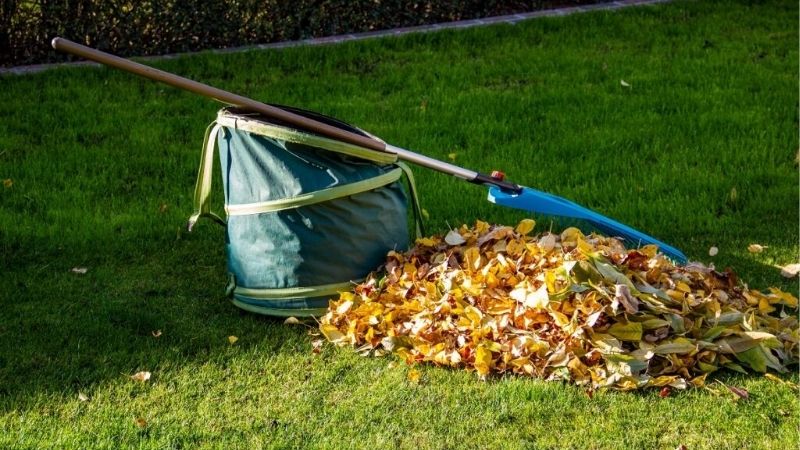
The right approach depends more on leaf depth and ground conditions than on buying the largest blower. A lightweight rake can clear tight corners, while a mower with a functioning collection bag deals with open lawn quickly. Set aside a compost bin or municipal yard-waste container before making piles, so the leaves do not blow back across the turf.
| Tool or Material | Size or Spec | Why You Need It | Substitute |
|---|---|---|---|
| Fan-style leaf rake | Wide flexible tines sized to the lawn | Pull intact leaves into rows with light pressure | Adjustable leaf rake |
| Yard tarp or leaf bags | Capacity appropriate to local collection rules | Move piles without scattering them | Reusable garden cart |
| Lawn mower | Working bagger or mulch setting per manual | Collect leftover leaves or chop a thin layer | Push-operated lawn sweeper |
| Gloves and sturdy footwear | Work gloves and closed-toe, slip-resistant shoes | Protect hands and reduce slips | Equivalent yard-work protection |
| Eye and hearing protection | Use as equipment manual requires | Protect against ejected debris and equipment noise | Manual raking for quiet areas |
Keep Blades, Cords and Bystanders Safe
Walk the lawn first and pick up stones, wire, toys, sticks and other material that a machine might throw. The U.S. Consumer Product Safety Commission’s rotary mower guidance says to keep other people out of the work area and retain all guards. Wear sturdy footwear and eye protection; CPSC’s yard-equipment safety guidance also advises hearing protection when using motor-driven tools. Follow your machine manual for slope handling and power disconnection before servicing a jam.
Do not reach under a mower deck, into a vacuum impeller, or through a bagging chute. Turn the equipment off and wait until all moving parts stop; disconnect its power source as the manufacturer instructs before inspecting. If the lawn is slippery, steep, or full of hidden debris, switch to a hand rake or postpone the motorized part of the job.
Decide Which Leaves Need Removal
The key distinction is a light, broken-up scattering versus an opaque leaf blanket. Iowa State Extension explains that a layer hiding most grass should be collected or chopped into fragments that can slip between grass blades. University of Minnesota Extension’s October 2024 guidance recommends beginning to bag the residue when less than 50 percent of the lawn is visible during mulch-mowing. That is a practical warning sign, not a universal measurement for every turf species.
On a few small patches, a rake may be all you need. On a broad lawn with moderate, dry deposits, a mower bag or push sweeper can save trips. Leaves stuck in wet, compacted sheets should be lifted carefully instead of forced through a clogged vacuum. If you have planted beds nearby, intact leaves moved there can provide winter habitat, as the University of Maryland Extension noted in its December 2024 leaf advice.
Plan Where the Collected Leaves Will Go
Decide between composting, using leaves in garden beds, and the municipal yard-waste program before starting. Penn State Extension’s 2023 guide describes composting leaves with a source of nitrogen-rich green material to speed decomposition. Check whether your town accepts loose curbside piles, compostable bags, or lidded carts. A pile left next to a storm drain can be washed into it, so avoid using street gutters as temporary storage unless your local program specifically directs that method.
If space permits, dedicate a leaf-mold pile away from traffic and drainage paths. Its job is to break down gradually, so an open mesh enclosure or other ventilated area is more useful than wet bags sealed for months. Keeping removed material on the property where appropriate also avoids buying replacement mulch later. For any leaves that appear diseased or mixed with trash, follow the local extension and disposal guidance rather than spreading that debris over valued plants.
How to Remove Leaves From Your Lawn Step by Step
Work from places where leaves have drifted into thick clumps toward an accessible collection point. Clearing the heavy material first exposes the grass and leaves you with a small finishing job. This seven-step sequence combines the collection methods described by Iowa State Extension with CPSC precautions for lawn machinery.
Step 1: Walk the Area and Clear Hazards
Start at the lawn’s edge and look beneath piled leaves before bringing out a blower or mower. Collect litter, hidden branches and stones by hand while wearing gloves. Mark sprinkler heads, edging, low landscape lights and delicate seedlings that could be damaged by a rake or mower. Inspect soft spots and slopes so you are not surprised by slippery footing once work begins. A clear route from the lawn to the compost area prevents unnecessary trips over the same grass.
For a yard with multiple trees, choose one direction of travel and a few convenient pickup zones. Do not aim piles toward a public sidewalk or neighbor’s property. If leaves are tangled around garden ornamentation, hand-pick those areas. The check is complete when the path for every powered tool is visibly free of hard objects and people.
Step 2: Wait for Leaves to Dry Enough
Dry leaves generally separate from the turf and pass through mowing equipment more readily. Penn State Extension’s January 2025 leaf-recycling guidance specifically recommends shredding when leaves are relatively dry and not piled deeply. After rain, gently test a small patch with the rake. If leaves peel up as a sticky sheet or the soil is soft enough to rut underfoot, wait for better conditions.
Do not assume every moist leaf must remain untouched. A small, damp pile over a drain or doorway may need immediate hand removal for access and slip prevention. Use a rake and tarp rather than forcing the material into an electric vacuum. Where a storm is approaching, removing the thickest accumulations early may be more effective than waiting until the entire canopy has dropped.
Step 3: Rake Thick Leaves Into Loose Rows
Hold a fan rake at an angle that lets its tips skim the top of the grass rather than dig into the soil. Pull from the far edge toward a series of shallow windrows. A push-pull rhythm is usually easier on your back than lifting a full rake head high with each stroke. Keep moving; if leaf litter starts to scatter downwind, shift to the leeward side and shorten the distance between piles.
Use smaller passes around tree roots and recently seeded patches. Unlike a rigid bow rake, a fan rake has tines intended to move leaves without aggressively disturbing the soil. For large, established areas, a blower can consolidate dry leaves before final raking, provided its air stream is not stripping mulch from adjacent beds. You have enough material collected once most blades of grass are visible between the remaining small fragments.
Step 4: Gather Large Piles Without Compressing Turf
Lay a tarp beside a leaf row and pull a light pile onto it with the rake. Fold the sides inward and drag or carry it to the destination, taking modest loads so the tarp does not spill. A garden cart or reusable leaf bag works when there is room for it beside the lawn. A handheld rake pair can lift broad mounds without repeatedly bending down, especially when leaves are brittle and tend to scatter.
Do not pack a heavy wet load so tightly that it tears a bag or strains your back. When you use a municipal yard-waste bag, follow the municipality’s weight and material requirements; these differ across U.S. communities. A leaf pile is not finished until it has left the grass surface, including at the base of the fence where wind can deposit the leaves again overnight.
Step 5: Use a Collector on Open Lawn
Where leaves cover long, open strips, a mower with a collection bag or a wheel-driven lawn sweeper can replace repetitive hand scooping. Set the mower as its owner manual directs for normal turf cutting rather than lowering the deck to scrape up debris. The University of Minnesota’s lawn-mowing guidance describes 3 inches or higher as an appropriate routine mowing height for typical residential Midwestern lawns, but your local turf species and manufacturer instructions govern your actual setting.
If leaves keep building up ahead of the mower or the bagger stops filling normally, stop and check the material depth. Turn off the machine and follow the manual before checking the intake or bag attachment. A lawn sweeper may be preferable when the grass no longer needs mowing. Empty collection equipment before an overloaded basket begins dropping leaves back onto the surface. Avoid using powered pickup equipment on a steep, soggy slope just to save a few minutes.
Step 6: Finish With a Light Mowing Pass
After the larger piles are off the lawn, consider shredding the scattered dry leaves that remain. Penn State Extension advises that a mulching or ordinary mower can chop leaves and that a second pass at a different angle may be needed. The goal is for the small fragments to settle below the green blades, not to create a new opaque layer of chopped material. Choose the bagging mode instead if the clippings are clumping or the grass is disappearing under residue.
The University of Minnesota’s October 2024 guidance provides a useful visual check: once less than half the lawn surface is visible, stop trying to mulch all the incoming leaves and begin removing the excess. Penn State’s January 2025 discussion describes about a half-inch layer of finely shredded leaf material as one beneficial upper reference for lawn use. Neither figure should override a manual, turf-specific extension recommendation, or obvious matting. If the lawn is already dormant, a mower may still handle dry leaves when ground and machine conditions are safe.
Step 7: Reuse or Dispose of the Collected Leaves
Place suitable leaves in a compost pile or set aside intact portions for shrub and perennial beds. Penn State’s composting guide updated in 2023 offers a starting example of a 6-inch layer of leaves followed by a 2-inch layer of nitrogen-rich green material, with turning to maintain airflow. That is an example compost recipe, not a requirement for ordinary yard-waste collection. Avoid burying small plants under tightly packed wet clumps.
For leaves sent off-site, follow the collection schedule and approved bag or cart type for your address. Do not dump the material in woodland, drainage ditches, or waterways. The EPA’s yard-waste fact sheet cautions that burning leaves produces air pollution; composting and authorized local collection are preferable where available. Make one last pass along the curb, steps and gutter openings so loose material is not ready to wash or blow back onto the freshly cleared grass.
Products That Help
For detailed hand raking, the Fiskars Pro Leaf Rake 397930-1001 has a 23.75-inch listed head width and an aluminum shaft with steel tines, according to Fiskars’ product specifications. Choose it when shrubs, edges and garden fixtures interrupt long machine passes. The GARDENA Lawn and Leaf Collector 03565-20 uses wheel-driven brushes and a removable basket; GARDENA’s U.S. product page listed it for $149.99 as of October 2026. It fits open, relatively level lawn where repeated bending is the main concern. Check wheel and brush access before purchasing for a very rough property.
The corded WORX WG518 is another option for concentrating dry leaves and vacuuming loose piles. WORX’s product documentation lists a 12-amp motor, up to 400 CFM of airflow, and a 7.5-pound machine weight. The manufacturer’s page displayed $99.99 in October 2026 but showed it temporarily out of stock, so confirm availability and the correct outdoor-rated extension cord before making a purchase. A combination vacuum is not the first choice for saturated leaves or debris hiding gravel. These products are examples of different working methods, not claims that they were field-tested here.
Common Mistakes to Avoid
Do not wait until all trees have dropped their leaves if the grass is already buried. Penn State’s October 2026 interview with an extension specialist specifically identifies waiting until every leaf has fallen as an avoidable cleanup mistake. Several shorter sessions prevent the wet, matted layers that require extra scraping. Also avoid pulling rake tines hard through new seedlings, scalping turf with the mower, or blasting delicate plants with a blower just to clear a last handful of leaves.
Leaving piles on the driveway overnight may be convenient, but wind and rain can return them to the lawn or create slippery walking areas. Finally, do not assume every leaf should go in a trash bag. University of Maryland Extension’s 2024 advice favors keeping intact leaf litter in suitable garden beds when practical because it can support overwintering insects. A cleared turf surface and retained garden habitat can coexist.
Frequently Asked Questions
Even after the broad cleanup is done, the lawn’s age, tree species and next weather change may affect how aggressively you should finish. These answers cover situations where the usual raking-and-collection sequence needs adjusting.
Can I Rake a Newly Seeded Lawn?
Use very light contact and avoid dragging a loaded rake across seedlings that have only recently emerged. Where loose leaves have landed on tender grass, lifting them by hand or gently moving them away with a low-force tool may disturb the soil less. Consult the seed producer’s care directions and your local extension recommendations for your specific grass; the safe approach is different from vigorous raking of well-established turf.
Can Leaves Stay on Dormant Grass Until Spring?
A scattered amount can remain, but a thick unbroken covering is a poor bet even after visible growth has slowed. Iowa State Extension’s October 2025 response explains that heavy leaves on lawns can block light and contribute to weak, patchy turf. Snow and moisture can press the layer down further. Clear the dense areas while the ground is safe to access rather than assuming dormancy makes the problem disappear.
Will Oak Leaves Make the Grass Soil Too Acidic?
Not necessarily. Penn State Extension’s January 2025 discussion cites Michigan State research finding no soil-pH effect from mulched oak or maple leaves in that work. Your property’s soil conditions still matter; diagnose an actual pH concern with a soil test rather than collecting every oak leaf on the assumption that its species will acidify the lawn. Excess quantity and coverage are the more immediate lawn-cleanup problems.
What About Leaves Along a Sidewalk?
Remove those first if they are slick or block drainage. Penn State’s October 2026 extension interview singles out fallen leaves on paths as a slipping hazard. Scoop or rake them into a container instead of blowing them into the street. If your municipality allows a designated curbside leaf pile, follow its placement instructions and keep storm-water inlets clear. Safety on walking routes can take priority over the order of the lawn cleanup.
Final Thoughts
Once you know how to remove leaves from lawn without damaging the turf, use the next windy day as a test of your setup: place the compost pile or collection area where leaves cannot drift straight back onto the grass. For a small yard, the Fiskars Pro Leaf Rake is enough to move stubborn piles, while a GARDENA 03565-20 sweeper makes sense only if its working surface and storage needs suit the property. Confirm current prices and availability before buying. Leave room in your autumn routine for another quick clearing after the last major leaf drop.