Key takeaways
- Sauder: a US maker of ready-to-assemble entertainment furniture, listing many TV stands and armoire-style units with stated maximum TV sizes.
- Bush Furniture: another ready-to-assemble brand with wardrobe-style and console options.
- Pulaski and Hooker Furniture: traditional furniture makers with solid-wood armoires and entertainment pieces at higher budgets.
- IKEA: offers wardrobe and media-storage systems that can be combined; check measured interior dimensions in the maker’s documents.
- Lift-cabinet specialists: several makers sell motorised TV lift cabinets, and buyers should confirm the stated weight and screen size ranges and the warranty.
A TV wardrobe, also called a TV armoire or entertainment cabinet, suits buyers who want to hide a television and its cables behind doors in a bedroom or living room; choose a model by first measuring your screen’s width, height and depth, then checking the maker’s stated maximum TV size, weight rating and ventilation, because those three details decide whether a cabinet works safely in real life.
This guide explains how TV wardrobes differ, which specifications matter, how to match size and compatibility, and when a different piece of furniture is the better answer. Specific dimensions and weight limits vary by model and are listed by the maker, so use the figures below as categories to check rather than fixed numbers.
Our top picks


As an Amazon Associate we earn from qualifying purchases at no extra cost to you.
At a glance: types of TV wardrobe
| Type | Best for | Typical stated features | Limits |
|---|---|---|---|
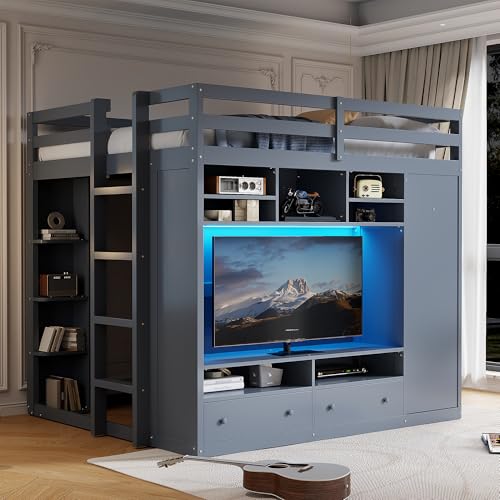
| Traditional armoire with fold-back doors | Bedrooms, classic style, hiding a TV completely | Doors that fold flat to the sides; shelf for a TV; drawers beneath; cable access holes | Deep and tall; solid weight; assembly is time-consuming |
| Wardrobe with a built-in TV shelf and hanging space | Small bedrooms needing storage and TV in one piece | Hanging rail plus an open niche for a TV | TV niche is often modest, so check the maximum screen size |
| Lift cabinet (motorised) | Hiding a TV at the foot of a bed | TV rises from the cabinet on a motorised mechanism; remote control | Mechanism adds cost and possible service needs; electrical safety matters |
| Wall-mounted TV with a cabinet or doors around it | Living rooms and minimalist spaces | Doors or panels slide or fold across a wall-mounted screen | Needs a secure wall mount and careful measurement; installation is more involved |
| Low media console with doors | Living rooms where hiding is less important | Doors for storage; open top or shelf for the TV | Does not hide the screen, only the equipment |
What to check before you buy
1. Maximum TV size and weight
Makers publish the largest TV a cabinet will hold, often as a diagonal size, and a weight limit for the shelf. Both matter. A TV stated as 55 inches diagonal can be wider than a cabinet interior if the bezel is thick or the stand feet are wide, so measure the actual width, height and depth of your TV including the stand, not just its diagonal. Modern flat panels are slim, but older television sets and some soundbars are deep.
2. Interior opening
Look at the cabinet’s inside width, height and depth rather than its outside dimensions. Allow a few centimetres or about an inch around the screen so air can circulate and so you can reach the ports. If you use a soundbar, set-top box or games console, add their dimensions too.
3. Ventilation and heat
Electronics produce heat. Cabinets with open backs, vented panels or cut-outs are generally better than fully closed boxes, and many manufacturers advise leaving doors open when the TV or console is running. Follow the television maker’s manual for minimum clearances, and do not cover vents.
4. Cable management
Look for pre-drilled holes or a cut-out at the back so power and HDMI cables run neatly. A power strip with surge protection placed inside the cabinet keeps the wiring tidy. Use equipment that is rated for your mains supply and have a qualified electrician look at anything beyond plugging in standard devices.
5. Stability and anti-tip
Tall furniture carrying a heavy screen can tip. Reputable makers include anti-tip hardware, and consumer-safety bodies in many countries advise anchoring tall units to the wall, especially if children or pets are around. Use the supplied kit, and check that your wall type is suited to the fixings.
6. Construction and finish
Solid wood and good-quality plywood carry weight well. MDF and particleboard with laminate or melamine veneer are common at lower budgets and are light and fine for smaller TVs, but they can sag over time if shelves are overloaded. Check how the maker describes the shelf supports and drawer runners.
Sizing guide
| Your situation | What to measure | What to look for |
|---|---|---|
| Smaller bedroom TV | Screen width and depth; room clearance for open doors | A compact armoire or wardrobe with a TV niche; doors that fold flat |
| Larger TV in a living room | Screen width plus stand width; cabinet interior width | Wide cabinet or wall-mounted solution; consider a lower console |
| TV at the foot of a bed | Bed length plus clearance; ceiling and bed-frame height | Lift cabinet or low unit; check that the TV is at a comfortable eye level when raised |
| Hiding a wall-mounted TV | Mount depth, screen size, door swing space | Cabinet system designed for wall mounting, installed according to the maker’s guide |
Brands and retailers commonly discussed
Lines change regularly, so confirm that a model is currently listed on the maker’s page. These are names that furniture reviewers and home outlets often mention in the TV cabinet and armoire category.
- Sauder: a US maker of ready-to-assemble entertainment furniture, listing many TV stands and armoire-style units with stated maximum TV sizes.
- Bush Furniture: another ready-to-assemble brand with wardrobe-style and console options.
- Pulaski and Hooker Furniture: traditional furniture makers with solid-wood armoires and entertainment pieces at higher budgets.
- IKEA: offers wardrobe and media-storage systems that can be combined; check measured interior dimensions in the maker’s documents.
- Lift-cabinet specialists: several makers sell motorised TV lift cabinets, and buyers should confirm the stated weight and screen size ranges and the warranty.
Trade-offs by budget tier
| Tier | What to expect | Trade-off |
|---|---|---|
| Budget | Ready-to-assemble particleboard armoires or consoles | Lighter build; check weight limits; assembly takes patience; can sag |
| Mid-range | Better laminates, engineered wood, sturdier hardware | Often adequate for flat-panel TVs; look for anti-tip hardware |
| Premium | Solid wood or high-quality veneer; lift mechanisms; made-to-measure | Longer lasting and attractive; heavier and more costly to deliver and install |
Pick X if…
| Pick this | If you… |
|---|---|
| Fold-back door armoire | want a TV that disappears in a traditional bedroom |
| Wardrobe with TV niche | need clothes storage and a TV in a small room |
| Lift cabinet | want a hidden TV at the foot of the bed and accept a motorised mechanism |
| Wall-mounted TV with cabinet | prefer a clean look and can install a secure wall mount |
| Low media console | do not need to hide the screen and want more flexible placement |
Practical tips
- Measure doorways, stairs and the room before ordering, since armoires can be tall and heavy.
- Check which direction the doors swing and whether the TV remote can reach a receiver when the doors are closed. Some people choose infrared repeaters for this reason.
- Place the cabinet away from radiators and direct sunlight to reduce heat build-up.
- Never push the TV’s weight beyond the shelf rating, and avoid placing it on the cabinet’s top unless the maker allows it.
Alternatives
- Wall-mounted TV with a picture-frame style cover: hides the screen as art without a bulky cabinet.
- Built-in cupboard or alcove: carpenter-made storage that matches the room, usually a higher-budget project.
- TV stand with doors: hides equipment while keeping the screen visible.
Delivery and assembly
Armoires arrive in heavy flat-pack boxes, so plan for two people and clear the route to the room. Allow time for assembly, and keep the instruction sheet for the anti-tip kit.
Frequently Asked Questions
How do I know if my TV will fit a wardrobe?
Measure the TV’s width, height and depth including the stand, then compare them with the cabinet’s interior opening and the maker’s stated maximum TV size. Leave a little space around the set for air flow and cables. If you use a soundbar or console, include them in the measurement.
Is it safe to keep a TV inside a closed cabinet?
Many makers advise leaving the doors open or using a vented back so heat can escape. Always follow the TV manual’s clearance instructions. If your TV or console becomes very hot, move it to a more open location and consult the manufacturer.
Do TV wardrobes need to be anchored to the wall?
Tall furniture carrying a heavy screen can tip, so anchoring is widely advised, particularly in homes with children. Use the anti-tip hardware supplied and fixings suitable for your wall type. If you are unsure, ask a qualified installer.
Can I put a large flat-screen TV in an armoire?
Often, yes, if the interior is wide enough and the shelf’s weight rating is sufficient. Check the stated maximum diagonal and the actual width of the TV. Very large screens may be better suited to a wall-mounted solution with doors or a wide media console.
What is the difference between a TV wardrobe and a TV stand?
A TV wardrobe or armoire typically encloses the television behind doors, while a TV stand holds the screen in view and usually offers storage for devices. Wardrobes hide the screen but take up more floor space and more height.
Are motorised lift cabinets reliable?
Reviewers report that they work well when the TV stays within the stated weight and size limits, though the mechanism is an extra component that can wear. Check the warranty, and have a qualified electrician inspect any hard-wired power supply rather than attempting it yourself.
More from Amazon
Programs that pair well with the guide above. Offers and eligibility are set by Amazon and may change.
A free business account with business pricing and bulk-buying tools for work, shop or home office.
Create a business accountFree shipping on eligible items, Prime Video and more. Eligible new members can start with a free trial.
Start a Prime free trialAudiobooks and podcasts to listen to on the go. Eligible new members can start with a free trial.
Try Audible freeAd-free music streaming. Eligible new subscribers can start with a free trial.
Try Music Unlimited freeAs an Amazon Associate we earn from qualifying purchases.