Key takeaways
- A 170cc engine is enough for a flat to gently sloped half-acre lawn; 201cc gives headroom for thick, damp or hilly grass.
- Rear-wheel drive pulls better uphill and when the bag is full; front-wheel drive turns more easily on flat lawns.
- Variable-speed drive lets you match your walking pace, while single-speed drive is simpler and cheaper.
- Most mowers ship without oil in the crankcase: add oil to the correct level before the first start.
- Value brands can be excellent value, but check warranty terms and local parts support first.
The best self propelled gas lawn mowers in the 21-inch class are the PowerSmart 21-Inch 170cc and AMERISUN 21-inch 170cc for a half-acre lawn on a tight budget, and the 201cc models from BILT HARD, SENIX and YARDMAX for thicker grass and slopes. Every model here has a 3-in-1 deck (bag, mulch, side or rear discharge), so the real differences are engine size, which wheels drive the mower and how the speed is controlled.
Walk-behind gas mowers with a drive system are the compromise many homeowners settle on: no battery to size, no cord, and far less effort than pushing. This guide compares six current self-propelled gas models, explains the spec lines that matter (cc, rear-wheel vs front-wheel drive, variable speed) and shows how to match them to your yard, with a first-start checklist for a new mower.
Our top picks



As an Amazon Associate we earn from qualifying purchases at no extra cost to you.
Key takeaways
- A 170cc engine is enough for a flat to gently sloped half-acre lawn; 201cc gives headroom for thick, damp or hilly grass.
- Rear-wheel drive pulls better uphill and when the bag is full; front-wheel drive turns more easily on flat lawns.
- Variable-speed drive lets you match your walking pace, while single-speed drive is simpler and cheaper.
- Most mowers ship without oil in the crankcase: add oil to the correct level before the first start.
- Value brands can be excellent value, but check warranty terms and local parts support first.
Best Self Propelled Gas Lawn Mowers Compared
| Mower | Engine | Deck | Drive | Heights | Best for |
|---|---|---|---|---|---|
| PowerSmart 21-Inch 170cc | 170cc 4-stroke OHV | 21 in steel | Rear-wheel | Check listing | Budget half-acre lawns |
| AMERISUN 21-inch AV8621S1 | 170cc 4-cycle OHV | 21 in | Rear-wheel | Check listing | Value 3-in-1 mowing |
| BILT HARD 21-inch 201cc | 201cc 4-cycle OHV | 21 in | Self-propelled | 8 | Thicker grass |
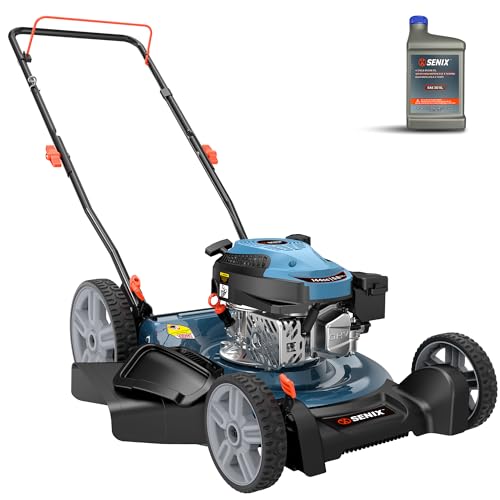
| SENIX 22-inch 201cc RWD | 201cc 4-cycle OHV | 22 in | Rear-wheel, variable speed | 6 | Slopes and larger lawns |
| YARDMAX YG2860 | 201cc | 22 in | Front-wheel, 6-speed CVT, high wheels | Check listing | Rough, uneven ground |
| PowerSmart EasyDrive Pro 22-inch | 170cc 4-cycle OHV | 22 in | Self-propelled | 6 | Wider cut at a budget tier |
The cc, deck and drive details come from the product listings. Check the maker page for oil capacity, weight and warranty before you buy.
How We Chose These Mowers
This is a research-based list, and we did not personally use these mowers. We compared listing text, maker details and the specs that decide how a gas mower behaves. A model qualified if it was a whole gas walk-behind mower, with a drive system, a deck of 21 or 22 inches and a stated engine size. We left out push-only gas mowers (they are listed under Also Consider), battery mowers and parts. Where the listing was silent on a spec, we mark it “check listing” rather than guess.
Engine Size, Drive Type and Speed: What to Look For
These three details separate a mower that feels effortless from one that fights you. The table translates the jargon.
| Spec | What it means | Rule of thumb |
|---|---|---|
| 144cc to 150cc | Entry-level push-class engine | Fine for push mowers on small, flat lawns |
| 160cc to 170cc | Common self-propelled engine | Good for flat lawns up to about half an acre |
| 190cc to 201cc | More torque for the deck | Better for thick grass, mulching and slopes |
| Rear-wheel drive (RWD) | Power goes to the back wheels | Best on slopes and with a full bag |
| Front-wheel drive (FWD) | Power goes to the front wheels | Turns easily on flat ground; can slip on hills |
| Variable speed | Drive follows how far you move the bar | Handy if you stop and turn often |
| Single speed | One fixed walking pace | Simple; fine if you walk at a steady rate |
The cc ranges above are general guidance, not a promise of performance: two engines of the same cc can behave differently depending on the maker, deck design and blade.
1. PowerSmart 21-Inch 170cc: Best Budget Rear-Wheel Drive
- 170cc 4-stroke OHV engine · 21 in steel deck
- Rear-wheel drive
- 3-in-1 walk-behind: bag, mulch, side discharge
Best for: a flat to gently sloped lawn up to about half an acre. Skip if: your grass is tall, dense or very wet.
Pros: rear-wheel drive at a low cost tier; steel deck; flexible 3-in-1 use.
Cons: 170cc is the lower end for thick grass; check height range and oil capacity on the maker page.
2. AMERISUN 21-Inch AV8621S1: Best Value 3-in-1
- 170cc 4-cycle OHV engine · 21 in deck
- Rear-wheel drive, self-propelled
- 3-in-1 mulching, bagging and discharge
Best for: shoppers who want self-propelled drive and a 3-in-1 deck at a lower price point. Skip if: you want a long record of dealer support.
Pros: rear-wheel drive; same engine class as the PowerSmart; widely discussed model number.
Cons: value brand, so check the warranty and parts availability; the listing is light on detail.
3. BILT HARD 21-Inch 201cc: Best for Thicker Grass
- 201cc 4-cycle OHV engine · 21 in deck
- Self-propelled · 3-in-1 bagging, mulching, side discharge
- 8 adjustable cutting heights
- Smooth easy start listed
Best for: a lawn where the grass grows quickly or stays thick. Skip if: your lawn is small and a 170cc is enough.
Pros: larger engine for the price; eight heights give fine control; same 21 in deck as the budget models.
Cons: the listing does not state RWD or FWD; check before you buy if you have a slope.
4. SENIX 22-Inch 201cc Rear Wheel: Best for Slopes and Larger Lawns
- 201cc 4-cycle OHV engine · 22 in deck
- Rear-wheel drive with variable speed
- 3-in-1 with bagging, mulching and side discharge
- 6 height positions
Best for: a larger or hillier lawn where rear-wheel traction and variable speed are useful. Skip if: you are sensitive to weight; bigger decks are heavier.
Pros: strong 201cc engine; rear-wheel drive; variable speed; slightly wider deck.
Cons: a 22 in deck is a little harder to maneuver around tight beds.
5. YARDMAX YG2860: Best for Rough, Uneven Ground
- 201cc engine · 22 in deck
- Select PACE 6-speed CVT drive
- High wheels, front-wheel drive
- 3-in-1 walk-behind
Best for: lumpy lawns and rough ground where high wheels roll over bumps. Skip if: you have steep slopes, where front-wheel drive can lose traction.
Pros: six speed settings; high wheels; 201cc engine.
Cons: front-wheel drive is less suited to hills; high wheels raise the center of gravity.
6. PowerSmart EasyDrive Pro 22-Inch 170cc: Best Wider Budget Deck
- 170cc 4-cycle OHV engine · 22 in deck
- Self-propelled
- 3-in-1: mulch, bag, rear discharge
- 6 cutting heights
Best for: a flat lawn where a wider cut saves time. Skip if: you need the most torque.
Pros: wider deck than the 21 in class; low cost tier; six heights.
Cons: 170cc driving a 22 in deck can bog in thick, wet grass; the listing does not name the drive wheels, so check.
Also Consider
- PowerSmart 21-inch 170cc (rear-wheel drive for slopes): a second PowerSmart listing that stresses slope traction and six heights.
- SENIX 201cc 22-inch variable speed: another SENIX with variable speed, in a different listing.
- SENIX 21-inch 144cc push: no drive system; fine for small yards and the lowest cost tier.
- BILT HARD 201cc 21-inch push: strong engine, 10 height positions, but you push it yourself.
If you want a brand with a long dealer network and are willing to pay more, look at Honda and Toro walk-behind lines on the maker pages; they are outside the value brands covered here.
How Long Will It Take? Mowing Time by Deck Width
Self-propelled gas mowers walk at roughly a brisk stroll, around 2 to 3 miles per hour, depending on the drive. A rough planning calculation: effective cut width times walking speed gives the area per hour. The figures below are estimates for planning, assuming straight passes and no stops, and real jobs take longer because of turns, emptying the bag and obstacles.
| Lawn size | 21 in deck (approx.) | 22 in deck (approx.) | Comment |
|---|---|---|---|
| 1/4 acre (about 10,900 sq ft) | 45 to 60 min | 40 to 55 min | Comfortable for most people |
| 1/2 acre (about 21,800 sq ft) | 1.5 to 2 hours | 1.25 to 1.75 hours | Plan a break and a fuel check |
| 3/4 acre | 2.25 to 3 hours | 2 to 2.5 hours | Consider a riding mower |
A one-inch difference in deck width changes the total only slightly. Engine torque and bag emptying matter more than the extra inch.
Mulching or Bagging with a Self-Propelled Mower
Choosing the right mode saves effort and protects the lawn.
- Mulch when the lawn is cut weekly and the grass is dry. The clippings feed the lawn, and you skip the bag. This puts the heaviest load on the engine, so a 190cc to 201cc engine has an edge.
- Bag when the grass is long, you are cutting seed heads, or you want a tidy look. Bagging works best with rear-wheel drive because the full bag moves weight to the back.
- Side or rear discharge is the quickest way through long, rough grass, but clippings are left on top, so rake or blow them if they clump.
- Never remove the guards or chute covers to make a mower discharge differently. Use the attachments provided.
Slopes and Safety Basics
Gas mowers are heavy, and slopes are where accidents happen. Follow the slope guidance in the manual for your model.
- Mow across a slope only if the manual allows it; many walk-behind mowers are meant to go up and down. Check your manual.
- Do not mow wet slopes: wheels slip and you can fall under the mower.
- Wear closed shoes with grip, eye protection and hearing protection, as a gas engine is loud.
- Clear sticks, toys and stones before mowing; the blade throws them.
- Turn the engine off and wait for the blade to stop before clearing the chute or emptying the bag.
- Disconnect the spark plug wire before working under the deck.
When the Self-Propel Feels Weak
Drive problems on self-propelled mowers are usually simple. Work through the list with the engine off and the spark plug wire disconnected.
| Symptom | Likely cause | What to check |
|---|---|---|
| Drive does nothing | Drive cable loose or stretched | Adjust the cable at the handle or cable end, per the manual |
| Drive slips in thick grass | Packed deck or worn belt | Scrape clippings, inspect the belt |
| Mower pulls to one side | Uneven tire pressure or one wheel not driving | Check tires and the drive wheel |
| Engine bogs on a slope | Grass too long or engine under strain | Raise the deck and mow in two passes |
Buying Guide: How to Choose a Self-Propelled Gas Mower
1. Start with lawn size and slope
Up to about a quarter acre of flat lawn, a push mower might do. From a quarter to a half acre, or any slope, a self-propelled model is easier on your back. Beyond roughly half an acre with a gas walk-behind, think about a riding mower.
2. Choose engine size by grass and terrain
For flat Bermuda or fescue lawns cut weekly, a 170cc engine copes. If you mulch, cut thick grass or mow after rain, the extra torque from 190cc to 201cc helps. Mulching asks the most of the engine because the blade has to chop the clippings repeatedly.
3. Pick the drive layout
Choose rear-wheel drive if you have slopes or like to bag. Choose front-wheel drive if the lawn is flat and you turn a lot. Variable speed lets you match your pace; single speed is simpler.
4. Check deck material and wheels
Steel decks are strong and common at this cost tier. Larger rear wheels roll over bumps more easily. A 21 in deck is a good balance; 22 in saves time on open lawns.
5. Height adjustment
Six to ten positions is plenty. A single-lever adjuster is quicker than adjusting each wheel.
6. Weight and storage
A self-propelled gas mower is heavier than a push model, and you will lift it into a truck or shed. Look for a folding handle, and measure your shed door.
7. Warranty and parts
Value brands may offer shorter warranties than established names. Check what is covered and whether blades, belts, air filters and spark plugs are easy to find.
First-Start Checklist for a New Gas Mower
- Unpack and attach the handle and bag per the manual.
- Add engine oil to the full mark on a level surface. Many new mowers ship dry; running one without oil can destroy the engine.
- Use fresh regular unleaded fuel with a low ethanol content, as the manual allows, and do not overfill.
- Set the tire pressure if the manual lists a value.
- Prime the carburetor as the manual describes, set the throttle and pull the starter rope smoothly.
- Check the blade height, then cut a short strip before the full lawn. Re-check for loose bolts and any odd noise.
If you hear metal rubbing during that first strip, stop and check the blade and deck.
Looking After a Self-Propelled Gas Mower
- Change the oil after the first few hours and then at the interval in your manual (often each season).
- Clean or replace the air filter when it is dirty; replace the spark plug at the recommended interval.
- Sharpen the blade once or twice per season and balance it.
- Use fuel stabilizer for storage, or run the carburetor dry before the off-season.
- Scrape the underside of the deck after wet mows.
- Check the drive cable and wheel gears if the self-propel feels weak.
Value Brand or Established Brand? The Trade-Offs
Most of the mowers above come from value-oriented brands, which sell through online listings rather than dealer networks. That keeps the price down, but it changes the ownership experience, so weigh the trade-offs honestly.
| Factor | Value brands (PowerSmart, AMERISUN, SENIX, BILT HARD, YARDMAX) | Established dealer brands |
|---|---|---|
| Cost tier | Lower | Higher |
| Features per dollar | High: 3-in-1, drive and a larger deck are common | Often fewer features at the same price |
| Local service | Mostly mail-order parts and online support | Dealer repairs and parts counters |
| Engine | Generic overhead-valve engines | Often a named engine maker |
| Warranty length | Check carefully; often shorter | Often longer, with registration |
| Best for | Homeowners comfortable with basic maintenance | Buyers who want a repair shop nearby |
If you can change oil, replace a spark plug and swap a blade, a value brand can be a sensible choice. If you want to hand the mower to a shop once a year, an established brand with local dealers is easier.
Fuel, Oil and Parts: A Quick Reference
- Fuel: fresh regular unleaded within the ethanol limit in your manual. Do not mix oil into fuel for a 4-stroke engine.
- Oil: most 4-stroke mowers use SAE 30 or 10W-30; the manual states which and how much.
- Air filter and spark plug: note the part numbers when you buy, and keep spares.
- Blade: buy a spare blade and swap it so you can sharpen at leisure.
- Storage: stabilize fuel before winter and keep the mower dry.
Pre-Season Checklist
- Drain old fuel and refill with fresh fuel.
- Change the oil and check the filter.
- Sharpen or replace the blade and tighten the bolt to the specified torque.
- Check tire pressure and the drive cable adjustment.
- Look over the bag, chute and deck for cracks.
- Start the mower and run it for a minute before the first full cut.
FAQ
Is a 170cc or 201cc engine better?
201cc has more torque and suits thick grass, slopes and mulching. 170cc is fine for flat, regularly cut lawns up to about half an acre, and usually costs less.
Rear-wheel or front-wheel drive for a lawn mower?
Rear-wheel drive is generally better on hills and with a full bag, because weight shifts to the back wheels. Front-wheel drive turns more easily on flat ground.
Are value brands like PowerSmart, AMERISUN and SENIX reliable?
They can be good value, but check warranty terms, spare-part availability and the oil and fuel requirements. Established brands usually have wider dealer service.
What does 3-in-1 mean on a mower?
It means the deck can bag clippings, mulch them or discharge them to the side (some models use rear discharge instead). You choose using an attachment or a plug.
How much oil does a self-propelled mower need?
Most walk-behind engines take a fraction of a quart, but the exact amount and the right grade are in the manual. Fill to the mark on a level surface.
Can a 21 inch mower handle a half-acre lawn?
Yes, though it takes time. A self-propelled drive and a 22 in deck reduce the effort, and a second person or a riding mower may be more efficient beyond half an acre.
Which is better for hills, variable speed or single speed?
Rear-wheel drive matters more than speed control on hills. Variable speed is a bonus because you can slow down on awkward sections.
Why will my new mower not start?
The most common reasons are no oil or fuel in the tank, the safety bar not held, or the primer not pressed enough. Re-read the starting steps in the manual before you suspect a fault.
Can I use a self-propelled mower on a small lawn?
Yes, but a push mower costs less and weighs less. The drive system is mainly worth paying for on lawns of a quarter acre or more, or on slopes.
How often should I sharpen the blade?
Once or twice per season is a typical guide, and sooner if you hit stones or the grass looks torn rather than cut cleanly.
Which One Should You Buy?
- Flat half-acre, budget: PowerSmart 21-Inch 170cc or AMERISUN AV8621S1.
- Thicker grass, standard deck: BILT HARD 21-Inch 201cc.
- Slopes and bigger lawns: SENIX 22-Inch 201cc rear wheel.
- Rough, bumpy ground: YARDMAX YG2860.
- Wider cut on a budget: PowerSmart EasyDrive Pro 22-Inch.
Sources
- Product listings for PowerSmart, AMERISUN, BILT HARD, SENIX and YARDMAX models
- Maker pages and owner’s manuals for engine, oil and warranty details
- General small-engine maintenance guidance from engine makers
Last updated: November 2026
More from Amazon
Programs that pair well with the guide above. Offers and eligibility are set by Amazon and may change.
A free business account with business pricing and bulk-buying tools for work, shop or home office.
Create a business accountFree shipping on eligible items, Prime Video and more. Eligible new members can start with a free trial.
Start a Prime free trialAudiobooks and podcasts to listen to on the go. Eligible new members can start with a free trial.
Try Audible freeAd-free music streaming. Eligible new subscribers can start with a free trial.
Try Music Unlimited freeAs an Amazon Associate we earn from qualifying purchases.