Key takeaways
- An apartment changes how you think about a first aid kit. There is no garage shelf, no hall closet the size of a pantry.
An apartment changes how you think about a first aid kit. There is no garage shelf, no hall closet the size of a pantry, and often no car parked within a short walk. Whatever you buy has to live in a bathroom cabinet or under a bed, and it has to be easy to find when someone is holding a paper towel against a kitchen cut at ten at night. That makes size, layout and labeling matter as much as the number of items in the box.
This guide is for the apartment dweller with under 50 dollars to spend, shopping for general household supplies rather than anything medical or professional. At that tier you can realistically expect a bag or hard case stocked with common bandages, wipes and basic tools, while specialty items and heavier trauma gear usually cost more. Nothing here is medical advice, and no kit can guarantee any outcome; a kit is simply a way to have everyday supplies in one place. Six options from the list are reviewed below using only their titles, so confirm contents on the listing.
Quick Picks
Our top picks



As an Amazon Associate we earn from qualifying purchases at no extra cost to you.
| Product | Best for | Key detail from the title |
|---|---|---|
| First Aid Only 260-Piece Family Kit | Shared households | 260 pieces, portable case, home, car and travel |
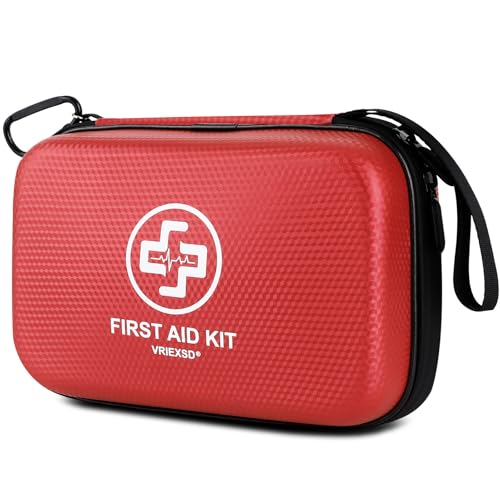
| VRIEXSD 320-Piece Kit | Damp bathrooms and humid climates | 320 pieces, waterproof EVA hard shell, compact design |
| Care Science 110-Piece Kit | Tiny storage spaces | 110 pieces for travel, work, school and home |
| Be Smart Get Prepared 180-Piece Kit | Mid-size everyday kit | 180 pieces for home, car, office, outdoor, FSA |
| First Aid Only 335-Piece Kit | Larger household supplies | 335 pieces, OSHA-ready wording for home, vehicle and travel |
| 556-Piece Premium Large Kit | People who want a big organized bag | 556 pieces, labelled compartments, rip-away MOLLE bag |
How to Choose
Piece count is not the same as usefulness
A 300-piece kit can be mostly small adhesive bandages and individually wrapped wipes, which are useful but easy to count generously. Read the title and the contents list for what is actually included, such as gauze pads, tape, tweezers, scissors, gloves and instant cold packs. For an apartment, a moderate count with sensible variety usually beats a huge box you never unpack. It also helps to compare the kit against what you already own, since many households have a thermometer, pain relievers and a few bandages scattered in drawers that a new kit would simply duplicate.
Case type and where it will live
Hard-shell cases stack neatly on a shelf and protect contents from spills, which suits a bathroom or kitchen cabinet. Soft bags fold flatter and slide under a bed or into a closet. A bag with labeled compartments is easier to use quickly. If humidity is a concern, a waterproof or water-resistant case is worth looking for, because damp bandage packaging degrades over time. Check the closure as well: a zipper or latch that stays shut when the kit is knocked off a shelf is a small feature that saves a lot of tidying.
Household fit: who lives there
A solo renter and a family of four need different things. Households with children may want to add child-appropriate items separately, while those with pets should know that human kits are not designed for animals. If anyone in the home takes regular medication or has allergies, a general kit does not replace what a doctor has advised. Keep personal medications separate and labeled, and talk to a doctor or pharmacist about what is appropriate for your household instead of relying on a pre-packed list.
Expiry dates, labels and keeping it current
Some supplies, such as ointments, wipes and certain packaged items, carry expiry dates. A kit is only helpful if the contents are in date and complete, so set a reminder to check it once or twice a year. Look for a layout that lets you spot depleted items at a glance. Budget kits often cut corners on tool quality, so check that scissors and tweezers feel sturdy when you open the box. Writing the purchase month on the lid with a marker makes the later check far easier, and a small notes card inside the case can list emergency numbers and the building address for anyone else in the home.
The 6 Best Options
First Aid Only 260-Piece Family Kit
This kit suits a shared apartment where several people may reach for it. The title describes 260 pieces in a portable case for home, car and travel, and it mentions OSHA compliance, though what that means for your situation should be confirmed on the listing. A portable case is handy when you want to carry it from the bathroom to the kitchen.
- Strength: A portable case moves easily between rooms or into a car.
- Strength: The family-sized assortment covers a range of everyday minor needs.
- Trade-off: Broad coverage can mean small quantities of each item.
Skip it if you want a hard waterproof shell for a humid bathroom, since the title does not highlight that. In that case a kit in a sealed case may keep its contents in better condition over a long stretch in a damp room.
VRIEXSD 320-Piece Kit
The VRIEXSD is the case-first choice. Its title names a waterproof EVA hard shell and a compact design, which makes sense for a bathroom shelf where steam and splashes are routine. At 320 pieces it also lists comprehensive supplies for home use, giving it breadth without a big footprint.
- Strength: A waterproof hard shell guards against humidity and spills.
- Strength: A compact design fits on a closet shelf.
- Trade-off: The title is truncated, so confirm the full contents list before buying.
Skip it if you want labeled compartments to find items quickly in a hurry. A shell with a single open tray means you may have to dig a little when a roommate needs something fast.
Care Science 110-Piece Kit
With 110 pieces, this is the smallest option here, and that is its selling point. The title positions it for travel, work, school, home, car and camping, which means it is built for being tucked into a bag. In a studio apartment with limited storage, small can be the deciding factor.
- Strength: A lower piece count means a smaller footprint.
- Strength: Its everyday positioning suits carrying to work or school.
- Trade-off: Fewer pieces means you may run low sooner.
Skip it if several people share the home and you expect frequent use. Households that go through bandages quickly will want a larger count or a plan to restock.
Be Smart Get Prepared 180-Piece Kit
This is the middle-of-the-road pick. The title lists 180 pieces for home, car, office and outdoor use, along with an FSA mention that may matter to buyers who use those accounts, though eligibility should be confirmed with the account provider. It is a reasonable all-purpose size for one or two people, and the one-kit-for-the-house, one-for-the-car approach is simple to keep track of.
- Strength: A balanced count that is neither tiny nor oversized.
- Strength: Multi-location positioning suits keeping one kit in the home and one in the car.
- Trade-off: The title offers few details on the case type.
Skip it if you need to know exactly which tools are included before you buy. Read the full listing for the contents rundown, since the title alone leaves several details open.
First Aid Only 335-Piece Kit
For a household that wants more depth, the 335-piece version steps up from the smaller family kit. The title describes OSHA-ready supplies for home, vehicle and travel use and mentions cuts, scrapes and burns as general categories of minor household needs. It gives a renter a single place to look for those items, which is useful when a lease has you sharing a kitchen and bathroom with others who may not know where anything is kept.
- Strength: A larger count gives more of the basics.
- Strength: The brand’s kits are organized for general household use.
- Trade-off: Bigger boxes need more shelf space in a small apartment.
Skip it if cabinet space is tight, since a smaller kit may fit more easily. Measure the shelf where it will live before you commit to the larger box.
556-Piece Premium Large Kit
This is the biggest and most organized bag on the list. The title describes labeled compartments, a rip-away MOLLE tactical design and a survival-style medical bag, which appeals to people who like seeing every item sorted. In an apartment it can double as a grab bag near the door, and the MOLLE styling means it can clip onto a backpack for a weekend outdoors.
- Strength: Labeled compartments make items easier to find.
- Strength: A rip-away design is easy to pull off a hook or pack.
- Trade-off: Its size and tactical styling are more than many renters need.
Skip it if you want something small that stays out of sight in a bathroom cabinet. A bag this size is better kept on a hook or a closet shelf where it can be seen.
Which One Fits Your Situation
Studio apartment with almost no storage
The Care Science 110-piece kit takes the least space and still gathers the basics in one place.
Shared flat with roommates
The First Aid Only 260-piece kit offers a family-sized assortment that several people can use, and its portable case moves between rooms.
Humid bathroom or kitchen cabinet
The VRIEXSD with its waterproof EVA hard shell is the better match, because the case is designed for damp conditions.
You like everything sorted and visible
The 556-piece bag, with its labeled compartments, suits someone who wants to find items in seconds and does not mind the extra bulk in 2026 or later.
One practical idea for apartment living is to keep a small duplicate of the most-used items, such as bandages and wipes, in the kitchen, since that is where many minor household mishaps happen. The main kit can then stay in a bathroom or hall closet. This is a housekeeping suggestion rather than medical guidance, and the right setup depends on who lives with you.
Common Mistakes
- Buying the highest piece count without checking what the pieces actually are.
- Storing the kit in a steamy bathroom without a waterproof case.
- Never checking expiry dates, so the contents are out of date when needed.
- Forgetting to add personal medications, allergy information or items specific to your household.
- Hiding the kit so well that no one else in the home knows where it is.
Related guides
- Battery Powered Floodlight Camera With Local Storage
- Cordless Drill Brush Attachment For Bathroom Grout
- Rechargeable Emergency Lantern For Power Outages
Frequently Asked Questions
Does a bigger kit mean better preparation?
Not necessarily. Preparedness depends on having the right basics and knowing where they are. A well-organized mid-size kit can be more usable than a bulky one.
Where should I keep it in an apartment?
Choose a spot that is easy to reach and cool and dry, and make sure everyone in the home knows where it is. Avoid a spot that gets very hot or damp.
How often should I check the contents?
Looking through it once or twice a year is a sensible habit. Replace anything expired or used, and restock items that have run low.
Can a kit replace professional care?
No. A kit holds everyday supplies, nothing more. For anything serious or uncertain, contact a medical professional or emergency services.
More from Amazon
Programs that pair well with the guide above. Offers and eligibility are set by Amazon and may change.
A free business account with business pricing and bulk-buying tools for work, shop or home office.
Create a business accountFree shipping on eligible items, Prime Video and more. Eligible new members can start with a free trial.
Start a Prime free trialAudiobooks and podcasts to listen to on the go. Eligible new members can start with a free trial.
Try Audible freeAd-free music streaming. Eligible new subscribers can start with a free trial.
Try Music Unlimited freeAs an Amazon Associate we earn from qualifying purchases.