Key takeaways
- Base and frame material: Insist on welded or heavy-gauge steel for the five-star base, not reinforced nylon. Flip the spec sheet over and look for a Class 4 gas cylinder — that’s the rating built to handle repeated high-load cycling without sagging.
- Seat width and depth: Measure your hips while seated, then add three inches of clearance per side. A 22-inch or wider seat pan prevents the side-bolster pressure that causes numbness, and 20 inches of depth keeps thighs supported without pinching behind the knee.
- Cushion construction: Pocket-spring seats outlast pure foam by a wide margin under heavy load, since the coils share the compression instead of one foam block taking all of it. If you’re choosing foam, look for high-density specs rather than thickness alone.
- Caster and mechanism quality: Rubber or PU-sheathed wheels roll quietly and won’t chew hardwood; dual-wheel casters spread load per contact point. Check that the tilt lock and lift both engage under full weight rather than only when the chair is empty.
- Adjustability that actually moves: Adjustable lumbar support should slide vertically, not just inflate. Multi-directional arms (2D minimum, 5D ideal) let you clear a desk edge instead of fighting it, which matters more than you’d expect over a full workday.
What's inside
If you’ve ever felt a chair flex under you mid-video-call, or heard that dry plastic creak that says the base is about to give up, you already know the problem: most office chairs are engineered around a 250-pound average and a five-star nylon base that was never meant to carry real weight. The failure points are predictable once you’ve taken a few apart — thin-gauge steel frames, hollow nylon bases, single-stage gas lifts rated well below the chair’s advertised capacity, and foam that compresses to a pancake within six months. Weight rating alone isn’t the whole story either, since a “400 lb” claim on a 19-inch seat still leaves you perched rather than seated.
This guide approaches the problem the way you’d spec parts for a build: look at the load-bearing hardware first, then seat geometry, then comfort materials. Below are six big-and-tall office chairs rated from 400 to 650 pounds, with honest notes on where each one earns its rating and where corners were cut. I’ve flagged the details that matter most for eight-hour days — steel base construction, seat width and depth, cushion type, and caster quality — so you can match a chair to your body and your desk instead of guessing from a spec sheet.
As an Amazon Associate we earn from qualifying purchases.


How to Choose a/an Office Chair For Fat People (2026)
- Base and frame material: Insist on welded or heavy-gauge steel for the five-star base, not reinforced nylon. Flip the spec sheet over and look for a Class 4 gas cylinder — that’s the rating built to handle repeated high-load cycling without sagging.
- Seat width and depth: Measure your hips while seated, then add three inches of clearance per side. A 22-inch or wider seat pan prevents the side-bolster pressure that causes numbness, and 20 inches of depth keeps thighs supported without pinching behind the knee.
- Cushion construction: Pocket-spring seats outlast pure foam by a wide margin under heavy load, since the coils share the compression instead of one foam block taking all of it. If you’re choosing foam, look for high-density specs rather than thickness alone.
- Caster and mechanism quality: Rubber or PU-sheathed wheels roll quietly and won’t chew hardwood; dual-wheel casters spread load per contact point. Check that the tilt lock and lift both engage under full weight rather than only when the chair is empty.
- Adjustability that actually moves: Adjustable lumbar support should slide vertically, not just inflate. Multi-directional arms (2D minimum, 5D ideal) let you clear a desk edge instead of fighting it, which matters more than you’d expect over a full workday.
The Best Office Chair For Fat People (2026)s Reviewed
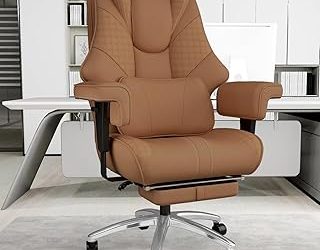
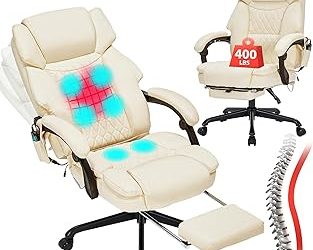
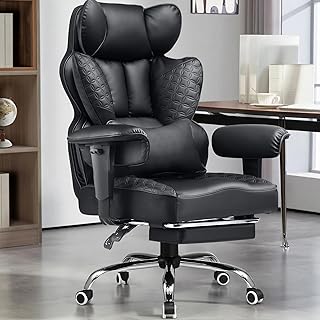
650lbs Big and Tall Leather Executive Chair
The highest capacity in this lineup, and the frame reflects it — a genuinely stout steel base paired with a wide, well-padded seat that’s built for eight-hour stretches rather than occasional use. The bonded leather runs warm in summer, so factor in room ventilation, but the load-bearing hardware here is the most confidence-inspiring of the group.
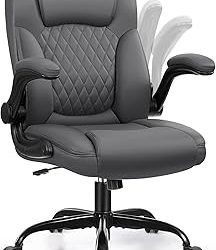
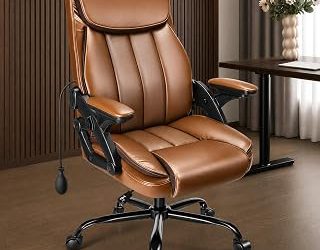
600LBS Heavy Duty Chair with 5D Flip Arms
The 5D flip-up arms are the standout feature, letting you tuck the chair fully under a desk or clear the armrest entirely when you shift positions. Pocket-spring cushioning underneath handles compression better than the foam-only competition, making this the strongest all-rounder for anyone who adjusts posture frequently through the day.
500lbs High Back Executive Chair with Pocket Spring Cushion
A clean, no-nonsense build with quiet rubber wheels and adjustable lumbar support that actually travels up and down the backrest. Assembly is straightforward with clear hardware labeling — expect about 30 minutes and a second pair of hands for seating the base.
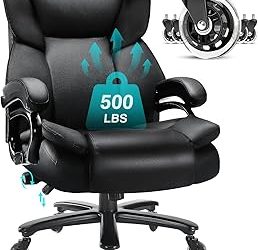
500lbs Extra Wide Seat Chair with Thick Armrest Pads
Built specifically around back-pain relief, with an extra-wide seat pan and generously padded armrests that reduce elbow pressure over long sessions. The upgraded wheels and reinforced base are a meaningful step up from budget chairs in the same weight class.
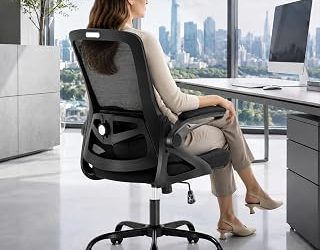
YFO Big and Tall Mesh Chair 500LBS
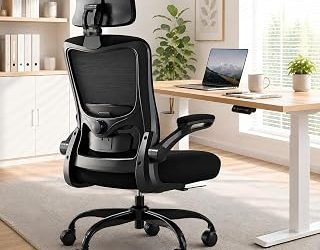
The best pick for warm rooms or anyone who runs hot, since the mesh back breathes far better than leather while still supporting a 500-pound rating. The 360-degree rotation and 2D arms cover the essentials without the complexity of higher-end adjustment systems.
Frequently Asked Questions
Are advertised weight ratings reliable?
Treat them as a ceiling, not a target. A chair rated at 500 pounds will last considerably longer if you’re carrying 350, because the gas lift and base are cycling well within their design limits.
How long does assembly take?
Plan on 30 to 45 minutes. Keep all bolts finger-tight until every piece is in place, then torque them down in sequence — tightening as you go is the fastest way to end up with a misaligned backrest.
Mesh or leather for heavy users?
Mesh wins on airflow, leather wins on padding depth and durability under abrasion. If you’re above 400 pounds, prioritize a mesh design with a reinforced frame rather than a stretched panel doing structural work.
Will these chairs damage hardwood floors?
Rubber or PU-coated casters are safe on wood and laminate. Bare nylon wheels are not — swap them for a set of aftermarket rubber casters, which is a five-minute upgrade that costs very little.
Final Thoughts
For maximum load capacity and long-haul comfort, the 650lbs leather executive chair is the sturdiest build here. The 600LBS model with 5D flip arms offers the best balance of adjustability and cushion longevity for most buyers, while the YFO mesh 500LBS is the smart choice if breathability matters more than plush padding.