Key takeaways
- Backing type: For hardwood, laminate, tile, or vinyl plank, you need a smooth or lightly textured underside — never studded. Cleats are engineered to bite into carpet pile and will leave permanent dimples in a soft finish like polyurethane over pine.
- Measure the sweep, not the desk: Sit down, roll back until you naturally stop, and mark the floor. Most people need 12 to 18 inches behind the chair plus the width of the desk. A 36″ x 48″ mat handles a standard workstation; go to 47″ x 60″ if you pivot between two monitors or a side cabinet.
- Thickness and roll resistance: Thin mats crease and telegraph every floor seam. Look for solid PVC with enough body to lie flat but not so much that casters sink and steering gets heavy. If a mat ships rolled, plan on a day or two flat with weight on the corners.
- Edge and surface finish: Beveled or tapered edges stop toe-catching and let a vacuum head ride over cleanly. Textured or woven patterns hide caster tracks; clear vinyl shows them but preserves the floor you paid for.
- Cleaning reality: Coffee, printer toner, and pet hair all end up down there. A sealed, non-porous top wipes with a damp cloth. Fabric-topped or fibrous mats pill, trap grit, and turn into sandpaper against the finish underneath.
What's inside
Anyone who has spent a weekend refinishing a floor knows exactly how fast a caster wheel can undo that work. Office chairs are quietly brutal on hard surfaces: five small wheels concentrate your entire body weight into contact patches the size of a dime, then grind grit across the finish every time you push back from the desk. The damage shows up as a dull halo around the chair, then fine scratches, then a worn track you can feel with your fingertips. Rugs bunch and creep. Cardboard looks terrible. And a mat sized for carpet, with those aggressive gripper spikes on the underside, will chew straight through a hardwood finish.
This guide covers the mats actually worth buying for hard floors in 2026, chosen with a builder’s eye: what the material really is, how the edges behave after a few months, whether the backing grips without gouging, and how each one handles the awkward realities of a home setup like floor vents, thresholds, and uneven plank seams. I have grouped picks by the situations that come up most often, from a standard 36″ x 48″ footprint under a single desk to oversized coverage for a corner setup with a keyboard tray and rolling drawers.
As an Amazon Associate we earn from qualifying purchases.


How to Choose a/an Office Chair Floor Mat (2026)
- Backing type: For hardwood, laminate, tile, or vinyl plank, you need a smooth or lightly textured underside — never studded. Cleats are engineered to bite into carpet pile and will leave permanent dimples in a soft finish like polyurethane over pine.
- Measure the sweep, not the desk: Sit down, roll back until you naturally stop, and mark the floor. Most people need 12 to 18 inches behind the chair plus the width of the desk. A 36″ x 48″ mat handles a standard workstation; go to 47″ x 60″ if you pivot between two monitors or a side cabinet.
- Thickness and roll resistance: Thin mats crease and telegraph every floor seam. Look for solid PVC with enough body to lie flat but not so much that casters sink and steering gets heavy. If a mat ships rolled, plan on a day or two flat with weight on the corners.
- Edge and surface finish: Beveled or tapered edges stop toe-catching and let a vacuum head ride over cleanly. Textured or woven patterns hide caster tracks; clear vinyl shows them but preserves the floor you paid for.
- Cleaning reality: Coffee, printer toner, and pet hair all end up down there. A sealed, non-porous top wipes with a damp cloth. Fabric-topped or fibrous mats pill, trap grit, and turn into sandpaper against the finish underneath.
The Best Office Chair Floor Mat (2026)s Reviewed
Baroyal Office Chair Mat, 36″ x 48″ (Espresso)
Heavy-duty PVC in a dark espresso tone that reads more like an intentional floor covering than office equipment, which matters if your desk lives in a living room. The non-slip underside holds position on sealed hardwood without adhesive or grippers, and the mass keeps corners down once it has relaxed flat.
Hardwood Floor Chair Mat, Black 36″ x 48″
The pick if pilling has burned you before — this one keeps a sealed surface that will not fuzz up or shed fibers into caster housings. Black hides scuffs and toner dust better than any other finish, and the standard footprint suits a single-desk setup with normal roll-back.
Blvornl Chair Mat, 36″ x 48″ (Dark Grey Rattan)
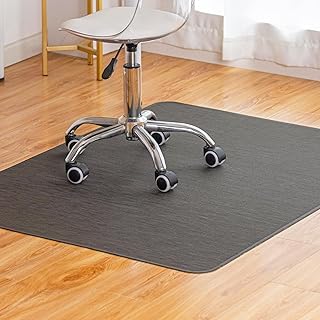
The woven rattan print is the smartest detail here: it visually breaks up caster tracks and dust in a way flat colors cannot, so it looks maintained with far less effort. Solid anti-slip PVC underneath, fully waterproof, and it wipes clean in one pass.
Blvornl Ultra Large Chair Mat, 47.2″ x 60″
This is the one for L-shaped desks, dual-monitor arms, or anyone who rolls between a keyboard and a filing drawer. The extra 11 inches of width and a foot of depth eliminate the classic failure mode where a rear caster drops off the edge mid-push and scores the floor beside the mat.
Kuyal Clear Chair Mat, 36″ x 48″
Choose this when the floor itself is the feature — clear vinyl protects white oak or patterned tile without covering it. Expect visible caster tracks over time in exchange for near-invisible coverage, and give it a full day flat before judging how it sits.
Frequently Asked Questions
Will a chair mat damage my hardwood finish?
Not if you pick a smooth-backed hard-floor mat and sweep before installing. Damage almost always comes from two sources: carpet-style gripper spikes, or trapped grit ground between the mat and the finish. Lift and wipe underneath every couple of months.
How do I flatten a mat that arrived rolled?
Unroll it face up in a warm room, then weight the corners with books or paint cans overnight. Warmth does most of the work — a cold garage will keep the curl for weeks. Avoid reverse-rolling PVC, which can crease it permanently.
Do I need a mat if I swap to soft rollerblade casters?
Soft polyurethane casters help a lot and are a worthwhile upgrade, but they still track grit and still compress the finish at rest. A mat plus soft casters is the belt-and-suspenders approach for a floor you care about.
What size mat fits a standard desk?
A 36″ x 48″ mat covers most 48″ to 60″ desks with a single chair. Step up to roughly 47″ x 60″ for corner desks, standing-desk setups where the chair gets pushed further back, or anywhere you roll sideways to a second surface.
Final Thoughts
For most home offices on hardwood, the Baroyal 36″ x 48″ in espresso is the balanced choice — enough mass to stay put, a finish that looks deliberate in a shared room. If you want caster tracks to disappear between cleanings, the Blvornl dark grey rattan is the smarter buy, and anyone working from an L-shaped or dual-monitor desk should skip straight to the Blvornl Ultra Large 47.2″ x 60″ rather than discovering a rear wheel off the edge the hard way.