Key takeaways
- Pressure vs. paint safety: Anything between 1,400 and 1,900 PSI at the nozzle is comfortable for automotive clear coat. Machines rated higher aren’t disqualified, just use the 40-degree white tip and keep a foot of distance instead of reaching for the narrow nozzles.
- Flow rate matters more than you think: GPM determines how fast dirt actually leaves the panel. A 1.76 GPM unit rinses noticeably quicker than a 1.2 GPM one at the same pressure, which shortens the whole job.
- Foam delivery method: Onboard soap tanks are convenient for quick washes; a detachable foam cannon produces the thick clinging lather that lifts grime with less contact. Cannon-equipped models are the better choice if you’re doing a proper two-bucket detail.
- Hose and cord length: Check the combined reach before you buy. Twenty feet of hose plus a 35-foot cord covers most driveways; anything shorter means dragging the unit mid-wash or fussing with extension cords rated for the amp draw.
- Storage footprint and stability: Vertical units save shelf space but can tip when you tug the hose. Look for anti-tipping designs or a wide wheeled base, plus integrated hooks so the cord and wand don’t end up in a tangle on the floor.
What's inside
Anyone who has washed a car in the driveway with a garden hose and a sponge knows the frustration: brake dust that won’t budge, a film of road grime that just smears around, and forty minutes of scrubbing that leaves swirl marks in the clear coat. An electric pressure washer solves the mechanical part of the problem, but the specs plastered across the box rarely tell you what actually matters for automotive paint. Too much pressure and you’re stripping trim; too little flow and you’re standing there waiting for the soap to do all the work.
This guide comes from a hands-on perspective: what these machines feel like to haul out of the garage, coil up afterward, and use on a Saturday morning without waking the neighborhood. We’ve focused on corded electric units in the 1,700 to 2,500 PSI range, because that window covers safe paint-friendly cleaning while still handling the patio, the fence, and the mossy back steps. Below you’ll find the picks, followed by a buying framework and answers to the questions that come up most often once the box is open.
As an Amazon Associate we earn from qualifying purchases.


🛒 Best Price Today on Amazon
Prime members get fast, free shipping on everything above, plus member-only deals. New members get a 30-day free trial — cancel anytime.
How to Choose a/an Electric Car Pressure Washer (2026)
- Pressure vs. paint safety: Anything between 1,400 and 1,900 PSI at the nozzle is comfortable for automotive clear coat. Machines rated higher aren’t disqualified, just use the 40-degree white tip and keep a foot of distance instead of reaching for the narrow nozzles.
- Flow rate matters more than you think: GPM determines how fast dirt actually leaves the panel. A 1.76 GPM unit rinses noticeably quicker than a 1.2 GPM one at the same pressure, which shortens the whole job.
- Foam delivery method: Onboard soap tanks are convenient for quick washes; a detachable foam cannon produces the thick clinging lather that lifts grime with less contact. Cannon-equipped models are the better choice if you’re doing a proper two-bucket detail.
- Hose and cord length: Check the combined reach before you buy. Twenty feet of hose plus a 35-foot cord covers most driveways; anything shorter means dragging the unit mid-wash or fussing with extension cords rated for the amp draw.
- Storage footprint and stability: Vertical units save shelf space but can tip when you tug the hose. Look for anti-tipping designs or a wide wheeled base, plus integrated hooks so the cord and wand don’t end up in a tangle on the floor.
The Best Electric Car Pressure Washer (2026)s Reviewed
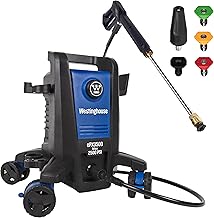
Westinghouse ePX3500
The 2,500 max PSI paired with 1.76 GPM makes this the most capable all-rounder here, and the anti-tipping base is a genuinely useful bit of engineering when you’re yanking the hose around a vehicle. The onboard soap tank and steel wand feel a step above the plastic assemblies common at this price.
Sun Joe SPX3000
A long-running favorite for good reason: dual detergent tanks let you keep car soap in one and driveway cleaner in the other, so you’re not rinsing bottles between jobs. Note the 2,030 PSI PWMA rating is the honest working number, which is right in the sweet spot for paint.
Westinghouse ePX3100v
Same 1.76 GPM flow as its bigger sibling at a gentler 2,100 PSI, which arguably makes it the better dedicated car washer. The detachable foam cannon produces thick, clinging suds, and the built-in carry handle means no wrestling with an awkward frame.
Hiclean 2100 PSI
A compact, genuinely portable unit that includes both turbo and fan nozzles plus a foam cannon out of the box. Best suited to apartment dwellers and anyone with limited storage who still wants proper foam-and-rinse capability.
CRAFTSMAN CMEPW1700
At 1,700 PSI and 1.2 GPM this is the most paint-conservative pick, and the lightweight corded design is easy to carry one-handed to the curb. Flow rate means slower rinsing on heavily soiled vehicles, but for regular maintenance washes it’s plenty.
Frequently Asked Questions
Will a pressure washer damage my car’s paint?
Not if you use the wide-angle nozzle, hold the wand roughly 12 to 18 inches from the surface, and keep the spray moving. Damage typically comes from narrow red or turbo tips held close to one spot, or from blasting at chipped paint and lifting trim edges.
Do I need a separate foam cannon?
Onboard tanks work fine for a rinse-and-go wash, but a cannon generates far denser foam that dwells on the panel and loosens dirt before you touch it. If you care about minimizing swirl marks, it’s worth having.
Can these run from a rain barrel or bucket?
Most electric units require pressurized inlet water from a spigot and will cavitate or stall if fed from a static source. Check the manual for a specific gravity-feed or siphon rating before trying it.
What maintenance do they need?
Run clean water through the system after using detergent, drain the pump before freezing weather, and store the unit indoors. Rinsing the inlet filter screen every few uses prevents the pressure drops that get mistaken for a failing pump.
Final Thoughts
For most driveways the Westinghouse ePX3100v hits the ideal balance of paint-safe pressure, strong 1.76 GPM flow, and a foam cannon that actually works. Step up to the Westinghouse ePX3500 if you want the extra headroom for fences and concrete, or choose the Sun Joe SPX3000 if the dual-detergent setup fits how you like to work.