Key takeaways
- Leather grade: Top-grain cowhide is the sweet spot for a desk chair. It keeps the natural grain surface, breaks in rather than breaks down, and develops patina instead of cracks. Skip anything labeled “bonded” or “leather match” on contact surfaces.
- Base and frame metal: Cast aluminum beats nylon and stamped steel for both rigidity and lifespan. Give the base a look for five true spokes and a solid connection to the gas lift housing.
- Lumbar geometry: A molded curve in the backrest foam works better than a strap-on pillow that slides around. Check whether the support sits at your actual belt line when seated, not four inches above it.
- Recline mechanism: Lockable multi-position tilt is worth the upcharge over free-float. Being able to park the back at one angle for typing and another for reading is the feature you’ll use daily.
- Caster quality: Polyurethane-coated wheels roll silently on hardwood and won’t leave gray tracks. Standard 11mm stems mean easy swaps later if you want to upgrade.
What's inside
Anyone who has taken a chair apart knows the truth: “leather” on a product page can mean almost anything. Bonded scraps glued to a backing, a thin PU skin over foam, or actual hide with a grain you can feel under your thumb. The difference shows up around month eighteen, when the cheap stuff starts flaking off in confetti-sized pieces around your desk. Add in stamped steel bases that develop a wobble, and armrests bolted through a single point of particleboard, and you get why so many home office chairs end up on the curb.
I went at this the way I approach any purchase I plan to keep for a decade: looking at what holds the thing together. Base material, caster construction, how the lumbar support is actually built rather than what the marketing calls it, and whether the leather is top-grain or something less honest. Below are six genuine leather office chairs worth your money in 2026, plus the specs I check before anything comes home.
As an Amazon Associate we earn from qualifying purchases.


How to Choose a Genuine Leather Office Chair (2026)
- Leather grade: Top-grain cowhide is the sweet spot for a desk chair. It keeps the natural grain surface, breaks in rather than breaks down, and develops patina instead of cracks. Skip anything labeled “bonded” or “leather match” on contact surfaces.
- Base and frame metal: Cast aluminum beats nylon and stamped steel for both rigidity and lifespan. Give the base a look for five true spokes and a solid connection to the gas lift housing.
- Lumbar geometry: A molded curve in the backrest foam works better than a strap-on pillow that slides around. Check whether the support sits at your actual belt line when seated, not four inches above it.
- Recline mechanism: Lockable multi-position tilt is worth the upcharge over free-float. Being able to park the back at one angle for typing and another for reading is the feature you’ll use daily.
- Caster quality: Polyurethane-coated wheels roll silently on hardwood and won’t leave gray tracks. Standard 11mm stems mean easy swaps later if you want to upgrade.
The Best Genuine Leather Office Chair (2026)s Reviewed
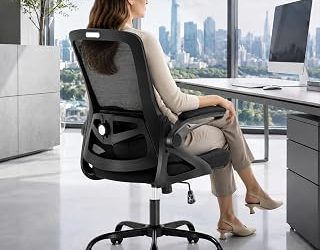
Genuine Leather Padded Mid Back Conference Desk Chair, Brown
Aluminum arms and legs on a mid-back frame make this the most structurally honest chair in the group at its price point. The thickened backrest gives you real padding depth behind the shoulder blades, which matters more than you’d expect during long stretches at a keyboard.
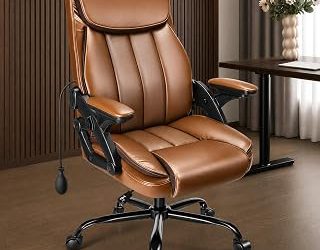
Top-Grain Cowhide Executive Office Chair
Adjustable headrest height is rare below the premium tier, and paired with a three-position lockable recline it lets you dial in a genuinely custom fit. The top-grain cowhide is the real appeal here, and it will look better in five years than it does out of the box.
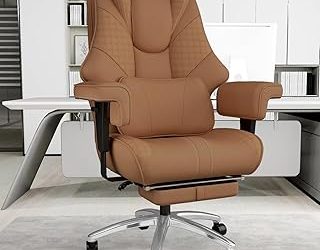
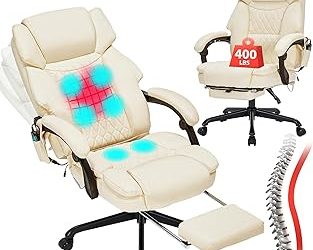
High Back Executive Chair with Flexible Footrest, 400 lbs
A 400-pound rated frame means overbuilt components throughout, which is exactly what you want in a chair you’ll sit in daily. The retractable footrest turns it into a legitimate reading chair without giving up desk-height function.
TOMU Executive Chair with Foot Rest, Beige
The beige top-grain leather is a smart pick for a bright room where black leather would read heavy and industrial. Padded armrests and an aluminum base put this squarely in the lounge-adjacent category, and the footrest tucks away cleanly when you need to work.
Mid-Century Modern High Back Chair with 135° Recline
That 135-degree recline goes further back than almost anything else here, essentially giving you a nap chair that also works for spreadsheets. Adjustable armrests and quiet casters round out a chair that fits a mid-century room without looking like a rental office castoff.
Frequently Asked Questions
How do I tell genuine leather from bonded leather in person?
Look at the cut edges and the pore pattern. Real hide has irregular, non-repeating grain and a fibrous suede-like underside, while bonded leather shows a uniform stamped texture and a fabric backing at the seams.
Do leather office chairs get hot?
Less than vinyl or PU, since real leather breathes and wicks a little moisture. Perforated panels help further, though in a warm climate a mesh back will always run cooler.
What maintenance does genuine leather need?
Wipe dust weekly with a dry microfiber cloth and condition twice a year with a pH-balanced leather cream. Keep the chair out of direct sun, which fades and dries hide faster than any amount of use.
Can I replace the casters and gas cylinder myself?
Almost always yes. Casters pull out with a firm tug and standard Class 3 or 4 gas lifts swap with a rubber mallet and a pipe wrench, which means a good frame can outlast its original hardware by years.
Final Thoughts
For most home offices, the Top-Grain Cowhide Executive Chair delivers the best balance of hide quality and adjustability, while the Mid-Century Modern chair with 135-degree recline is the pick if your room leans design-forward. If you want maximum durability and don’t mind a bulkier footprint, the 400-pound-rated High Back with the flexible footrest is the one I’d bolt together and keep for the long haul.