Key takeaways
- CFM at 90 PSI, not peak CFM: Check your gun’s requirement, then look for a compressor delivering at least 1.5 times that figure at 90 PSI. Most LVLP furniture guns want 3 to 5 CFM sustained, so a rating below 4 SCFM means you’ll be pausing to let pressure recover.
- Tank volume buys you runtime: A 2-gallon tank works fine for chair spindles and small drawer fronts. Anything with a broad surface, like a tabletop or a wardrobe door, benefits from 8 gallons and up so the pump cycles less and pressure stays flat.
- Oil-free pumps for finish work: Oil-lubricated compressors last longer under industrial duty but carry a real risk of oil mist reaching your finish, which shows up as fisheyes. For furniture, oil-free removes an entire category of headache.
- Noise ratings under 70 dB: Anything in the 60 to 70 dB range lets you talk over it and spray indoors without ear protection. Older direct-drive units run 85 dB or louder, which turns a two-hour session into a genuinely unpleasant one.
- Moisture control is non-negotiable: Compressed air carries water, and water ruins lacquer. Budget for an inline desiccant filter or a decent water separator regardless of which tank you pick, and drain the tank after every session.
What's inside
Spraying a smooth finish on a dresser or a set of dining chairs comes down to one unglamorous variable: whether your compressor can keep feeding air while the trigger stays down. Most people find this out the hard way, halfway through a tabletop, when the motor kicks on, pressure sags, and the fan pattern goes from silky to spattered. Nail guns forgive an undersized tank. Spray guns absolutely do not, because they draw continuously instead of in short bursts.
This guide is written from the shop floor, not the spec sheet. I’ve sorted through the compressors that actually hold up for furniture work, where the priorities are steady CFM at 40 to 90 PSI, low enough noise that you can spray in an attached garage without annoying the household, and oil-free pumps that won’t spit contamination into your topcoat. Below you’ll find current picks across the range, from a compact carry unit for small pieces to upright tanks that can run an HVLP gun all afternoon.
As an Amazon Associate we earn from qualifying purchases.



🛒 Best Price Today on Amazon
Prime members get fast, free shipping on everything above, plus member-only deals. New members get a 30-day free trial — cancel anytime.
How to Choose a/an Air Compressor For Spraying Paint (2026)
- CFM at 90 PSI, not peak CFM: Check your gun’s requirement, then look for a compressor delivering at least 1.5 times that figure at 90 PSI. Most LVLP furniture guns want 3 to 5 CFM sustained, so a rating below 4 SCFM means you’ll be pausing to let pressure recover.
- Tank volume buys you runtime: A 2-gallon tank works fine for chair spindles and small drawer fronts. Anything with a broad surface, like a tabletop or a wardrobe door, benefits from 8 gallons and up so the pump cycles less and pressure stays flat.
- Oil-free pumps for finish work: Oil-lubricated compressors last longer under industrial duty but carry a real risk of oil mist reaching your finish, which shows up as fisheyes. For furniture, oil-free removes an entire category of headache.
- Noise ratings under 70 dB: Anything in the 60 to 70 dB range lets you talk over it and spray indoors without ear protection. Older direct-drive units run 85 dB or louder, which turns a two-hour session into a genuinely unpleasant one.
- Moisture control is non-negotiable: Compressed air carries water, and water ruins lacquer. Budget for an inline desiccant filter or a decent water separator regardless of which tank you pick, and drain the tank after every session.
The Best Air Compressor For Spraying Paint (2026)s Reviewed
VEVOR 13-Gallon Oil-Free Air Compressor
At 4.6 SCFM at 90 PSI with 13 gallons of storage, this is the sweet spot for most home furniture shops: enough reserve to spray a full dining table without the pump running constantly, and a 66 dB rating that keeps it garage-friendly. The wheels matter more than you’d think when you’re rolling it out to a driveway spray setup.
California Air Tools 8010 PK with LVLP Spray Kit
The 8-gallon tank paired with a matched LVLP gun makes this the easiest entry point if you’re building a finishing setup from scratch, since the gun and compressor are already spec’d to each other. At 60 dBA it’s the quietest unit here, and the 1.0 HP pump is genuinely low-maintenance.
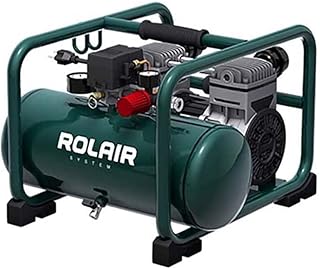
Rolair JC20 Hand Carry 2HP Compressor
Rolair builds these for contractors who abuse their tools daily, and it shows in the cast-iron pump and the way it holds output over years rather than months. The small tank means it’s best for touch-ups, small casework, and spindle spraying rather than large panels, but nothing in this size class is built better.
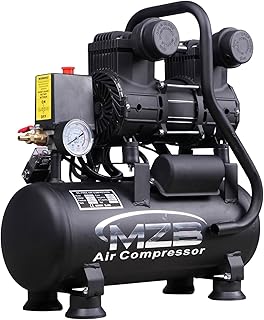
MZB 18.5-Gallon Upright Oil-Free Compressor
The upright footprint is the argument here: you get serious tank capacity for continuous spraying while giving up roughly the floor space of a shop vac. Oil-free operation and a 115 PSI ceiling suit furniture finishing well, though you’ll want it on a level surface since tall tanks are tippy.
Rolair FC2002 Twin Stack Compressor
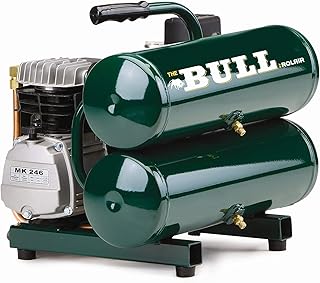
Twin-stack tanks split the difference between portability and reserve air, and the overload protection with manual reset means a stalled start won’t cook the motor. Choose this one if you move between a garage bench and job sites and want a compressor that tolerates being knocked around.
Frequently Asked Questions
What size compressor do I need for spraying furniture?
For HVLP or LVLP guns doing cabinet doors, tables, and dressers, target 4 SCFM or more at 90 PSI with at least an 8-gallon tank. Smaller units work for detail and touch-up spraying, but they’ll cycle constantly on large flat surfaces, which invites pressure fluctuation and uneven film build.
Can I use an oil-lubricated compressor for painting?
You can, but you need a proper coalescing filter downstream and disciplined maintenance. Oil-free pumps sidestep the contamination risk entirely, which is why nearly every finishing-focused compressor sold today is oil-free.
Do I need a separate water trap?
Yes. The regulator-mounted filter on most compressors catches bulk water only. Add an inline desiccant dryer close to the gun, especially in humid weather, or you’ll see blush and cratering in waterborne and lacquer finishes.
How quiet is quiet enough for indoor spraying?
Anything at or below 70 dB is comfortable for extended sessions in a basement or attached garage. The 60 to 66 dB units are noticeably calmer still, roughly the level of normal conversation, which makes a real difference over a long finishing day.
Final Thoughts
For most home furniture makers, the VEVOR 13-Gallon hits the best balance of sustained CFM, tank reserve, and quiet operation at a sane price. If you’d rather buy a complete finishing setup in one go, the California Air Tools 8010 PK with its LVLP gun is the shortest path to good results, and anyone who wants a compressor that will outlast their shop should look hard at the Rolair JC20.