Key takeaways
- Slide or chop: A non-sliding saw crosscuts roughly 5-6 inches of stock — fine for 2x4s, trim, and narrow shelving. If you’re breaking down 1×10 shelf boards or wide stair treads, a slider earns its extra footprint and cost. Don’t pay for slide rails you’ll never extend.
- Single vs. dual bevel: Single bevel tilts one direction, so you flip the workpiece for opposing cuts. Dual bevel tilts both ways and saves you from flipping long, awkward molding — a genuine time-saver on baseboard runs, and less chance of blowing a cut on a piece you already scribed.
- Fence height and depth stop: Measure the fence. A tall fence supports crown and wide baseboard on edge; a short one forces you to build jigs. A working depth stop lets you cut dadoes and half-laps, which turns a miter saw into a joinery tool.
- Cut-line indication: Lasers drift and need calibration. Shadow-line systems project the actual blade silhouette, so they can’t lie to you. If a saw has neither, budget an afternoon learning to read the kerf — doable, but slower.
- Weight and portability: Under 30 pounds means you carry it to the job. Over 50 means it lives on a stand. Decide which saw you’re buying before you fall for the spec sheet, because a heavy saw that stays in the garage is useless on a deck build.
What's inside
Ten-inch miter saws sit in an awkward spot: cheap enough that every hardware store stocks a wall of them, expensive enough that picking wrong stings for a decade. The specs sheets all blur together — 15 amps, 5000 RPM, 0-45° bevel — and none of that tells you whether the fence stays square after you drop the head a hundred times, or whether the dust port actually catches anything. I’ve built enough shaker cabinet doors and face frames to know that the difference between a saw you tolerate and a saw you trust comes down to details the marketing copy skips.
This guide covers the 10-inch miter saws worth your bench space in 2026, from budget chop saws that punch above their price to dual-bevel sliders that handle crown molding without math gymnastics. I’ve weighted repeatable accuracy, blade quality out of the box, and how the saw behaves in a cramped garage shop over horsepower bragging rights. Below you’ll find the current picks, a buying framework, and answers to the questions that actually come up mid-project.
As an Amazon Associate we earn from qualifying purchases.




🛒 Best Price Today on Amazon
Prime members get fast, free shipping on everything above, plus member-only deals. New members get a 30-day free trial — cancel anytime.
How to Choose a 10 In Miter Saw (2026)
- Slide or chop: A non-sliding saw crosscuts roughly 5-6 inches of stock — fine for 2x4s, trim, and narrow shelving. If you’re breaking down 1×10 shelf boards or wide stair treads, a slider earns its extra footprint and cost. Don’t pay for slide rails you’ll never extend.
- Single vs. dual bevel: Single bevel tilts one direction, so you flip the workpiece for opposing cuts. Dual bevel tilts both ways and saves you from flipping long, awkward molding — a genuine time-saver on baseboard runs, and less chance of blowing a cut on a piece you already scribed.
- Fence height and depth stop: Measure the fence. A tall fence supports crown and wide baseboard on edge; a short one forces you to build jigs. A working depth stop lets you cut dadoes and half-laps, which turns a miter saw into a joinery tool.
- Cut-line indication: Lasers drift and need calibration. Shadow-line systems project the actual blade silhouette, so they can’t lie to you. If a saw has neither, budget an afternoon learning to read the kerf — doable, but slower.
- Weight and portability: Under 30 pounds means you carry it to the job. Over 50 means it lives on a stand. Decide which saw you’re buying before you fall for the spec sheet, because a heavy saw that stays in the garage is useless on a deck build.
The Best 10 In Miter Saw (2026)s Reviewed
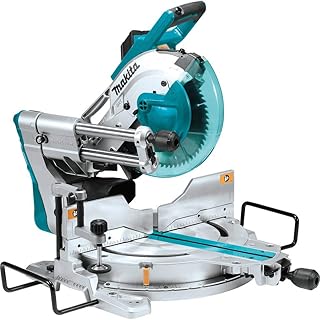
Makita LS1019L Dual-Bevel Slider
The compact rail design lets this sit flush against a wall, which is a bigger deal in a one-car garage than any spec on the box. Cuts come off glass-smooth, the dual bevel detents lock positively, and the laser holds calibration better than most — this is the saw I’d buy if furniture work is the main event.
SKIL MS6305-00 Dual Bevel Slider
SKIL packed dual bevel and sliding capacity into a price bracket where you’d normally get one or the other. The fit and finish won’t match Makita, but the miter detents are crisp and it handles 12-inch crosscuts without complaint — strong value for a weekend shop.
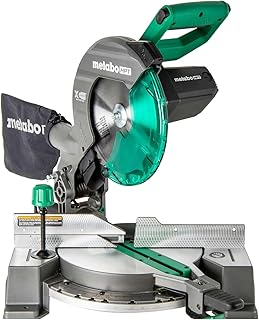
Metabo HPT C10FCG2
The Xact Cut shadow line is the headline here, and it works exactly as advertised: no batteries, no drift, just the blade’s shadow on your pencil mark. At around 24 pounds it’s genuinely luggable, making it my pick for trim carpentry and site work.
DEWALT DWS713
An honest, tough single-bevel compound saw with a tall fence and a stainless miter detent plate that stays accurate through abuse. No frills, no laser, but the cast components feel like they’ll outlast the warranty by a decade.
DOVAMAN 10-Inch Sliding Miter Saw
Three included TCT blades and dual speeds (5000/3200 RPM) mean you can move between wood, aluminum trim, and plastics without a trip to the store. Ambidextrous controls are a thoughtful touch, and the 3.5×13.4-inch capacity covers most furniture stock.
Frequently Asked Questions
Is a 10-inch saw big enough for furniture building?
For most casework, yes. Table aprons, rails, stiles, and shelving all fall well within a 10-inch slider’s range. You’d only want 12 inches for thick timber posts or very wide stair components.
Should I replace the stock blade?
Almost always. Factory 36-40 tooth blades are general-purpose compromises. A 60-80 tooth fine-finish blade transforms cut quality on hardwood and plywood — it’s the cheapest upgrade in the shop.
How often should I check the saw for square?
Verify 90° and 45° with a machinist square before any project where joints show. After transport, check every time. Five minutes of setup beats gapped miters on a finished piece.
Do these saws work with a shop vacuum?
Better than with the included bags, which catch maybe half the dust. Connect a vac to the rear port and you’ll capture most of it, though miter saws are inherently messy — plan on a hood or outdoor cutting for big jobs.
Final Thoughts
If furniture is your focus and precision matters more than price, the Makita LS1019L is the clear pick — its compact slide and dependable calibration make it a saw you stop second-guessing. For a tighter budget without giving up dual bevel and slide capacity, the SKIL MS6305-00 delivers a lot of saw for the money, while the Metabo HPT C10FCG2 remains the smartest choice if you need something light enough to carry and a cut line you can actually trust.