Key takeaways
- Tooth count and task: Fewer teeth clear waste faster. Run 24 to 32 teeth for ripping thick stock and framing lumber, 40 teeth for a genuine do-everything blade, and 60 to 80 teeth when you need clean crosscuts in plywood, melamine, or hardwood trim. Pushing an 80-tooth blade through 2-inch oak just burns the workpiece and the blade.
- Arbor size: Nearly every 10-inch North American table saw uses a 5/8-inch arbor. Confirm it before ordering, and never shim an oversized bore to fit. If the blade wobbles on the arbor, runout goes up and the cut quality goes down.
- Kerf width: Thin-kerf blades around 0.090 inch remove less material and are easier on underpowered contractor saws and portable jobsite units. Full-kerf blades near 0.125 inch are stiffer and track straighter, which matters if you own a cabinet saw with 3 horsepower or more.
- Carbide grade and grind: Look for micro-grain carbide tips and a laser-cut plate with expansion slots. ATB (alternate top bevel) grinds slice cleanly through cross grain; flat-top or FTG teeth rip more aggressively. Thicker carbide means more resharpening cycles down the road.
- Anti-vibration features: Laser-cut slots, anti-kickback shoulders, and a coating that resists pitch buildup all contribute to quieter cuts and less burning. These features cost a few dollars more and pay for themselves in reduced cleanup.
What's inside
The blade that shipped with your table saw is almost certainly the weakest link in your shop. Most stock blades are 24- or 28-tooth general-purpose steel-and-carbide compromises, built to prove the saw spins rather than to leave a joinable edge. You notice it the first time you rip a piece of hard maple and get scorch marks down the cut, or crosscut plywood and pull out a strip with the veneer chewed off both faces. No amount of fence tuning fixes a blade problem. Feed rate slows, the motor bogs, and you end up sanding away material you needed for the joint.
Swapping in the right blade is the cheapest meaningful upgrade a home woodworker can make, and it costs less than a decent set of clamps. This guide walks through ten 10-inch blades worth running in 2026, from high-tooth-count finish blades that leave glue-ready edges to multi-packs that cover framing, ripping, and finish work in one purchase. We cover what tooth count actually does, when a thin kerf helps and when it hurts, and which blades earn a permanent spot on the shop wall.
As an Amazon Associate we earn from qualifying purchases.


🛒 Best Price Today on Amazon
Prime members get fast, free shipping on everything above, plus member-only deals. New members get a 30-day free trial — cancel anytime.
How to Choose a 10 In Table Saw Blade (2026)
- Tooth count and task: Fewer teeth clear waste faster. Run 24 to 32 teeth for ripping thick stock and framing lumber, 40 teeth for a genuine do-everything blade, and 60 to 80 teeth when you need clean crosscuts in plywood, melamine, or hardwood trim. Pushing an 80-tooth blade through 2-inch oak just burns the workpiece and the blade.
- Arbor size: Nearly every 10-inch North American table saw uses a 5/8-inch arbor. Confirm it before ordering, and never shim an oversized bore to fit. If the blade wobbles on the arbor, runout goes up and the cut quality goes down.
- Kerf width: Thin-kerf blades around 0.090 inch remove less material and are easier on underpowered contractor saws and portable jobsite units. Full-kerf blades near 0.125 inch are stiffer and track straighter, which matters if you own a cabinet saw with 3 horsepower or more.
- Carbide grade and grind: Look for micro-grain carbide tips and a laser-cut plate with expansion slots. ATB (alternate top bevel) grinds slice cleanly through cross grain; flat-top or FTG teeth rip more aggressively. Thicker carbide means more resharpening cycles down the road.
- Anti-vibration features: Laser-cut slots, anti-kickback shoulders, and a coating that resists pitch buildup all contribute to quieter cuts and less burning. These features cost a few dollars more and pay for themselves in reduced cleanup.
The Best 10 In Table Saw Blade (2026)s Reviewed
FOXBC 10-Inch 80-Tooth Ultra Finish Blade
Eighty teeth with a fine ATB grind makes this the blade to reach for when you are crosscutting veneered plywood or mitering trim and cannot tolerate tearout. Keep the feed rate slow and steady, and treat it as a finish blade only — it will scorch if you push thick hardwood through it.
DEWALT DWA11040 40-Tooth Fine Finish
The most sensible single-blade answer for a home shop, this 40-tooth blade rips 3/4-inch stock without bogging and crosscuts cleanly enough that most cuts need only light sanding. The carbide holds an edge well through sheet goods, and DEWALT’s plate stays flat and quiet at speed.
WEN BL1080 80-Tooth Carbide-Tipped
WEN’s 80-tooth blade delivers finish-grade cuts at a price that makes it easy to keep a spare on hand. It works in miter saws and table saws alike, so it is a practical pick if you want one blade to handle both stations for trim and casework.
WEN BL1060 60-Tooth Fine Finish
Sixty teeth splits the difference nicely: cleaner than a 40-tooth blade on crosscuts, but it still clears chips fast enough to avoid burning in hardwood. This is the blade I recommend to anyone building furniture who does not want to swap blades between operations.
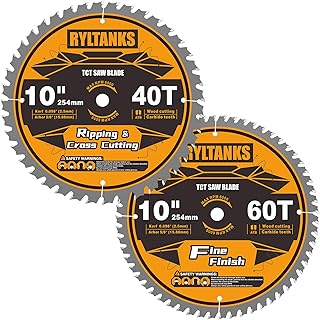
32T / 60T / 80T 3-Pack
A complete tooth-count progression in one purchase, covering framing rips, fine crosscuts, and ultra-fine finish work. Buying the set is a fast way to learn firsthand how much tooth count affects cut quality, and it saves you from forcing the wrong blade through the wrong material.
Frequently Asked Questions
How many teeth do I actually need?
For general furniture work, a 40-tooth blade handles the majority of cuts. Add a 60- or 80-tooth blade for plywood and trim, and a 24- to 32-tooth rip blade if you break down rough lumber regularly.
Will these blades fit my miter saw?
Most 10-inch, 5/8-inch arbor blades fit both table saws and 10-inch miter saws. Check your saw’s maximum blade thickness and confirm the arbor before mounting.
Why is my new blade burning the wood?
Burning usually means feed rate, alignment, or tooth count — not a defective blade. Verify the fence is parallel to the blade, clean pitch off the carbide, and step down to a lower tooth count for thick stock.
Is it worth resharpening a budget blade?
Generally no. Sharpening runs $15 to $25, which approaches the cost of a replacement on inexpensive blades. Resharpening makes economic sense on premium blades with thick carbide tips.
Final Thoughts
If you buy one blade, make it the DEWALT DWA11040 — it covers ripping and crosscutting well enough to stay on the arbor most of the time. Pair it with the FOXBC 80-tooth for veneered sheet goods and delicate trim, or skip the guesswork entirely and grab the 32T/60T/80T three-pack, which gives you the right blade for every operation from framing to final finish cuts.