Key takeaways
- Tooth count drives the tradeoff: 24 to 32 teeth clear sawdust fast and rip thick stock without bogging; 60 to 80 teeth leave a near-planed surface but cut slower and demand a steady feed. Match the count to the job, not to the price tag.
- Kerf thickness matters on small motors: A thin-kerf blade removes roughly a third less material per pass, which is a real advantage on 15-amp jobsite saws. Full-kerf blades stay flatter under load and suit heavier machines with a stable throat plate.
- Check the arbor and the plate: Nearly every consumer table saw uses a 5/8-inch arbor, but confirm before ordering. Expansion slots in the plate reduce warping from heat, and that keeps burn marks off your rip cuts.
- Carbide grade beats tooth count for longevity: Micrograin carbide holds a sharper edge through more board feet and survives the occasional hidden staple. Cheap carbide chips at the tips and you notice it immediately in the cut quality.
- Buy in sets if you switch tasks often: Changing a blade takes ninety seconds. Owning a rip blade and a finish blade will improve your work more than spending double on one premium do-it-all option.
Anyone who has run a piece of hard maple through a table saw and watched the edge come out fuzzy, scorched, or slightly off-square knows the frustration. Nine times out of ten the culprit is not the saw, the fence, or your technique. It is the blade that shipped in the box, which manufacturers treat as a placeholder rather than a real cutting tool. Swap in something purpose-built and the same $300 contractor saw suddenly produces glue-ready edges and crosscuts that need almost nothing off the sanding block.
This guide covers ten 10-inch blades worth bolting onto your arbor in 2026, chosen with furniture work in mind: hardwood rips, plywood crosscuts, face frames, and the occasional sheet of melamine. I have paid attention to tooth geometry, kerf thickness, and how each blade behaves on lower-powered saws, since not everyone is feeding a 3HP cabinet machine. You will find single-purpose finish blades, do-everything combination options, and multi-packs that cover the full range without draining the shop budget.
Our top picks


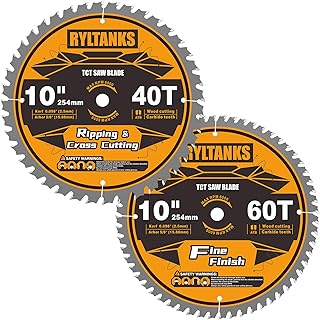
As an Amazon Associate we earn from qualifying purchases at no extra cost to you. Ratings are shown as listed on Amazon.
🛒 Best Price Today on Amazon
Prime members get fast, free shipping on everything above, plus member-only deals. New members get a 30-day free trial — cancel anytime.
How to Choose a 10 Table Saw Blades (2026)
- Tooth count drives the tradeoff: 24 to 32 teeth clear sawdust fast and rip thick stock without bogging; 60 to 80 teeth leave a near-planed surface but cut slower and demand a steady feed. Match the count to the job, not to the price tag.
- Kerf thickness matters on small motors: A thin-kerf blade removes roughly a third less material per pass, which is a real advantage on 15-amp jobsite saws. Full-kerf blades stay flatter under load and suit heavier machines with a stable throat plate.
- Check the arbor and the plate: Nearly every consumer table saw uses a 5/8-inch arbor, but confirm before ordering. Expansion slots in the plate reduce warping from heat, and that keeps burn marks off your rip cuts.
- Carbide grade beats tooth count for longevity: Micrograin carbide holds a sharper edge through more board feet and survives the occasional hidden staple. Cheap carbide chips at the tips and you notice it immediately in the cut quality.
- Buy in sets if you switch tasks often: Changing a blade takes ninety seconds. Owning a rip blade and a finish blade will improve your work more than spending double on one premium do-it-all option.
The Best 10 Table Saw Blades (2026)s Reviewed
FOXBC 10-Inch 80-Tooth Ultra Finish
Eighty teeth on a 10-inch plate is about as fine as it gets, and this one earns its keep on veneered plywood and pre-finished panels where tearout ruins the whole piece. Feed it slowly and keep the cut shallow, since crowding an 80-tooth blade in thick hardwood is a fast route to burning.
DEWALT 40-Tooth Fine Finish (DWA11040)
This is the blade I recommend to anyone who wants one blade in the saw most of the time. Forty teeth handle 4/4 hardwood rips without stalling, then turn around and crosscut poplar face frames cleanly enough that a light pass with 180-grit finishes the edge.
WEN BL1080 80-Tooth Carbide-Tipped
WEN has quietly built a reputation for blades that punch above their price, and the BL1080 backs it up with tight, consistent tips and a plate that runs true. It works on both miter and table saws, which makes it a sensible second blade for trim and cabinet door work.
WEN BL1060 60-Tooth Fine Finish
Sixty teeth land in the sweet spot between speed and surface quality, which is why this blade lives on my saw during casework. It leaves crosscuts in cherry and walnut smooth enough for a scraper rather than a sander.
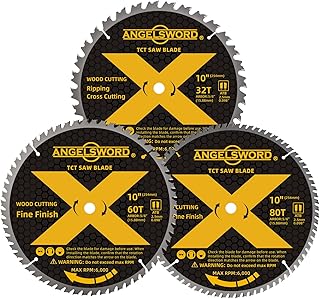
ANGELSWORD 3-Pack (32T, 60T, 80T)
Framing, fine finish, and ultra-fine in one purchase covers virtually every operation a furniture shop runs. The 32-tooth is the standout, chewing through construction lumber and rough stock while the finer two sit clean in storage until you need them.
Frequently Asked Questions
How often should I replace a table saw blade?
Judge by performance, not calendar time. When you notice more pushing effort, burn marks on clean stock, or fuzzy edges on material that used to cut crisply, the blade needs sharpening or replacement. A quality carbide blade can be resharpened several times.
Can I use a miter saw blade in my table saw?
Often yes, provided the arbor size matches and the blade is rated for the saw’s RPM. Blades sold for both applications, like the WEN options, are designed with that flexibility in mind.
Do thin-kerf blades cut less accurately?
Not inherently, but they deflect more under side pressure. Use a zero-clearance insert and let the blade set the pace instead of forcing stock into the fence.
Is an 80-tooth blade good for ripping hardwood?
No. There is not enough gullet space to evacuate chips, so heat builds fast and you get scorching. Reserve 80-tooth blades for crosscuts and sheet goods.
Final Thoughts
If you only buy one blade, make it the DEWALT DWA11040 — it covers the widest range of furniture tasks with the fewest compromises. Pair it with the FOXBC 80-tooth for plywood and finished panels, or skip the guesswork entirely and grab the ANGELSWORD 3-pack, which gets you a complete blade rotation for roughly the price of one premium option.