Key takeaways
- Tooth count: For plywood, more teeth means each one removes less material per pass, which keeps the veneer intact. Aim for 60T minimum on a 10-inch blade; 80T is the sweet spot for cabinet-grade face plies. Anything under 50T belongs on solid stock, not sheet goods.
- Grind geometry: Look for ATB (alternate top bevel) teeth. Those angled tips act like tiny knives that slice the veneer fibers at the surface rather than plowing through them. A high-ATB grind is even better for melamine and prefinished ply.
- Kerf width: Thin-kerf blades pull less amperage, which matters if you’re running a contractor saw or a jobsite unit on a 15-amp circuit. The tradeoff is a plate that can flutter on long rips, so pair thin kerf with a steady feed rate.
- Arbor and diameter match: Most home table saws take a 5/8-inch arbor with a 10-inch blade. Smaller 8-1/4 and 8-1/2 inch blades exist for compact saws — confirm your saw’s max diameter before ordering, since an oversized blade won’t retract into the throat.
- Carbide quality: Tungsten carbide tips hold an edge far longer than steel, and plywood glue lines are abrasive enough to dull cheap carbide fast. Check that teeth are brazed cleanly and the plate has expansion slots or laser-cut vents to shed heat.
Plywood punishes the wrong blade. You feed a sheet of birch ply across the table, everything feels smooth, and then you flip the offcut over and find the underside chewed into a fuzzy ribbon of splinters. That tear-out isn’t a technique problem you can sand away on a cabinet face frame — it’s the blade’s tooth geometry lifting the thin face veneer before the plate finishes the cut. Anyone who has built a plywood carcass and tried to hide a ragged edge under iron-on banding knows the feeling.
The fix is mostly hardware. High tooth counts, a tight kerf, and the right grind keep the veneer supported through the cut instead of tearing it loose. This guide walks through the specs that actually matter for sheet goods, then breaks down six blades that hold up in a home shop — from budget two-packs to dedicated 80-tooth finish blades — so you can match one to your saw and your project without overbuying.
Our top picks


As an Amazon Associate we earn from qualifying purchases at no extra cost to you. Ratings are shown as listed on Amazon.
🛒 Best Price Today on Amazon
Prime members get fast, free shipping on everything above, plus member-only deals. New members get a 30-day free trial — cancel anytime.
How to Choose a Table Saw Blades For Plywood (2026)
- Tooth count: For plywood, more teeth means each one removes less material per pass, which keeps the veneer intact. Aim for 60T minimum on a 10-inch blade; 80T is the sweet spot for cabinet-grade face plies. Anything under 50T belongs on solid stock, not sheet goods.
- Grind geometry: Look for ATB (alternate top bevel) teeth. Those angled tips act like tiny knives that slice the veneer fibers at the surface rather than plowing through them. A high-ATB grind is even better for melamine and prefinished ply.
- Kerf width: Thin-kerf blades pull less amperage, which matters if you’re running a contractor saw or a jobsite unit on a 15-amp circuit. The tradeoff is a plate that can flutter on long rips, so pair thin kerf with a steady feed rate.
- Arbor and diameter match: Most home table saws take a 5/8-inch arbor with a 10-inch blade. Smaller 8-1/4 and 8-1/2 inch blades exist for compact saws — confirm your saw’s max diameter before ordering, since an oversized blade won’t retract into the throat.
- Carbide quality: Tungsten carbide tips hold an edge far longer than steel, and plywood glue lines are abrasive enough to dull cheap carbide fast. Check that teeth are brazed cleanly and the plate has expansion slots or laser-cut vents to shed heat.
The Best Table Saw Blades For Plywood (2026)s Reviewed
KENDO 10 Inch Circular Saw Blade Set, 2-Pack 40T 60T
This pairing is the most practical starting point for a one-saw shop: the 40T handles ripping solid lumber, and the 60T ATB blade takes over for plywood, MDF, and laminate. Swapping between them beats forcing one general-purpose blade to do both jobs badly.
FOXBC 10-Inch Table Saw Blade, 80-Tooth
An 80-tooth ultra-finish blade built specifically for clean crosscuts and sheet goods, and it leaves an edge smooth enough to skip sanding before edge banding. Feed slowly — high tooth counts clear less dust, so rushing generates heat and burn marks.
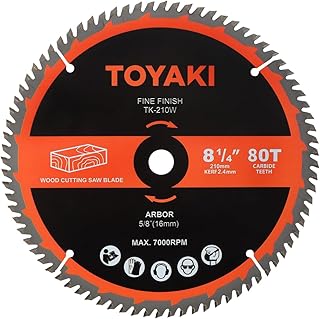
10-Inch 80-Tooth Woodworking Saw Blade, Max 7000 RPM
Carbide-tipped with a 7000 RPM ceiling, this one earns its keep on prefinished plywood and veneer-faced panels where tear-out is unforgiving. The red finish is cosmetic, but the tooth geometry delivers the fine finish it advertises.
Benchmark Abrasives TCT 8-1/2 Inch, 60 Tooth
Sized for compact saws that won’t accept a 10-inch plate, this 60T tungsten carbide blade cuts plywood, hardwood, and MDF panels without the bogging you get from coarse-tooth alternatives. A smart pick for small-shop or benchtop setups.
8-1/4-Inch Miter Saw Blade, 80-Tooth
Eighty teeth on an 8-1/4 inch plate makes for a very fine cut, and it moves easily between miter, table, and circular saws with its 5/8-inch arbor. Best reserved for finish work rather than heavy ripping.
Frequently Asked Questions
Do I really need a dedicated plywood blade?
If you build with sheet goods regularly, yes. A 40T combination blade will cut plywood, but you’ll spend the time you saved cleaning up tear-out on every visible edge.
Why is my plywood still splintering with a new 80T blade?
Blade height is usually the culprit. Raise it just enough that the teeth clear the stock by about an eighth of an inch — too high and the teeth attack the veneer at a steeper, more aggressive angle.
Will a zero-clearance insert help?
Significantly. It supports the underside veneer right at the cut line and is the single cheapest tear-out fix available. Combine it with a fine blade and results improve immediately.
How long should a carbide blade last?
In a home shop cutting mostly plywood, a quality carbide blade runs a few years before needing sharpening. Watch for burning, extra feed resistance, or fuzzy edges as your signals.
Final Thoughts
For most home furniture builders, the KENDO 2-pack offers the best value by covering both ripping and plywood finish cuts out of one purchase. If you already have a rip blade and want the cleanest possible sheet-good edges, the FOXBC 80-tooth is the one to add. Smaller saws should look at the Benchmark Abrasives 8-1/2 inch 60T, which brings genuine finish-blade performance to compact machines.