Key takeaways
- Tooth count: For ripping solid hardwood, 20 to 24 teeth generally clears waste faster than a high-tooth-count finish blade. More teeth can improve the surface but may cut slower and run hotter.
- Tooth geometry: Flat-top grind teeth are excellent for efficient ripping and can leave a shoulder-friendly dado-like bottom. ATB teeth are more versatile when you also want cleaner general-purpose cuts.
- Kerf: Thin-kerf blades remove less material, which can help a smaller saw maintain speed. Make sure the riving knife or splitter is compatible with the blade’s actual kerf.
- Carbide: Hardwood is unforgiving, so substantial carbide tips and reliable brazing matter. A blade that can be sharpened is usually a better long-term investment than a disposable bargain.
- Material and setup: Blade choice cannot compensate for a misaligned fence, a dull riving knife, or poor support. Use a stable outfeed, keep the stock against the fence, and let the blade feed at its own pace.
What's inside
Ripping hardwood on a table saw is where an ordinary blade quickly reveals its weaknesses. A dull or poorly matched blade can leave burn marks, wander through dense stock, strain the motor, or produce a rough edge that turns a simple glue-up into a sanding project. The right ripping blade should clear chips efficiently while staying rigid and cool.
This guide focuses on practical choices for furniture makers, cabinet builders, and serious DIY users. I’m looking at tooth count, kerf, carbide quality, tooth geometry, and the kind of cut each blade is best suited to making. Before ordering, confirm your saw accepts a 10-inch blade, uses a 5/8-inch arbor, and can safely run a thin-kerf blade if applicable.
As an Amazon Associate we earn from qualifying purchases.




🛒 Best Price Today on Amazon
Prime members get fast, free shipping on everything above, plus member-only deals. New members get a 30-day free trial — cancel anytime.
How to Choose a 10 Table Saw Blade For Ripping Hardwood (2026)
- Tooth count: For ripping solid hardwood, 20 to 24 teeth generally clears waste faster than a high-tooth-count finish blade. More teeth can improve the surface but may cut slower and run hotter.
- Tooth geometry: Flat-top grind teeth are excellent for efficient ripping and can leave a shoulder-friendly dado-like bottom. ATB teeth are more versatile when you also want cleaner general-purpose cuts.
- Kerf: Thin-kerf blades remove less material, which can help a smaller saw maintain speed. Make sure the riving knife or splitter is compatible with the blade’s actual kerf.
- Carbide: Hardwood is unforgiving, so substantial carbide tips and reliable brazing matter. A blade that can be sharpened is usually a better long-term investment than a disposable bargain.
- Material and setup: Blade choice cannot compensate for a misaligned fence, a dull riving knife, or poor support. Use a stable outfeed, keep the stock against the fence, and let the blade feed at its own pace.
The Best 10 Table Saw Blade For Ripping Hardwood (2026)s Reviewed
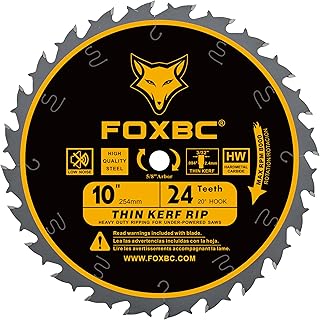
FOXBC 10-Inch Flat Tooth Ripping Blade
This 24-tooth FOXBC blade takes a straightforward furniture-shop approach: fewer teeth, a flat-tooth profile, and a thin kerf designed to move through wood without wasting material. It is a sensible pick for long rips in oak, maple, ash, and other hardwoods when a fast cut and flat-bottomed kerf are more important than a polished crosscut edge.
CMT 250.024.10 ITK XTreme Ripping Blade
CMT’s 24-tooth ITK XTreme is aimed at demanding rip work, with an ATB grind that gives it more versatility than a dedicated flat-top blade. It suits makers who frequently switch between ripping hardwood and making reasonably clean cuts in sheet goods, while its thin-kerf design can be helpful on saws with modest power.
10-Inch 24T Carbide Table Saw Blade
This general 24-tooth carbide-tipped option is built around the classic ripping specification: a 5/8-inch arbor, thin kerf, and enough open space between teeth to evacuate chips from hardwood. It is a practical value-oriented choice for a workshop that needs one blade for solid wood, softwood, and plywood rather than a specialty blade for one material.
Freud LM75R010 Industrial Thin Kerf Glue Line Ripping Blade
The Freud LM75R010 is the choice for woodworkers who care about the quality of the ripped edge, not merely how quickly the blade gets through the board. Its industrial construction and glue-line ripping focus make it well suited to panel preparation and edge joining, where a clean, consistent cut can reduce jointing and sanding.
10-Inch 40T/60T Table and Miter Saw Blade 2-Pack
This two-blade set is less specialized for heavy hardwood ripping, but it offers useful flexibility for a small home shop. The 40-tooth blade can handle general ripping and crosscutting, while the 60-tooth blade is better reserved for finer cuts; for frequent thick-hardwood work, expect a dedicated 24-tooth blade to feed more efficiently.
Frequently Asked Questions
Is a 24-tooth blade best for ripping hardwood?
It is one of the best starting points for most table-saw ripping. The lower tooth count creates larger gullets that clear chips effectively, reducing the chance of heat buildup and burning during long cuts. A 20-tooth or flat-top blade may cut faster, while a 30-tooth combination blade may leave a smoother surface.
Can I use a thin-kerf blade on any table saw?
Usually, but the riving knife or splitter must be thinner than the blade kerf and still wider than the cut left in the wood. Check the manufacturer’s measurements rather than relying on the label alone. If the splitter is too thick, the workpiece can bind after the cut.
Why does my hardwood burn during a rip cut?
Burning commonly comes from a dull blade, a fence that is not parallel to the blade, feeding too slowly, or allowing the stock to pinch the blade. Confirm alignment, clean resin from the teeth, and use a sharp ripping blade. Do not force the feed rate or stand directly behind the workpiece.
Should I use a ripping blade for plywood?
A dedicated ripping blade can cut plywood, but its aggressive tooth pattern may leave more breakout than a combination or fine-finish blade. For visible plywood edges, use a higher-tooth-count blade and support the sheet well. Reserve the ripping blade for fast cuts where edge appearance is secondary.
Final Thoughts
For focused hardwood ripping, the FOXBC Flat Tooth and Freud LM75R010 are strong choices for different budgets and finish expectations. The CMT ITK XTreme is the more versatile option, especially for a DIY shop that wants thin-kerf performance without limiting itself to one type of cut.