Key takeaways
- Crosscut capacity at 90 degrees: This is the number that matters most for furniture work. A 7-1/4 slider typically clears an 8 to 12 inch board flat, which handles shelf stock, table aprons, and 2x material. If you routinely cut wide panels, a track saw or table saw is the better tool and no miter saw in this class will save you.
- Rail design and rear clearance: Traditional sliding rails need a foot or more of space behind the saw. Compact rail systems tuck the mechanism inside the housing, letting the saw sit flush against a wall. If your bench backs up to drywall, this single feature changes whether the saw is usable.
- Amp draw and blade speed: Somewhere between 9.5 and 10 amps is the norm here. Higher amperage helps with hardwood and repeated cuts, but blade quality matters more. Plan on replacing the factory blade with a 60 to 80 tooth fine-finish blade before you cut anything that shows.
- Cut line indication: LED shadow lines cast the blade’s own silhouette onto the workpiece and never need calibration. Laser guides project a separate beam that can drift out of alignment and require periodic adjustment. Shadow systems are the more reliable choice for repeat accuracy.
- Bevel range and detent quality: Single bevel saws tilt one direction, meaning you flip the stock for opposing miters. That’s fine for most furniture builds. Pay closer attention to the miter detents: positive stops that lock crisply at common angles save more time than a dual bevel head you rarely use.
What's inside
A 7-1/4 inch sliding miter saw sits in an awkward spot in most tool catalogs. Buyers looking for one usually have a specific reason: a shop where floor space is measured in inches, a truck bed that already carries too much, or a trim job three flights up a staircase. The problem is that “7-1/4 sliding” and “corded” don’t always show up together anymore. Manufacturers have pushed hard into cordless in this size class, and a few listings that look corded turn out to be battery platforms or 10-inch saws wearing a similar model number. Sorting real corded sliders from the rest takes more squinting at spec sheets than it should.
This guide walks through the compact miter saws worth considering right now, including the genuinely corded 7-1/4 sliders, plus a couple of close alternatives that come up constantly in the same shopping trip: a full-size corded 12-inch for anyone whose crown molding needs outgrew the small format, and a cordless 7-1/4 for jobsite work where an extension cord is the bottleneck. Each pick includes what it does well and where it gets frustrating, based on how these saws behave in actual use rather than on paper.
As an Amazon Associate we earn from qualifying purchases.



🛒 Best Price Today on Amazon
Prime members get fast, free shipping on everything above, plus member-only deals. New members get a 30-day free trial — cancel anytime.
How to Choose a 7-1/4 Sliding Miter Saw Corded (2026)
- Crosscut capacity at 90 degrees: This is the number that matters most for furniture work. A 7-1/4 slider typically clears an 8 to 12 inch board flat, which handles shelf stock, table aprons, and 2x material. If you routinely cut wide panels, a track saw or table saw is the better tool and no miter saw in this class will save you.
- Rail design and rear clearance: Traditional sliding rails need a foot or more of space behind the saw. Compact rail systems tuck the mechanism inside the housing, letting the saw sit flush against a wall. If your bench backs up to drywall, this single feature changes whether the saw is usable.
- Amp draw and blade speed: Somewhere between 9.5 and 10 amps is the norm here. Higher amperage helps with hardwood and repeated cuts, but blade quality matters more. Plan on replacing the factory blade with a 60 to 80 tooth fine-finish blade before you cut anything that shows.
- Cut line indication: LED shadow lines cast the blade’s own silhouette onto the workpiece and never need calibration. Laser guides project a separate beam that can drift out of alignment and require periodic adjustment. Shadow systems are the more reliable choice for repeat accuracy.
- Bevel range and detent quality: Single bevel saws tilt one direction, meaning you flip the stock for opposing miters. That’s fine for most furniture builds. Pay closer attention to the miter detents: positive stops that lock crisply at common angles save more time than a dual bevel head you rarely use.
The Best 7-1/4 Sliding Miter Saw Corded (2026)s Reviewed
SKIL MS6306-00 10 Amp 7-1/4″ Single Bevel Miter Saw
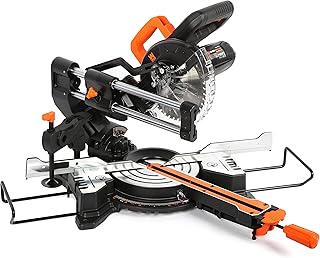
The compact rail system is the reason to buy this one, letting the saw live against a wall while still delivering a full slide stroke, and the LED shadow line beats any laser for repeatable cuts. Note that the SRS0001 stand is a separate purchase, so factor that into your budget if you don’t already have a work surface.
WEN MM0713 9.5-Amp 7.25-Inch Compact Sliding Miter Saw
At under 25 pounds this is the easiest saw here to carry up a stairwell one-handed, and the LED cutline guide is genuinely useful once you dial it in. The fence and detents benefit from a careful squaring session out of the box, but after that it holds its settings well for light trim and furniture stock.
RYOBI TSS702 10 Amp Corded 7-1/4 in. Sliding Miter Saw
A straightforward corded slider that punches through 2x framing lumber without complaint and stays reasonably quiet for a saw this size. Swap the stock blade early and it becomes a capable secondary saw for a garage shop.
DEWALT DWS715 12-Inch Single Bevel Compound Miter Saw
Not a slider and not compact, but the 15-amp motor and 12-inch blade give you crown molding capacity that no 7-1/4 saw can match. If your projects are trending toward larger casework, this is the saw you eventually buy anyway.
DEWALT DCS361B 20V MAX 7-1/4-Inch Cordless Miter Saw
Tool-only pricing makes this a smart add if you already run 20V MAX batteries, and cutting without hunting for an outlet changes how you work on site. Runtime on a single 5Ah pack is respectable for trim work, though heavy hardwood ripping will drain it faster than you’d like.
Frequently Asked Questions
Can a 7-1/4 inch miter saw cut a 2×4?
Yes, comfortably at 90 degrees. A 2×6 flat is also within reach on most models. Where you’ll hit limits is 4×4 posts and wide crown molding, which need a 10 or 12 inch blade.
Is a sliding saw worth it at this blade size?
It roughly doubles your crosscut width, which is the difference between cutting a 6-inch board and a 12-inch one. For furniture builders working with shelf stock and wide aprons, the slide earns its keep.
Should I buy corded or cordless in 2026?
Corded if the saw lives on a bench and you want consistent power with no runtime math. Cordless if you’re moving between rooms or working where power isn’t reliable. Cordless in this size class is now genuinely capable, not a compromise.
Do I need to replace the included blade?
For finish work, yes. Factory blades typically run 24 to 40 teeth, which is built for framing speed rather than clean edges. A 60 to 80 tooth blade costs little and transforms the cut quality on visible joinery.
Final Thoughts
For most home shops, the SKIL MS6306-00 is the pick worth reaching for first: the compact rail design solves the space problem that makes other sliders impractical, and the shadow line guide stays accurate without fiddling. The WEN MM0713 is the better buy if portability and price dominate your decision, and the DEWALT DCS361B makes sense for anyone already invested in 20V MAX batteries who values cutting wherever the work happens to be.