Key takeaways
- Crosscut capacity over blade size: A well-designed 10-inch slider can out-cut a cramped 12-inch model. Look at the published crosscut width at 90 degrees — anywhere from 13 to 16 inches — because that number determines whether you can handle a 1×12 shelf board or a wide apron in a single pass.
- Cut-line visibility: Lasers are fine once dialed in, but shadow-line LED systems project the blade’s actual silhouette onto the board, so there’s nothing to calibrate and no drift after a blade change. If you cut a lot of pre-finished or dark material, this feature earns its keep fast.
- Bevel controls you can reach: Some saws bury the bevel lock behind the motor housing, which is miserable when the saw sits against a wall. Front-mounted bevel adjustment and clearly marked detents at 0, 33.9, and 45 degrees save real time on compound cuts.
- Fence height and clamping: Tall sliding fences support crown nested in position and keep base molding vertical. Check that the included hold-down clamp actually reaches your typical stock thickness rather than topping out at an inch.
- Rail design and footprint: Traditional rear rails need clearance behind the saw. Forward-rail or dual-slide-glide designs cut that requirement down substantially, which matters enormously in a garage shop where the bench is already pushed against drywall.
Cutting crown molding for a dining room ceiling taught me more about miter saws than any spec sheet ever did. Flipping heavy stock end over end to catch the opposite angle is where mistakes happen: the workpiece shifts a hair, the cut drifts, and suddenly your 45-degree joint has a gap you can see from across the room. A dual bevel head solves that by tilting both left and right, so the wood stays put and you tilt the saw instead. Once you’ve worked that way, going back feels like tying one hand behind your back.
The trouble is that “dual bevel sliding” now covers everything from budget imports to jobsite mainstays, and the differences that matter are not the ones printed on the box. Blade diameter tells you less than slide capacity. RPM tells you less than fence height and detent quality. Below are six saws I’d consider for a home shop building furniture, cabinets, and trim, along with the buying criteria I’d actually use and answers to the questions that come up most.
Our top picks




As an Amazon Associate we earn from qualifying purchases at no extra cost to you. Ratings are shown as listed on Amazon.
🛒 Best Price Today on Amazon
Prime members get fast, free shipping on everything above, plus member-only deals. New members get a 30-day free trial — cancel anytime.
How to Choose a Dual Bevel Sliding Miter Saw (2026)
- Crosscut capacity over blade size: A well-designed 10-inch slider can out-cut a cramped 12-inch model. Look at the published crosscut width at 90 degrees — anywhere from 13 to 16 inches — because that number determines whether you can handle a 1×12 shelf board or a wide apron in a single pass.
- Cut-line visibility: Lasers are fine once dialed in, but shadow-line LED systems project the blade’s actual silhouette onto the board, so there’s nothing to calibrate and no drift after a blade change. If you cut a lot of pre-finished or dark material, this feature earns its keep fast.
- Bevel controls you can reach: Some saws bury the bevel lock behind the motor housing, which is miserable when the saw sits against a wall. Front-mounted bevel adjustment and clearly marked detents at 0, 33.9, and 45 degrees save real time on compound cuts.
- Fence height and clamping: Tall sliding fences support crown nested in position and keep base molding vertical. Check that the included hold-down clamp actually reaches your typical stock thickness rather than topping out at an inch.
- Rail design and footprint: Traditional rear rails need clearance behind the saw. Forward-rail or dual-slide-glide designs cut that requirement down substantially, which matters enormously in a garage shop where the bench is already pushed against drywall.
The Best Dual Bevel Sliding Miter Saw (2026)s Reviewed
DEWALT DWS780 12-inch Double Bevel Slider
This is the saw I recommend when someone wants to buy once and stop thinking about it — the XPS shadow light needs no adjustment, the detent plate holds its settings after months of use, and the 15-amp motor doesn’t bog in hard maple. It arrives with a wrench, material clamp, and dust bag, though the bag is the weak point and most owners plumb it into a shop vac.
Makita LS1219L 12-inch Dual-Bevel Slider
Makita’s guide rail system keeps the saw remarkably close to the wall while still delivering wide crosscuts, which is the single best argument for it in a tight shop. Bevel and miter locks land right up front, and the laser is bright enough to read under shop lighting without squinting.
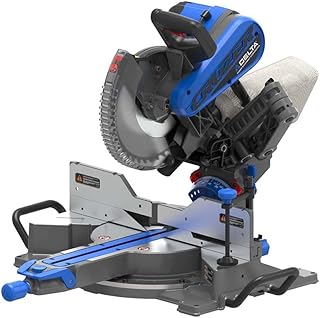
Delta 26-2310 10-inch Dual Bevel Slider
A 16-inch crosscut from a 10-inch blade is the headline here, and it means wide panel work without stepping up to a heavier 12-inch machine. The 4,000 RPM motor and lighter blade also make it a natural fit for finish carpentry where cut quality matters more than raw capacity.
DOVAMAN 12-Inch Dual-Bevel Compound Slider
The ambidextrous handle is genuinely useful for awkward cuts, and 4.2 x 13-inch capacity covers most furniture stock comfortably. Plan on swapping the stock blade for a quality 80-tooth crosscut model to get glue-ready edges.
DOVAMAN 10-Inch Dual Bevel Slider
Two speeds and three TCT blades make this the multi-material option — drop to 3,200 RPM for aluminum extrusion, run 5,000 for wood. The LED shadow line is a welcome inclusion at this price point.
Frequently Asked Questions
Is dual bevel worth the extra cost?
If you cut crown, base, or any trim requiring opposing miters, yes. Not flipping long stock reduces measuring errors and keeps you from wrestling awkward pieces across the table.
Do I need 12 inches, or will 10 do?
Ten inches handles most furniture work, spins faster for cleaner cuts, and uses cheaper blades. Choose 12 inches for thick timbers or tall baseboard cut vertically.
Can I get accurate joints straight out of the box?
Rarely. Budget an hour to square the blade to the table and fence with a machinist square, then verify the 45-degree stops with test cuts.
How much does the included blade matter?
Less than you’d think. Factory blades are usually general-purpose; a dedicated 60 to 80 tooth crosscut blade transforms cut quality on any of these saws.Final Thoughts
For most home furniture builders, the DEWALT DWS780 remains the safest bet on durability and out-of-box accuracy, while the Makita LS1219L wins if wall clearance is your constraint. On a tighter budget, the DOVAMAN 10-inch dual bevel delivers shadow-line visibility and multi-material capability that punches well above its price.