Anyone who has built a bookcase knows the moment: you cut five shelves, dry-fit the carcass, and one corner refuses to close. The miter gauge that came with your saw is usually the culprit. A short fence, a sloppy bar in the slot, and no support behind the workpiece add up to cuts that are close but never square. On a 24-inch shelf, half a degree of error becomes a visible gap in the joint.
A crosscut sled fixes the geometry problem at the source. It rides both miter slots (or one, tuned tight), carries the workpiece across the blade instead of dragging it, and gives you a zero-clearance kerf that stops tearout on plywood veneer. This guide covers the sleds worth buying in 2026 — from small-parts jigs that keep your fingers away from the blade to full MDF platforms and bare runner kits for anyone who would rather build their own base.
Our top picks



As an Amazon Associate we earn from qualifying purchases at no extra cost to you.
🛒 Best Price Today on Amazon
Prime members get fast, free shipping on everything above, plus member-only deals. New members get a 30-day free trial — cancel anytime.
How to Choose a/an Cross Cut Sled For Table Saw (2026)
- Runner fit: Most saws use a 3/4″ × 3/8″ miter slot, but tolerances vary by a few thousandths between brands. Look for adjustable or UHMW runners you can dial in — a sled that rocks side to side will never cut square, no matter how good the fence is.
- Maximum cut width: Check this number against what you actually build. A 13-inch capacity handles drawer parts and face frames fine; if you crosscut 18-inch shelves, you need a wider deck or you will be flipping stock and hoping the second pass lines up.
- Deck material: MDF is flat, cheap, and stable indoors but swells if your shop gets damp. Phenolic and aluminum cost more and stay put. Either way, the base needs to be thin enough that you keep usable blade height.
- Fence and stop system: A tall rear fence supports tall stock on edge. An adjustable stop block earns its keep the first time you cut twelve identical rails — set it once, repeat all day, no tape measure.
- Guarding and hold-downs: The blade exits the rear fence on every cut. A transparent guard, a blade block, or a boxed-in rear fence is not optional equipment on a sled you plan to use often.
The Best Cross Cut Sled For Table Saw (2026)s Reviewed
Rockler Small Parts Crosscut Sled
Built specifically for the cuts that make people nervous — short blocks, thin strips, and tiny trim pieces that would otherwise put your hand near the blade. The zero-clearance support means the offcut stays put instead of skittering into the blade, and it is the sled I reach for when making miniature drawer pulls or box parts.
Fulton MDF Crosscut Sled
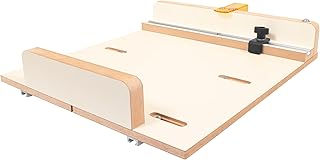
A conventional, well-proportioned MDF sled that behaves the way a shop-built one does, minus the weekend of building it. Squaring it up out of the box takes about twenty minutes with a framing square and the five-cut method, and after that it holds true through repeated use.
16.02″ × 17.91″ Precision Right-Angle Sled
Aluminum runners and an adjustable stop make this the most repeatable option here for batch work, and the transparent guard is a genuine safety upgrade over an open rear fence. The near-18-inch deck handles cabinet-door rails and mid-size shelves comfortably.
POWERTEC 71403 Crosscut Sled
Comes as a jig and hardware kit, which suits makers who want a proven fence and runner set without engineering it themselves. Assembly is straightforward, and the hardware quality is a step above generic big-box parts.
Standard 3/4″ × 3/8″ Runner Sled
A sensible pick if you run a DeWalt, Ridgid, or Skil contractor saw and want something that drops into the slots without shimming. The 13.2-inch capacity is the tradeoff — plenty for drawer boxes and face frames, tight for wide panels.
Frequently Asked Questions
Do I still need a miter gauge if I own a sled?
Yes, for angled cuts beyond what your sled offers and for narrow rip-adjacent work. But for square crosscuts, the sled will be more accurate every time.
How do I square a new sled?
Use the five-cut method on a piece of scrap plywood. It amplifies error so you can measure and correct it, and it beats trusting any square in your shop.
Will a sled reduce my depth of cut?
It does — you lose whatever the deck thickness is, typically 1/2″ to 3/4″. Factor that in before you plan thick stock.
Can I buy just the runners and build my own deck?
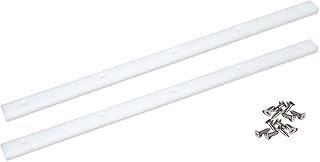
Absolutely. Pre-drilled UHMW bars in 3/4″ × 3/8″ × 17″ are the usual starting point, and they slide better than hardwood and ignore humidity swings.
Final Thoughts
For most home furniture builds, the 16.02″ × 17.91″ precision sled offers the best balance of capacity, repeatable stops, and blade guarding, while the Fulton MDF sled is the value choice if you want a traditional platform you can tune and trust. Add the Rockler Small Parts sled alongside either one — the safety margin it gives you on short pieces is worth the shelf space.