Key takeaways
- Base and caster load path: A five-spoke nylon base is standard, but on anything rated above 300 lbs you want steel or reinforced nylon with a wide spread. Measure the base diameter against your recline angle: if the backrest travels past the rear spokes, the chair tips. Casters should be 2.5 inches or larger, and swapping in polyurethane rollers is a ten-minute upgrade that saves hardwood floors.
- Recline mechanism type: Multi-position lockouts beat free-float tension for desk work because you can set an angle and stay there. Look for a mechanism that locks at three or more stops rather than one that only offers upright or fully back, and confirm the tension knob has a positive stop so it does not creep loose under weight.
- Seat pan construction: Peel back the upholstery mentally. High-density molded foam over a steel frame holds shape for years; thin foam over particleboard develops a hard edge under your thighs within months. Pocket-spring seats split the difference and resist the flattening that kills cheap foam.
- Footrest deployment: Retractable footrests either slide on a metal channel or fold on a hinged linkage. Channels are smoother but collect grit and need occasional silicone spray; linkages are more durable but often stop short of full leg extension. Check the extended length against your inseam before you commit.
- Upholstery and repairability: Bonded leather delaminates. Real leather and quality PU both hold up, but PU is easier to wipe down if you use the heat or massage functions regularly. Bonus points for chairs with replaceable armrest pads and accessible bolt heads instead of glued-on trim.
What's inside
A reclining office chair has to do two jobs that pull against each other. It needs to lock up rigid enough to keep you upright through a spreadsheet marathon, then drop back far enough to actually let your spine decompress. Most chairs pick a side. The ones that try to do both often reveal their compromise the first time you lean into the tilt and feel the whole frame flex, or the moment you notice the footrest slides under the seat pan on a sled that binds halfway out. If you have ever crawled under a chair with an Allen key to chase a rattle, you already know the failure points are almost always mechanical, not cosmetic.
I put these through the same checks I would run on any piece of furniture I built myself: pull the base and count the spokes, check whether the gas lift is a rated class or unmarked, press on the seat foam to see if it bottoms out against a plywood deck, and cycle the recline lever fifty times to see if the tension knob holds its setting. Below are six recliners that survived that treatment, spanning heavy-duty big-and-tall builds, heated massage models, and one cross-legged design that solves a problem nobody else addresses. Each pick includes what it does well and where the corners were cut.
As an Amazon Associate we earn from qualifying purchases.


How to Choose a Office Chair Recliners (2026)
- Base and caster load path: A five-spoke nylon base is standard, but on anything rated above 300 lbs you want steel or reinforced nylon with a wide spread. Measure the base diameter against your recline angle: if the backrest travels past the rear spokes, the chair tips. Casters should be 2.5 inches or larger, and swapping in polyurethane rollers is a ten-minute upgrade that saves hardwood floors.
- Recline mechanism type: Multi-position lockouts beat free-float tension for desk work because you can set an angle and stay there. Look for a mechanism that locks at three or more stops rather than one that only offers upright or fully back, and confirm the tension knob has a positive stop so it does not creep loose under weight.
- Seat pan construction: Peel back the upholstery mentally. High-density molded foam over a steel frame holds shape for years; thin foam over particleboard develops a hard edge under your thighs within months. Pocket-spring seats split the difference and resist the flattening that kills cheap foam.
- Footrest deployment: Retractable footrests either slide on a metal channel or fold on a hinged linkage. Channels are smoother but collect grit and need occasional silicone spray; linkages are more durable but often stop short of full leg extension. Check the extended length against your inseam before you commit.
- Upholstery and repairability: Bonded leather delaminates. Real leather and quality PU both hold up, but PU is easier to wipe down if you use the heat or massage functions regularly. Bonus points for chairs with replaceable armrest pads and accessible bolt heads instead of glued-on trim.
The Best Office Chair Recliners (2026)s Reviewed
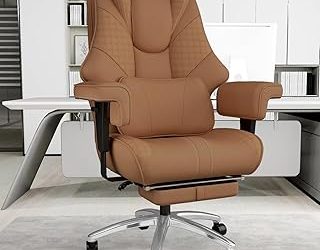
Ergonomic Office Chair with Lumbar Support (Brown Leather Executive)
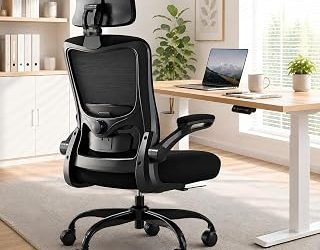
This is the straightforward pick: a brown leather executive chair on smooth casters with genuine lumbar contouring rather than a strapped-on pillow. The recline is smooth and the frame handles heavier users without the creak you get from stapled-together plywood decks, though the armrests are fixed, so measure your desk clearance first.
COMHOMA Big and Tall Pocket Spring Chair
The pocket-spring seat is the reason to buy this one. Independent coils distribute weight the way a mattress does, which means the seat edge stays soft after a year instead of packing down into a ridge, and the outward-fixed soft armrests give big-and-tall users real elbow room. Green colorway won’t suit every office, but the build quality is honest.
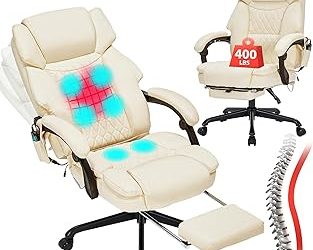
Massage & Heated Office Chair with Foot Rest (Beige)
The heat element sits properly behind the lumbar panel rather than under the seat, which is where it actually helps a tight lower back. Massage motors are on the gentler end, so treat this as a warm-up-and-loosen chair rather than a deep-tissue substitute, and the beige leather makes it one of the few recliners that reads as furniture in a shared room.
GYI 160 Reclining Office Chair with Footrest (White)
The cross-legged seat is genuinely clever: a wider, flatter pan that lets you sit lotus-style without your knees fighting the armrests, which is a real fix if you shift positions constantly. Heavy-duty base and a 160-degree recline that goes nearly flat, though white faux leather demands more wipe-downs than a darker finish.
Heated Recliner Office Chair with Massager and Height-Adjustable Arms
Adjustable armrests are the differentiator here, and they matter more than the six-point vibration for anyone who alternates between typing and reclining. The 155-degree tilt locks solidly and the PU leather takes heat cycling well, making this the most complete package if you want one chair to cover work and downtime.
Frequently Asked Questions
How much recline angle do I actually need?
For working posture, 100 to 110 degrees is the useful range and anything beyond that is for breaks. A 155 or 160-degree chair earns its keep if you nap or stretch, but if you only ever tilt back to think, a three-position mechanism at a lower maximum will feel sturdier and cost less.
Do the heat and massage functions hold up long term?
The vibration motors typically outlast the wiring harness, and the most common failure is a loose connector at the control pod rather than a dead motor. Route the power cable so it does not get pinched by the recline linkage, and check that connection first before assuming the unit is done.
Can I replace the gas cylinder if the chair sinks?
Yes, and it is one of the easier repairs. Standard cylinders share a common taper, so a pipe wrench and a rubber mallet will free the old one in most cases. Buy a class 4 replacement for heavier builds rather than matching the original spec.
Are 500 lb weight ratings believable?
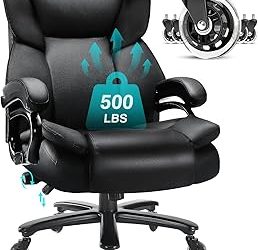
They are, provided the base is steel and the seat frame is welded rather than bolted through particleboard. The 500-lb massage chair on this list backs the claim with a genuinely wider seat and thicker padding, which is what separates a real rating from a marketing number.
Final Thoughts
If you want one chair that covers both work and recovery, the Heated Recliner with Massager and height-adjustable arms is the most complete build here, with the lock-out mechanism and armrest adjustment that most competitors skip. For heavier users, the 500LBS Massage Office Chair has the frame and seat width to back its rating, while the COMHOMA pocket-spring model is the smarter long-term buy if you care more about how the seat feels in year three than about heat and vibration features.