Key takeaways
- CFM before PSI: A blow gun wants steady airflow, not pressure records. Look for at least 2.0 SCFM at 40 PSI if you plan to dry panels and door jambs; anything less and you’ll be waiting on the tank to catch up every twenty seconds.
- Tank size vs. patience: A 4 to 8 gallon tank is the sweet spot for detailing. Smaller tanks cycle constantly, larger ones become a two-person lift you’ll leave in the garage corner instead of rolling out.
- Noise level: Standard oil-lubed pumps hit 85+ dBA, which is hearing-protection territory and a fast way to annoy your neighbors. Ultra quiet models in the 60 dBA range let you keep music on and hold a conversation.
- Oil-free and moisture control: Oil-free pumps mean no crankcase maintenance and no risk of oil mist landing on fresh paint. Budget for an inline water separator regardless, because humid air condenses in the hose and will spot a panel you just polished.
- Power source and duty cycle: Cordless units are unbeatable for convenience but throttle back as they heat up. If you’re topping off four tires plus a spare, check for a 100% duty cycle rating or a hardwired 12V connection instead of a cigarette lighter plug.
Anyone who has spent a Saturday afternoon detailing a car in the driveway knows the moment the job stalls: water hiding in the mirror housings, grit wedged in the lug nut recesses, and a microfiber towel that just smears it all around. Compressed air solves that, but the compressor aisle is confusing on purpose. Tank sizes, CFM ratings, duty cycles, and decibel claims all get thrown around, and most of the marketing copy is written for framing crews rather than someone chasing water spots off a clear coat.
This guide breaks it down from a hands-on angle. I’ve grouped the picks into two camps: cordless and 12V inflators that live in the trunk for tire pressure and quick blowouts, and tank-fed quiet compressors that can actually feed a blow gun or a small detail sprayer for a full session. Below you’ll find the specs that matter, honest notes on where each unit runs out of breath, and answers to the questions that come up once the hose is in your hand.
Our top picks


As an Amazon Associate we earn from qualifying purchases at no extra cost to you. Ratings are shown as listed on Amazon.
🛒 Best Price Today on Amazon
Prime members get fast, free shipping on everything above, plus member-only deals. New members get a 30-day free trial — cancel anytime.
How to Choose a Air Compressor For Auto Detailing (2026)
- CFM before PSI: A blow gun wants steady airflow, not pressure records. Look for at least 2.0 SCFM at 40 PSI if you plan to dry panels and door jambs; anything less and you’ll be waiting on the tank to catch up every twenty seconds.
- Tank size vs. patience: A 4 to 8 gallon tank is the sweet spot for detailing. Smaller tanks cycle constantly, larger ones become a two-person lift you’ll leave in the garage corner instead of rolling out.
- Noise level: Standard oil-lubed pumps hit 85+ dBA, which is hearing-protection territory and a fast way to annoy your neighbors. Ultra quiet models in the 60 dBA range let you keep music on and hold a conversation.
- Oil-free and moisture control: Oil-free pumps mean no crankcase maintenance and no risk of oil mist landing on fresh paint. Budget for an inline water separator regardless, because humid air condenses in the hose and will spot a panel you just polished.
- Power source and duty cycle: Cordless units are unbeatable for convenience but throttle back as they heat up. If you’re topping off four tires plus a spare, check for a 100% duty cycle rating or a hardwired 12V connection instead of a cigarette lighter plug.
The Best Air Compressor For Auto Detailing (2026)s Reviewed
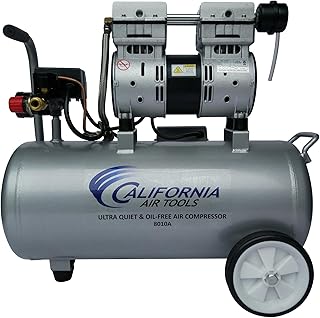
California Air Tools 8010A
This is the one I’d buy for a home detailing bay: a 1.0 HP oil-free pump, 8 gallon aluminum tank, and a genuinely quiet 60 dBA output that makes long sessions bearable. It recovers quickly enough to run a blow gun through an entire vehicle, and the aluminum tank resists the rust that eventually kills cheap steel drums.
California Air Tools CAT-4610AC
The twin-tank 4.6 gallon version trades some reserve capacity for a footprint you can actually store on a shelf and carry up basement stairs. Same ultra quiet oil-free pump as its bigger sibling, which makes it the smarter pick for apartment garages or anyone splitting duty between detailing and light air tools.
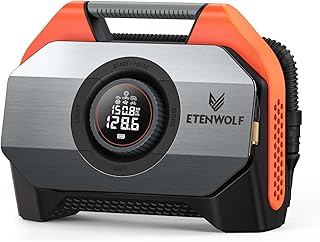
ETENWOLF VORTEX S6
A dual-cylinder cordless inflator with a 19200mAh pack and a 100% duty cycle, meaning it won’t tap out halfway through a truck’s worth of tires. The LED backlight earns its keep during roadside stops, and the build feels closer to a tool than a gadget.
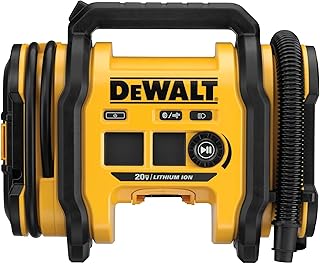
DEWALT DCC020IB 20V MAX Inflator
If you already own DEWALT 20V batteries, this is an easy call. Automatic shut-off at your target pressure means you can set it and walk away, and the tool-only price keeps it reasonable as a trunk-dweller for pressure top-offs rather than heavy inflation work.
AstroAI Dual Power Tire Inflator
Dual 12V DC and 120V AC power makes this the most flexible small inflator here, with dual metal motors that shrug off the heat soak that plagues plastic-housed budget pumps. The digital gauge reads accurately in my experience, though I’d still verify with a quality standalone gauge on a cold tire.
Frequently Asked Questions
Can I use a compressor to dry my car after washing?
Yes, and it’s the single best upgrade to your wash routine. Air blows water out of mirrors, emblems, grilles, and lug holes before it can run down and streak, but you need a tank-fed compressor with real CFM. Small inflators can’t sustain the airflow.
Do portable inflators work for detailing?
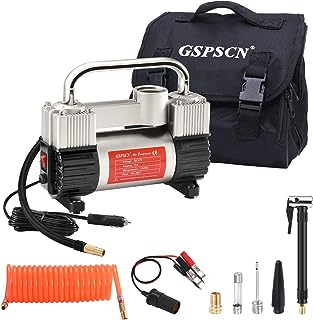
Only for tire pressure and light duties. Units like the GSPSCN 12V inflator and the DEWALT DCC020IB are excellent for keeping pressures correct, which matters for even tire dressing and wear, but they lack the volume to dry panels.
How much noise is too much?
Anything above 80 dBA warrants ear protection and will draw complaints in a shared driveway. The 60 dBA rating on both California Air Tools models is roughly conversation volume, which is why they dominate home detailing setups.
Do I need a moisture trap?
Absolutely, before your air ever touches paint. A cheap inline desiccant filter at the gun end plus draining the tank after each use prevents water spots and keeps the tank interior healthy.
Final Thoughts
For a dedicated home detailing setup, the California Air Tools 8010A is the pick that will still be serving you in a decade, with the CAT-4610AC as the space-conscious alternative that gives up very little. Pair either one with the ETENWOLF VORTEX S6 in the trunk, and you’ve covered both ends of the job without overspending on either.