Key takeaways
- CFM over PSI: Blowing water out of panel gaps needs volume, not pressure. Look for at least 2.5 CFM at 90 PSI for continuous drying work; anything less and you’ll be waiting on the tank to catch up every thirty seconds.
- Duty cycle: A 100% duty cycle rating means the unit can run continuously without a forced cooldown. Cordless inflators with 50% ratings will shut down mid-tire on a truck, which is exactly when you need them.
- Noise floor: Standard oil-lubricated pancake compressors hit 85–90 dB. Ultra-quiet models in the 70 dB range let you hold a conversation and work early mornings without complaints from the house.
- Oil-free vs. lubricated: Oil-free pumps mean no crankcase maintenance and, critically, no oil mist contaminating your paint surface. Essential if you’ll ever run a spray gun or blow dry a freshly polished panel.
- Portability math: Twin-tank aluminum designs balance capacity against weight better than single steel tanks. If you detail at multiple locations, a 4.6-gallon unit under 40 lbs beats an 8-gallon you’ll never move.
Anyone who has spent a Saturday afternoon drying a car by hand knows the frustration: water hides in mirror housings, lug nut recesses, badge edges, and trim seams, then trickles out ten minutes later leaving streaks down panels you just spent an hour polishing. Air solves that, but the compressor aisle is a minefield for detailers. Cordless tire inflators are marketed hard and look convenient, yet most run out of steam in under a minute of continuous flow. Tank compressors deliver real air volume but come with noise, weight, and oil-management questions. Buying the wrong one means either a paperweight in the trunk or a screaming pancake compressor your neighbors will remember.
This guide separates the two jobs detailers actually need air for: quick pressure work like topping off tires and seating a bead, versus sustained airflow for blowing out crevices, drying panels, and running a small spray gun. I’ve broken down what CFM figures really mean at the nozzle, why duty cycle matters more than peak PSI, and where oil-free aluminum tanks earn their premium. Below are six machines worth your money in 2026, from pocketable cordless inflators to genuinely quiet twin-tank units you can run in a garage without ear protection.
Our top picks


As an Amazon Associate we earn from qualifying purchases at no extra cost to you. Ratings are shown as listed on Amazon.
🛒 Best Price Today on Amazon
Prime members get fast, free shipping on everything above, plus member-only deals. New members get a 30-day free trial — cancel anytime.
How to Choose a/an Air Compressor For Car Detailing (2026)
- CFM over PSI: Blowing water out of panel gaps needs volume, not pressure. Look for at least 2.5 CFM at 90 PSI for continuous drying work; anything less and you’ll be waiting on the tank to catch up every thirty seconds.
- Duty cycle: A 100% duty cycle rating means the unit can run continuously without a forced cooldown. Cordless inflators with 50% ratings will shut down mid-tire on a truck, which is exactly when you need them.
- Noise floor: Standard oil-lubricated pancake compressors hit 85–90 dB. Ultra-quiet models in the 70 dB range let you hold a conversation and work early mornings without complaints from the house.
- Oil-free vs. lubricated: Oil-free pumps mean no crankcase maintenance and, critically, no oil mist contaminating your paint surface. Essential if you’ll ever run a spray gun or blow dry a freshly polished panel.
- Portability math: Twin-tank aluminum designs balance capacity against weight better than single steel tanks. If you detail at multiple locations, a 4.6-gallon unit under 40 lbs beats an 8-gallon you’ll never move.
The Best Air Compressor For Car Detailing (2026)s Reviewed
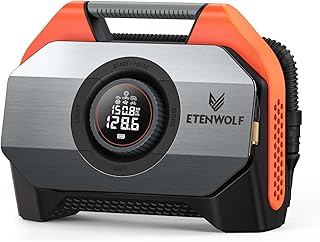
ETENWOLF VORTEX S6 Cordless Tire Inflator
The dual-cylinder pump and true 100% duty cycle put this well ahead of typical cordless inflators, meaning you can work four tires on a loaded SUV without a thermal shutdown. Its 19,200mAh pack and LED backlight make it the one I’d keep in the trunk for pressure checks and roadside work, though it’s not a drying tool.
AUXITO 26000mAh Heavy Duty Tire Inflator
The built-in power station is the differentiator here, doubling as a phone and light bank on location shoots, while 150 PSI handles light truck and RV tires. The 65W fast charging means it’s actually ready when you grab it, which is the failure point of most cordless units.
150 PSI Portable Air Compressor with Digital Gauge
A straightforward, budget-friendly inflator with an accurate digital readout and preset shutoff, which is all most detailers need for weekly pressure adjustments. Inflation is genuinely quick for the class, but treat it as a pressure tool rather than an airflow source.
AstroAI H2 Pro Cordless Tire Inflator
Dual power supply is the smart touch here, running off the 12V socket when the battery is flat instead of leaving you stranded. Auto shut-off is reliable across repeated cycles, making it a low-thought choice for anyone who just wants correct pressures before a wash.
8 Gallon Ultra Quiet Oil-Free Air Compressor
At 4.52 CFM and 70 dB, this is the unit that actually does detailing work: sustained blow-drying, crevice clearing, and small spray gun duty without contaminating your finish. The 8-gallon tank means fewer motor cycles during long sessions, at the cost of a footprint you’ll want to leave parked.
Frequently Asked Questions
Can I use a cordless tire inflator to dry my car?
No. Inflators produce high pressure at very low volume, typically well under 1 CFM, so you’d be pushing a thin trickle of air. Water displacement needs sustained volume from a tank compressor or a dedicated car dryer.
How many gallons do I actually need?
For blow-drying and crevice work, 4.6 gallons is a comfortable minimum, since it lets the pump keep up with continuous nozzle use. Going to 8 gallons reduces motor cycling on longer jobs but adds significant weight.
Is an oil-free compressor really necessary for detailing?
Yes, if air ever touches paint. Oil-lubricated pumps can carry trace oil mist that shows up as spotting on clear coat or contaminates a spray gun’s finish. Oil-free also means no drain-and-refill maintenance.
Do I need an inline water separator?
Absolutely. Compressed air carries condensation, and blowing moisture onto a car you just dried defeats the point. A cheap desiccant filter at the outlet is one of the best upgrades you can make.
Final Thoughts
For serious detailing airflow, the 8 Gallon Ultra Quiet oil-free unit is the workhorse pick thanks to its 4.52 CFM output and 70 dB operation, while the California Air Tools CAT-4610AC is the better choice if you need to move your setup around, offering nearly identical quiet performance in a lighter twin-tank aluminum package. Pair either with the ETENWOLF VORTEX S6 in the trunk for tire pressure duty, and you’ve covered both halves of the job properly.