Key takeaways
- 1,300–1,900 PSI: cars, motorcycles, patio cushions, window screens, painted siding. Gentle enough that mistakes are recoverable.
- 2,000–2,600 PSI: the residential sweet spot — vinyl siding, fences, brick, composite decking, garage floors. The Westinghouse ePX3500 sits here and covers most weekend work on one outlet.
- 2,800–3,400 PSI: concrete, oil-stained aprons, paver joints, stripping old stain. The WPX3400 and DeWalt DXPW3300-S live in this bracket.
- 3,500 PSI and up: genuinely commercial. Overkill for a home, and it will carve grain out of softwood in one pass.
The number stamped on the front of a pressure washer box is the one spec everybody fixates on, and it’s also the one that gets misread the most. PSI tells you how hard the water hits a surface; it says nothing about how fast you’ll actually finish the job, and it says nothing about whether your cedar bench will survive the encounter. I’ve stripped paint off a garage door by accident with a machine that was technically “mid-range,” and I’ve also spent an hour failing to shift algae off pavers with a unit that had plenty of pressure but almost no flow.
So let’s sort it out from the shop-floor perspective: what PSI range genuinely suits the surfaces around a home, why GPM belongs in the same conversation, and how nozzle choice can make a 2,000 PSI machine behave like a 3,000 PSI one. By the end you’ll know which number to shop for, what to skip, and where a cheap accessory beats an expensive upgrade.
Our top picks
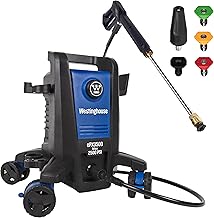


As an Amazon Associate we earn from qualifying purchases at no extra cost to you. Ratings are shown as listed on Amazon.
🛒 Best Price Today on Amazon
Prime members get fast, free shipping on everything above, plus member-only deals. New members get a 30-day free trial — cancel anytime.
What PSI Actually Means At The Nozzle
PSI is the pressure the pump generates; GPM (gallons per minute) is the volume it moves. Cleaning power is roughly the two multiplied together — pros call it cleaning units. A 2,500 PSI machine pushing 1.76 GPM lands around 4,400 cleaning units. A 3,400 PSI gas unit at 2.6 GPM lands near 8,800, which is why it finishes a driveway in half the time even though the PSI figure only looks 35% higher. Pressure breaks the bond; water volume carries the debris away. Chase one without the other and you’ll be standing outside a lot longer than you planned.
Matching PSI To What You’re Cleaning
- 1,300–1,900 PSI: cars, motorcycles, patio cushions, window screens, painted siding. Gentle enough that mistakes are recoverable.
- 2,000–2,600 PSI: the residential sweet spot — vinyl siding, fences, brick, composite decking, garage floors. The Westinghouse ePX3500 sits here and covers most weekend work on one outlet.
- 2,800–3,400 PSI: concrete, oil-stained aprons, paver joints, stripping old stain. The WPX3400 and DeWalt DXPW3300-S live in this bracket.
- 3,500 PSI and up: genuinely commercial. Overkill for a home, and it will carve grain out of softwood in one pass.
Electric Or Gas Changes The Answer
Electric units cap out around 2,500 PSI for a reason: a standard 15-amp circuit can only feed so much motor. In exchange you get quiet operation, no fumes, no oil changes, and the ability to work in a garage or on a balcony. Gas engines aren’t limited that way, so they deliver both higher PSI and much higher GPM — but they need warm-up, fuel stabilizer, and space to breathe. My honest split: if your list is cars, furniture, fencing, and a small patio, electric is the right tool. If you’re resurfacing a full driveway or maintaining outbuildings, gas earns its noise.
Nozzles Do More Work Than Extra PSI
Every machine ships with a nozzle set, and the color code is standardized: red (0°) is a pinpoint jet you should essentially never use on a building, yellow (15°) is for concrete, green (25°) handles general washing, white (40°) is your siding and furniture tip, and black is the low-pressure soap tip. Swapping green for white drops effective impact dramatically without touching the machine. A quick-connect gun like the Sooprinse or the adjustable GDHXW wand lets you change tips one-handed mid-job, which is the difference between doing it right and doing it fast.
Where A Foam Cannon Beats Raw Pressure
Grime that’s chemically bonded — road film, mildew, kitchen grease on a patio table — doesn’t respond well to force. It responds to dwell time. A foam cannon coats the surface in thick detergent that clings for a few minutes and loosens the bond, then a 40° rinse at modest pressure takes it away. A dual-connector shift valve kit that lets you flip between foam and rinse without disconnecting anything is one of the best sub-$40 upgrades in the whole category, and it will save more surfaces than any PSI increase.
Tips
- Always test in a hidden spot first — behind a downspout, under a bench slat — before committing to a full pass.
- Start with the wand about 18 inches back and walk in slowly; you can always get closer, but you can’t un-etch wood.
- Keep the spray moving in overlapping passes parallel to the surface. Holding still or angling into a seam is how water gets behind siding.
- Never run the pump dry, and squeeze the trigger to bleed pressure before disconnecting anything. Both habits add years to a machine.
Frequently Asked Questions
Is 3,000 PSI too much for a house?
Not if you use the right tip. Fit a 40° white nozzle, keep two feet of distance, and a 3,000 PSI machine washes siding safely. The danger is a narrow tip held close, not the rating itself.
What PSI is safe for outdoor furniture?
Stay at or below 1,500 PSI at the surface for teak, cedar, wicker, and powder-coated aluminum. Use a wide tip, back off further, and let detergent do the lifting instead of pressure.
Does higher PSI clean concrete faster?
Only up to a point. Past roughly 3,000 PSI, added GPM speeds you up more than added pressure, because volume is what flushes lifted dirt out of the pores.
Do I need a separate spray gun?
Not immediately, but a replacement gun is a cheap fix when a factory trigger starts leaking, and adjustable models let you dial pressure down for delicate work without swapping tips.
Conclusion
For most homes, 2,000–2,600 PSI paired with decent flow handles the honest majority of jobs, and a good nozzle set plus a foam cannon closes the gap on everything else. Step up to 3,300 PSI gas only if large concrete surfaces are a regular part of your routine — and remember that restraint at the wand, not the number on the box, is what keeps your siding and furniture intact.