Key takeaways
- Match PSI to the surface, not the ambition: Softwood decking and painted furniture want 500 to 1200 PSI at the nozzle. Concrete and masonry tolerate 2500 to 3000. Buying a higher-rated machine is fine, as long as you plan to dial it back with a wider tip.
- Watch GPM as closely as PSI: Flow rate is what carries loosened dirt off the surface. Most electric units sit around 1.76 GPM, while gas models push 2.5 GPM or more, which is the difference between an afternoon and a lunch break on a long driveway.
- Read cold-water PSI claims critically: Manufacturer figures often list a maximum measured under ideal conditions. A 120V outlet supplies a hard ceiling on motor output, so treat four-digit claims on plug-in units as marketing headroom rather than working pressure.
- Check the wand and fitting quality: Steel wands and brass quick-connects survive being dropped on concrete. Plastic couplers are the first thing to crack, and replacements rarely thread cleanly onto proprietary bodies.
- Decide how you will move it: Vertical, wheeled frames with cord wrap and hose storage get used. Compact boxes with loose accessories end up half-assembled on a shelf. Anti-tip designs matter more than they sound when you are tugging a hose around a corner.
Anyone who has spent a Saturday scrubbing a teak bench or a set of powder-coated patio chairs knows the frustration: the grime sits in the grain, the bristle brush glazes over the surface, and two hours later the results are uneven at best. A pressure washer solves that in minutes, but the spec sheets make the decision harder than it needs to be. PSI numbers now stretch past 5000 on listings that plug into a standard household outlet, which should raise an eyebrow for anyone who has actually held a wand and felt the reaction force.
This guide cuts through that. We look at what PSI actually delivers on furniture, decking, and driveways, why GPM matters just as much for rinse speed, and which machines hold up when you use them regularly rather than once a season. Every pick below has been chosen with an eye toward real garage-and-driveway work, including the kind of careful, low-pressure cleaning that outdoor furniture demands.
Our top picks



As an Amazon Associate we earn from qualifying purchases at no extra cost to you. Ratings are shown as listed on Amazon.
🛒 Best Price Today on Amazon
Prime members get fast, free shipping on everything above, plus member-only deals. New members get a 30-day free trial — cancel anytime.
How to Choose a Pressure Washer Best Psi (2026)
- Match PSI to the surface, not the ambition: Softwood decking and painted furniture want 500 to 1200 PSI at the nozzle. Concrete and masonry tolerate 2500 to 3000. Buying a higher-rated machine is fine, as long as you plan to dial it back with a wider tip.
- Watch GPM as closely as PSI: Flow rate is what carries loosened dirt off the surface. Most electric units sit around 1.76 GPM, while gas models push 2.5 GPM or more, which is the difference between an afternoon and a lunch break on a long driveway.
- Read cold-water PSI claims critically: Manufacturer figures often list a maximum measured under ideal conditions. A 120V outlet supplies a hard ceiling on motor output, so treat four-digit claims on plug-in units as marketing headroom rather than working pressure.
- Check the wand and fitting quality: Steel wands and brass quick-connects survive being dropped on concrete. Plastic couplers are the first thing to crack, and replacements rarely thread cleanly onto proprietary bodies.
- Decide how you will move it: Vertical, wheeled frames with cord wrap and hose storage get used. Compact boxes with loose accessories end up half-assembled on a shelf. Anti-tip designs matter more than they sound when you are tugging a hose around a corner.
The Best Pressure Washer Best Psi (2026)s Reviewed
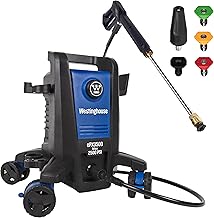
Westinghouse ePX3500
The anti-tipping base is the standout feature here, because a machine that stays upright while you drag 25 feet of hose across a patio is a machine you will actually reach for. At 2500 PSI and 1.76 GPM with a five-nozzle set and steel wand, it handles driveways confidently and steps down to a 40-degree tip for aluminum and resin furniture without stripping finish.
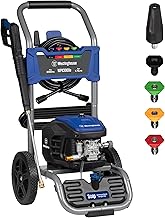
Westinghouse WPX3400 Gas
The 2.6 GPM flow rate is the reason to choose gas, and it shows up as roughly double the coverage speed on fence panels and long stretches of concrete. It is loud, needs oil checks, and is overkill for a small courtyard, but for anyone maintaining a large property it is the honest workhorse of this group.
Westinghouse WPX3000e
An induction motor is the detail worth paying for on an electric unit: quieter running, less heat, and a service life that tolerates repeated 30-minute sessions rather than short bursts. Rated at 3000 max PSI with the same 1.76 GPM, it sits in the sweet spot for mixed household work.
Westinghouse ePX3100v
At 2100 max PSI this is the most furniture-friendly pick in the lineup, and the detachable foam cannon makes quick work of teak, wicker, and vehicle paint. The carry handle and compact footprint suit anyone working from a shed or apartment balcony storage.
5000 PSI Power Washer with Hose Reel
Treat the headline figure with skepticism, but the practical package is genuinely useful: 33 feet of reeled hose, four tips, a foam cannon, and a soap bottle in a portable body. It suits light-duty patio and car work where convenience beats raw output.
Frequently Asked Questions
What PSI is safe for outdoor furniture?
Stay between 500 and 1200 PSI using a 40-degree white tip, held at least 12 inches back. Test on an underside surface first, especially on softwood or anything previously painted.
Are 5000 PSI electric pressure washers real?
A standard 15-amp household circuit cannot deliver the power those figures would require. Expect genuine working pressure in the 1500 to 2000 PSI range from plug-in units regardless of the number on the box.
Gas or electric for a typical suburban lot?
Electric covers driveways, siding, cars, and furniture with no fuel or maintenance. Choose gas only if you regularly clean more than a few hundred square feet at a time and want the higher GPM.
Do I need a separate detergent tank?
An onboard tank saves shuffling bottles mid-job and keeps soap draw consistent. A detachable foam cannon gives thicker cling for vehicles and finished wood, so ideally look for both.
Final Thoughts
For most homeowners the Westinghouse WPX3000e is the right buy, pairing an induction motor with enough pressure for concrete and enough control for a patio set. If your priority is furniture and cars, the ePX3100v with its foam cannon is gentler and easier to store, while the WPX3400 gas model earns its place on larger properties where flow rate saves real hours.