Key takeaways
- CFM at 90 PSI, not peak CFM: This is the only number that matters. Most LVLP guns need 3–5 CFM sustained; full-size HVLP guns want 10–13. Buy a compressor rated at least 1.5x your gun’s requirement so the motor isn’t running flat out the entire job.
- Tank volume as a buffer: A larger tank doesn’t create air, it stores it. Six gallons will get you through a fender; twenty-plus gallons lets you shoot a door and a quarter panel without waiting on recovery cycles that leave witness lines in your finish.
- Oil-free pumps for paint work: Oil-lubricated compressors can pass trace oil mist downstream, and that mist causes fisheye craters no amount of tack cloth will fix. Oil-free heads eliminate the source entirely, which is why every unit here uses one.
- Noise level in dB: Anything at 70dB or below is conversation-level. Units in the 66–70dB range let you hear the gun’s air note change, which is genuinely useful feedback when you’re chasing an even wet coat.
- Moisture management and portability: Look for an accessible tank drain and plan on adding a desiccant filter regardless. Wheels matter more than people expect once you’re dragging a 29-gallon vertical around a two-car bay.
Spray a clear coat with the wrong compressor and you’ll know within thirty seconds. The gun sputters, the fan pattern collapses, and you’re left with dry stripes across a panel you spent a weekend blocking. The culprit is almost never the gun — it’s a tank that empties faster than the pump can refill it. HVLP and LVLP guns are thirsty by design, pulling continuous air at 90 PSI for as long as your trigger is down, and a compressor sized for nail guns simply cannot keep up with that draw.
This guide is written from the garage floor, not a spec sheet. We’ve matched real CFM ratings against what spray guns actually consume, weighed tank capacity against duty cycle, and flagged which units stay quiet enough that you can shoot a hood at 8am without your neighbors filing complaints. Below are six compressors that hold pressure through a full panel, plus the buying criteria that separate a usable painting setup from an expensive air pump.
Our top picks


As an Amazon Associate we earn from qualifying purchases at no extra cost to you. Ratings are shown as listed on Amazon.
🛒 Best Price Today on Amazon
Prime members get fast, free shipping on everything above, plus member-only deals. New members get a 30-day free trial — cancel anytime.
How to Choose an Air Compressor For Auto Painting (2026)
- CFM at 90 PSI, not peak CFM: This is the only number that matters. Most LVLP guns need 3–5 CFM sustained; full-size HVLP guns want 10–13. Buy a compressor rated at least 1.5x your gun’s requirement so the motor isn’t running flat out the entire job.
- Tank volume as a buffer: A larger tank doesn’t create air, it stores it. Six gallons will get you through a fender; twenty-plus gallons lets you shoot a door and a quarter panel without waiting on recovery cycles that leave witness lines in your finish.
- Oil-free pumps for paint work: Oil-lubricated compressors can pass trace oil mist downstream, and that mist causes fisheye craters no amount of tack cloth will fix. Oil-free heads eliminate the source entirely, which is why every unit here uses one.
- Noise level in dB: Anything at 70dB or below is conversation-level. Units in the 66–70dB range let you hear the gun’s air note change, which is genuinely useful feedback when you’re chasing an even wet coat.
- Moisture management and portability: Look for an accessible tank drain and plan on adding a desiccant filter regardless. Wheels matter more than people expect once you’re dragging a 29-gallon vertical around a two-car bay.
The Best Air Compressor For Auto Painting (2026)s Reviewed
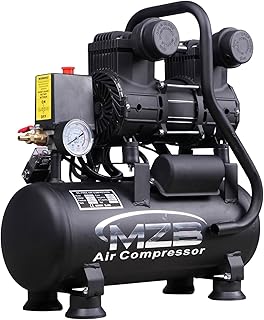
MZB 6.4 Gallon Ultra Quiet, 7.41 CFM
The 7.41 CFM rating is the standout here — that’s genuine full-size HVLP territory from a portable 6.4-gallon footprint, and the oil-free head keeps your air clean without maintenance. At 70dB it’s quiet enough for evening work, and the wheels mean you’re not wrestling it into position.
Klutch 29-Gallon Vertical, 2.5 HP
If you’re painting whole vehicles rather than touching up panels, the 29-gallon tank and 175 PSI ceiling give you the deepest reserve on this list, with 5.1 CFM at 90 PSI feeding most LVLP guns indefinitely. The vertical footprint and large wheels make it the most practical big-tank option for a home garage.
VEVOR 13-Gallon, 66dB
At 66dB this is the quietest unit reviewed, and 13 gallons is the sweet spot between reserve capacity and something you can actually roll through a doorway. The thickened steel body and 125 PSI max pressure make it a sensible middle pick for mixed painting and general shop duty.
AAIN Ultra Quiet 6.3 Gallon, 6 CFM
Six CFM from a 6.3-gallon portable is strong output for the size, and the 1.5HP oil-free motor recovers quickly between coats. A solid choice for panel repairs, bumpers, and bike work where portability outranks raw tank volume.
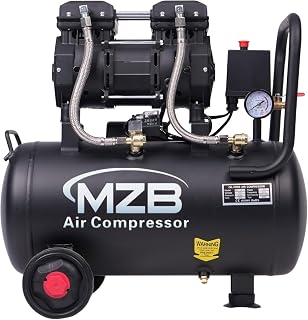
MZB 18.5 Gallon Upright
The upright 18.5-gallon configuration saves floor space while giving you enough stored air for extended spraying sessions, and the oil-free steel tank keeps contamination out of your lines. A practical step up if the 6-gallon units leave you waiting on recovery.
Frequently Asked Questions
How much CFM do I actually need to spray automotive paint?
Check your gun’s spec plate first. LVLP guns typically draw 3–5 CFM at 90 PSI, conventional HVLP guns 10–13 CFM. Add roughly 50% headroom so the compressor cycles rather than runs continuously, which reduces heat and moisture in the line.
Do I need an air dryer or filter?
Yes, without exception. Compressing air condenses water vapor, and water reaching your gun causes blushing and blistering. Run a water separator at the tank and a desiccant filter at the gun for the cleanest results.
Is a small tank workable if the CFM rating is high?
For panel work, yes. High-output portables like the 7.41 CFM MZB can sustain a smaller gun because the pump replenishes as fast as you’re drawing. For full-vehicle jobs, tank volume becomes the limiting factor and larger is genuinely better.
Are oil-free compressors durable enough for regular use?
Modern oil-free pumps handle intermittent shop duty well and eliminate the contamination risk that matters most in painting. They wear faster than oil-lubricated pumps under continuous industrial loads, which is rarely how a home garage uses them.
Final Thoughts
For most home painters, the MZB 6.4 Gallon at 7.41 CFM delivers the best output-to-footprint ratio on this list and handles full-size guns that stall lesser portables. Step up to the Klutch 29-Gallon if you’re shooting entire vehicles and want reserve air you’ll never run dry, or take the VEVOR 13-Gallon as the quiet, well-balanced middle ground that covers painting and everyday shop tasks equally well.