Our Top Picks
The best attic hatch insulation cover for winter is a zippered tent or panel that matches your opening, seals against the frame and keeps clear of heat sources, and for most 25 by 54 inch pull-down stairs that means choosing among the tent-style listings below. The twist most guides skip: the insulation value on the label is less important than the gaps around the door. A single eighth-inch crack around a standard hatch has the same open area as a hole about 4.4 inches on a side, and drafts through an opening like that can easily cost more than conduction through the panel does.
That framing guides everything below. The Editorial team wrote this from published specifications, manufacturer documentation and buyer reviews, so there are no first-hand impressions of how any cover installs or performs. We stick to what each title says and point you to the listing for the rest.
Start with the hole: measure before you shop

DGSL Attic Door Insulation Cover, Attic Tent 25 x 54 x 11 in | Energy-saving attic stairway door ladder insulator with zipper


As an Amazon Associate we earn from qualifying purchases. Product prices and availability are accurate as of the date/time indicated.

LEMOONE Attic Door Insulation Cover 25"x54"x11", Energy Saving Tent Attic Stairs Cover Ladder Pull Down Insulator, R-Value 15.5 Thicken Aluminum Foil Stairway Insulation with Zipper Fireproof


As an Amazon Associate we earn from qualifying purchases. Product prices and availability are accurate as of the date/time indicated.

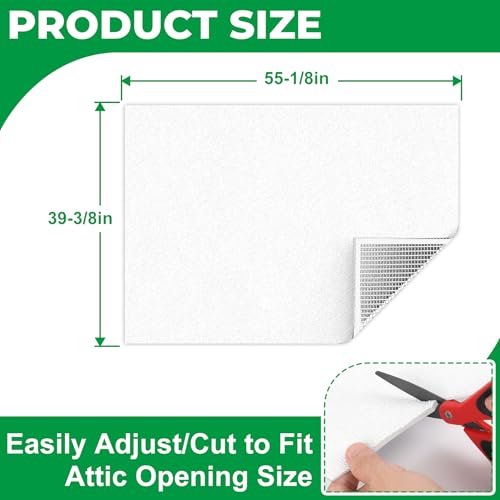
Forestchill Attic Door Insulation, Stairs Ceiling Shutter Seal With Velcor Strips, Air Tight Cover for Access, 39" x 55", Easy Cut to Fit


As an Amazon Associate we earn from qualifying purchases. Product prices and availability are accurate as of the date/time indicated.

Eapele Attic Stairs Insulation Cover Tent Premium Energy Saving, 25”x54”x11” for Pull Down Stairs, Double Bubble Reflective Radiant Barrier Reflects 95% of Radiant Heat


As an Amazon Associate we earn from qualifying purchases. Product prices and availability are accurate as of the date/time indicated.

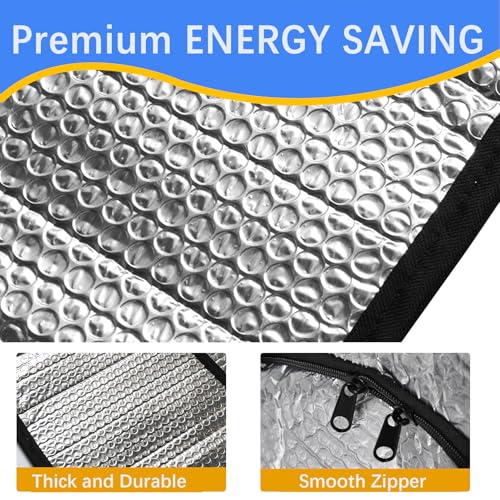
Attic Door Insulation Cover 25"x54"x11", Winter Energy Saving Tent Attic Stairs Cover Ladder, High R-Value 15.5 Thicken Aluminum Attic Zipper Door Insulation Cover


As an Amazon Associate we earn from qualifying purchases. Product prices and availability are accurate as of the date/time indicated.
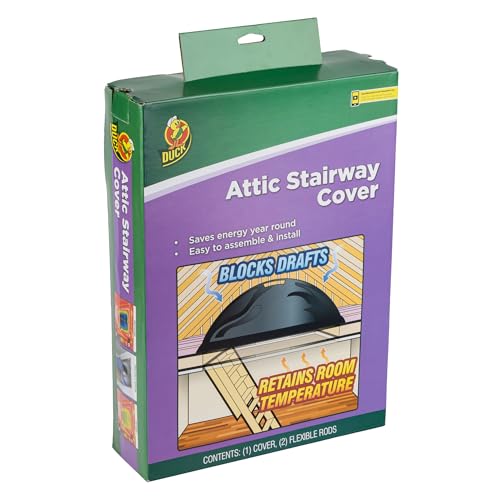
Duck Brand Stairway Attic Cover, Fits 25.5 in x 54 in Attic Openings, Black | Easy-to-Install and Move, Block Drafts and Retain Room Temperature Year Round, 1 Pack


As an Amazon Associate we earn from qualifying purchases. Product prices and availability are accurate as of the date/time indicated.

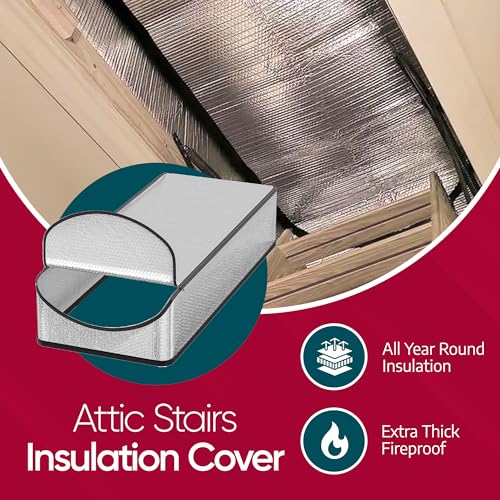
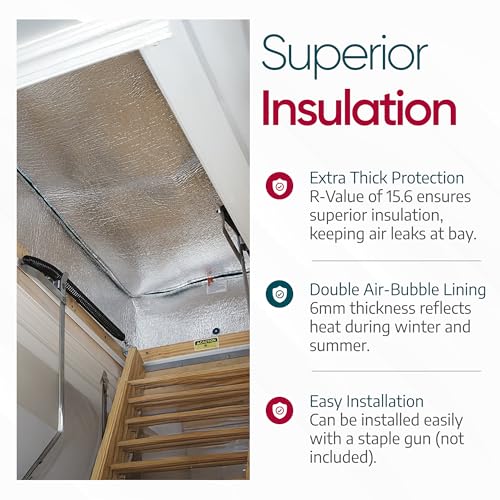
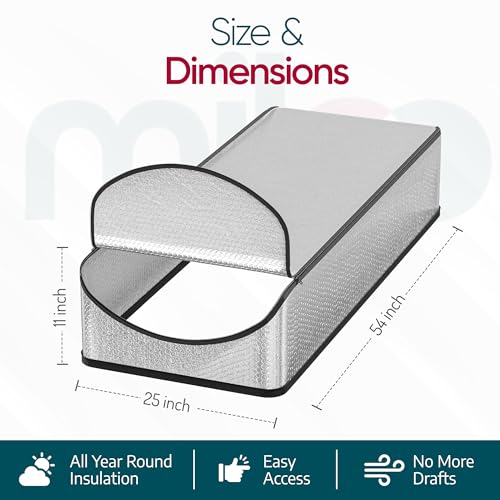
Attic Door Insulation Cover for Pull Down Ladder or Stair 25" x 54" x 11"- R-Value 15.6 Extra Thick Fire Proof Attic Tent Stairway Insulator with Easy Installation, Door Seal Hatch by Miloo





As an Amazon Associate we earn from qualifying purchases. Product prices and availability are accurate as of the date/time indicated.

Attic Stairway Insulation Cover - Premium Energy Saving Attic Stairs Door Ladder Insulator Pull Down Tent with Zipper 25 in x 54 in x 11In (Attic Cover + Installation Tool)
As an Amazon Associate we earn from qualifying purchases. Product prices and availability are accurate as of the date/time indicated.
Seven of the eight titles point at the standard pull-down opening: six describe a tent that is 25 inches by 54 inches by 11 inches, and the Duck cover is listed for a 25.5 by 54 inch opening. The eighth title is for a 39 by 55 inch flat sheet. If your opening differs, the best-reviewed tent in the world will not seal. Here is a short measuring routine.
- Rough opening. From the hallway or room below, measure the inside width and length of the hatch frame. Write down both numbers.
- Stair box. Measure the outside of the stair frame if the cover needs to wrap it. Tent-style covers usually go over the stair assembly on the attic side, so the attic side matters.
- Depth. The folded ladder takes up vertical space. Compare the 11-inch depth in most titles with the folded stack of your ladder. Do not force a cover that is too shallow to compress the ladder.
- Obstructions. Look for wires, pipes, ducts, bracing and joists on the attic side. Keep covers clear of recessed light housings, flues and chimneys.
- Stair weight limits. A tent adds weight to the stair door. Check the stair manufacturer’s guidance, especially for spring-loaded stairs.
If you cannot safely reach the attic side, consider hiring a professional. Never balance on the ceiling drywall between joists.
What a cover can save: a worked example with stated assumptions
Heat flows through a surface at a rate of area times temperature difference divided by R-value. Assume the following, all of which are estimates: the opening is 25 by 54 inches, which is 1,350 square inches or about 9.4 square feet. Assume an uninsulated pull-down door with a thermal resistance of about R-2, an indoor temperature of 68 degrees and an attic temperature of 28 degrees, a 40-degree difference.
| Case | Total R (assumed) | Heat loss per hour |
|---|---|---|
| Bare door | R-2 | About 188 BTU (9.4 x 40 / 2) |
| Door plus a cover that really delivers R-15 | About R-17 | About 22 BTU |
| Savings | About 166 BTU per hour |
Over a season of, say, 2,500 hours at that temperature difference, 166 BTU per hour is about 415,000 BTU. At 100,000 BTU per therm, that is around 4 therms of gas. Assuming gas at about $1.50 per therm and a furnace that turns all of it into heat, the saving is roughly $6. If the home uses electric resistance heat at 15 cents per kilowatt-hour (3,412 BTU per kilowatt-hour), it is about 122 kilowatt-hours or about $18. A heat pump would lower that further. These are illustrations, not measurements, and your climate, equipment and energy prices will change them.
Now the air. The perimeter of a 25 by 54 inch hatch is 158 inches. A gap of one-eighth inch along that perimeter gives an open area of about 20 square inches, equal to a square hole about 4.4 inches on a side. Warm indoor air rises and escapes into the attic through gaps like that, carrying heat and moisture with it. This is why air sealing the frame with weatherstripping, and picking a cover that closes against the ceiling without gaps, often matters more than the number printed on the product. It is also why a cover with a “tight seal” mention, like the Velcro-edged sheet below, deserves a close look.
The eight listings in one table
| Listing | Format and size in the title | Claims in the title | Price tier |
|---|---|---|---|
| DGSL Attic Door Insulation Cover | Tent, 25 x 54 x 11 in, zipper | “Energy-saving” | Budget |
| LEMOONE Attic Door Insulation Cover | Tent, 25 x 54 x 11 in, zipper | R-value 15.5, aluminum foil, “fireproof” | Budget |
| Forestchill Attic Door Insulation | Flat sheet seal, 39 x 55 in, hook-and-loop strips, cut to fit | “Air tight cover” | Budget |
| Eapele Attic Stairs Insulation Cover | Tent, 25 x 54 x 11 in | Double bubble radiant barrier, reflects 95% of radiant heat | Budget |
| Souroyea Attic Door Insulation Cover | Tent, 25 x 54 x 11 in, zipper | High R-value 15.5, aluminum | Budget |
| Duck Brand Stairway Attic Cover | Fits 25.5 x 54 in openings, black | Blocks drafts, easy to install and move | Premium |
| Miloo Attic Door Insulation Cover | Tent, 25 x 54 x 11 in | R-value 15.6, “extra thick,” “fire proof” | Premium |
| DGSL Attic Stairway Cover with tool | Tent, 25 x 54 x 11 in, zipper, installation tool | “Premium energy saving” | Mid-range |
Price tiers are relative to this set. Five listings cluster at the lowest prices, the DGSL with the tool is in the middle and the Duck and Miloo sit at the top. Check each listing for current pricing and for anything the title leaves out.
Covers, one at a time
DGSL Attic Door Insulation Cover: the basic zippered tent
The first DGSL listing is the plainest in the group: a 25 by 54 by 11 inch attic tent, described as an energy-saving stairway door and ladder insulator with a zipper. No R-value, material or fire claim appears in the title, which in a market full of big numbers is itself informative. It is a budget-tier product, and the benefit of a zippered tent is that it covers the whole stair assembly and lets you open it when you need attic access.
What the title does not say is how thick the insulation is or what it is made of. Check the listing for the construction, the fabric and the seam details. If the product page gives no R-value, you can still evaluate the design: how the zipper works, whether there is a flap behind it to block drafts, how it attaches to the ceiling or frame and whether it fits over the folded ladder.
Zippers in an attic tent are both a convenience and a weak point. Air can pass through the teeth if there is no baffle behind them. A good design will cover the zipper with a flap or overlap. Also think about how often you use the attic: if you go up monthly, the zipper pays for itself; if you go up once a year, a simpler flat cover might be fine.
This listing has a near-duplicate in the set, the other DGSL with an installation tool, so compare them closely before paying for both. If you are happy to hang a cover with basic tools, the cheaper one is enough. If you do not have a convenient way to hold it in place while you fasten it, the tool version may save frustration.
Pros
- Standard 25 x 54 x 11 inch size
- Zipper for attic access
- Budget price tier with no inflated claims
Cons
- No R-value or material stated in the title
- Zipper may leak air without a baffle; check the listing
- Near-duplicate of another DGSL listing
Who it’s for: homeowners with a standard 25 x 54 inch hatch who want a straightforward zippered tent.
LEMOONE Attic Door Insulation Cover: R-15.5 and aluminum foil in the title
LEMOONE’s title is claim-heavy: 25 by 54 by 11 inches, an energy-saving tent for pull-down stairs, R-value 15.5, thickened aluminum foil, a zipper and “fireproof.” In the same budget cluster as the plain DGSL, it adds numbers that make it look like the better insulator. Whether it is depends on how that R-value was determined.
Foil-faced insulation can reach strong R-values when it contains trapped air layers or foam, but reflective surfaces only work well when they face an air gap, and R-values for multi-layer products depend on test conditions. Ask the seller or read the product page for the test standard and thickness. Without that, 15.5 is a label, not a result. The same goes for “fireproof.” The word is often used loosely; look for a stated flame-spread classification or a named standard. If none is given, treat the cover as combustible material and keep it away from heat sources such as flues, chimneys and non-rated recessed lights.
The aluminum foil layer is a plus for sealing air, since foil facing can be a good air barrier when seams are tight. It can also be noisy and crinkle. The zipper is handy for attic access but should be checked for air leaks.
The LEMOONE and the Souroyea listing share almost the same set of claims (R-15.5, thickened aluminum, zipper), so compare photos and descriptions to decide. If the claims are reliable, both are a good value; if not, a plain tent with honest labeling might do the same work. In either case, pair the cover with weatherstripping on the hatch frame.
Pros
- R-value 15.5 stated (seller claim)
- Aluminum foil layer helps block air
- Standard tent size with zipper
Cons
- R-value and “fireproof” lack stated standards in the title
- Foil may crinkle and tear if handled roughly
- Near-twin claims with another listing
Who it’s for: buyers who want a labeled R-value and will verify the test details on the listing.
Forestchill Attic Door Insulation: a flat 39 by 55 inch seal, not a tent
This one is a different product type, and the title says so. Forestchill describes attic door insulation for a stairs ceiling shutter, with hook-and-loop strips, an “air tight cover for access,” 39 by 55 inches and “easy cut to fit.” It is not a 25 by 54 by 11 inch tent; it is a flat sheet you trim and fix around the hatch. The listing uses the spelling “Velcor,” but the idea is hook-and-loop fasteners.
The advantage of a flat, cut-to-fit sheet is that it suits unusual or larger hatches where tents do not fit. The 39 by 55 inch size gives extra material to trim, so you can match a hatch that is bigger than the standard. The disadvantage is that you are the installer: cutting, positioning and sealing are your job, and the result is only as good as the edges. Hook-and-loop strips make removal easier, but they also tend to leave gaps if they are not pressed along the entire perimeter.
The title does not say what the sheet is made of, how thick it is or whether it has any R-value. It also does not say how you reach the attic: you may have to peel the sheet back, and the “for access” phrase suggests it is designed to be reopened. Check the listing for how the sheet attaches, which surface the strips stick to and whether adhesive will damage paint. If the hatch is a drop-down ladder, the sheet may have to cover the folded ladder or the opening above it.
Because the product serves a different need from the tents, compare it to your hatch rather than to the others. If your hatch is 25 by 54 inches, a tent is likely simpler. If it is not, this is the one that fits.
Pros
- Cut-to-fit sheet for non-standard hatches
- Hook-and-loop strips for removal
- Budget price tier
Cons
- Not a tent; quality depends on your trimming and sealing
- Material and thickness not stated
- Strip adhesion varies with surface and temperature
Who it’s for: owners of non-standard or larger hatches who can trim and fit a sheet carefully.
Eapele Attic Stairs Insulation Cover: radiant barrier, which is a different claim
Eapele’s tent is 25 by 54 by 11 inches and is described as premium and energy saving for pull-down stairs, with a double-bubble reflective radiant barrier that “reflects 95% of radiant heat.” This is the cheapest listing in the set, and the only one whose headline claim is about reflectivity rather than R-value.
The distinction matters. A radiant barrier reduces heat transfer by radiation, which is the main concern in a hot attic in summer, where the roof heats the space and radiates heat down. In winter, the main heat flows through an attic door are conduction through the panel and air leaks. A reflective surface helps when it faces an air gap, but it is not a substitute for thick insulation. The title does not state an R-value, so this cover cannot be compared directly with those that do.
Double-bubble material is typically two layers of bubble film sandwiched between reflective faces. It is light and easy to handle. It can also be thin, so whether it offers meaningful insulation against conduction depends on the actual thickness and the way you install it. Check the listing for thickness and construction. If you live where attic heat in summer is as much of a concern as winter cold, a radiant barrier tent offers some additional benefit and might be a sensible pick.
The bottom line: it is a good budget way to cover the hatch and block drafts if sealed well, but the “reflects 95%” claim speaks to radiation only. If winter conduction is your priority, a thicker product with a stated R-value may be a better match, provided those claims are supported.
Pros
- Lowest price tier in the set
- Lightweight reflective material
- Radiant benefit for hot attics in summer
Cons
- No R-value stated; the 95% claim is about radiant heat only
- May be thin for conduction in winter
- Zipper or closure details not in the title
Who it’s for: budget buyers in climates where summer attic heat matters as much as winter drafts.
Souroyea Attic Door Insulation Cover: R-15.5 on a zippered aluminum tent
The Souroyea listing (the brand name appears in the product details, with a title that opens with generic wording) is a 25 by 54 by 11 inch winter tent for attic stairs with a high R-value of 15.5, thickened aluminum and a zipper. It reads almost the same as the LEMOONE title, apart from the fire claim, and costs about the same.
With two near-identical listings, the useful question is how to choose. Look at the photos and the description for differences in the zipper, the flap behind it, the seams, the way it attaches and the packaging. Check how both explain “R-value 15.5.” If one lists the thickness and materials and the other does not, that is a sign of a more transparent listing. If both leave it vague, assume you are getting a typical foil-faced tent and treat the R-value as a marketing figure.
A winter-focused tent’s biggest job is to keep warm air from rising into the attic. For that, look for a closure that overlaps, a base that sits flat against the ceiling or the frame and a way to fasten it so the fabric does not bow open. Ask yourself whether you will need to open it often: zippers are convenient but add leak points.
Unlike the LEMOONE, the Souroyea title does not claim to be fireproof. That is not a drawback; a product that makes fewer unverified claims is often easier to trust. Whatever the material, keep it away from heat sources and recessed light housings that are not rated for insulation contact. If the attic has any wiring concerns, consult a licensed electrician before you hang anything near it.
Pros
- R-value 15.5 stated (seller claim) at the budget tier
- Standard tent size with zipper
- No fire claim to verify
Cons
- R-value test method not shown in the title
- Nearly the same claims as another listing
- Zipper area may leak air
Who it’s for: shoppers who want a labeled R-value at a low price and will compare listing details.
Duck Brand Stairway Attic Cover: the brand-name option for 25.5 by 54 inch openings
Duck’s title says the cover fits attic openings of 25.5 by 54 inches, is black, is easy to install and move and helps block drafts and retain room temperature year-round, in a one-pack. The listing does not state an R-value, a material or a fire claim. Its price is in the premium tier, second only to the Miloo, which means the premium is more about brand, product design or construction than about a stated number.
A close reading shows two things. First, the fit is slightly different from the 25 by 54 inch tents: 25.5 inches on the short side. If your opening is closer to 25.5 inches, this may fit better. If it is smaller, check how much overlap the cover gives. Second, “easy to install and move” suggests that you can take it down when you need the attic and put it back, which is a practical advantage over covers that are fixed in place. The listing does not describe the format in detail, so check the images to see if it is a tent or a panel.
The black color may be a drawback or a benefit. It is hard to see in a dark attic, and some people dislike black near lights; others like how it hides dust. It does not tell you anything about heat absorption in an attic, because the cover mostly sits inside the conditioned space on the attic side.
The question is whether to pay more. Without a stated R-value, you need to look at the product description to see the thickness and materials. If you cannot find them, consider the cheaper tents with stated numbers. If the brand’s installation guidance and customer support matter to you, the premium may be justified. In either case, add weatherstripping to the hatch frame.
Pros
- Brand-name listing with stated fit for 25.5 x 54 inch openings
- Described as easy to install and move
- One-pack with straightforward claims
Cons
- No R-value or material in the title
- Premium price tier
- Format details are not in the title
Who it’s for: buyers with a 25.5 x 54 inch opening who prefer a recognized brand and a removable cover.
Miloo Attic Door Insulation Cover: R-15.6, extra thick and the highest price
The Miloo is the most expensive listing in the set. Its title names a 25 by 54 by 11 inch cover for pull-down ladders or stairs with R-value 15.6, “extra thick,” “fire proof,” easy installation and a door seal hatch. The R-value is almost the same as the 15.5 listings. The price premium therefore has to come from thickness, build quality, fire claims or installation extras rather than from a bigger number.
“Extra thick” is a relative term; the listing needs to show the actual thickness. Thicker material tends to resist heat flow better, but it also takes more space, and with an 11-inch tent depth you must make sure the folded ladder and its mechanism still fit and operate. Overstuffing the space can strain a spring-loaded stair door. Check the stair manufacturer’s weight guidance before you add a heavy cover.
The fire claim is the other talking point. The product is described as fire proof, and the earlier caution applies: look for a test standard or certification, and keep the cover away from flues, chimneys and non-rated recessed lights regardless. Fire clearances are not negotiable with any material. If your attic has unusual features or older wiring, a professional inspection is a good idea before you install.
The “door seal hatch” language suggests the design focuses on sealing the opening, which is the key factor from the worked example. If the listing shows overlapping flaps, a sturdy zipper or a good seal around the frame, that could be worth paying for. If the listing is thin on construction details, the money may be better spent on a cheaper tent plus weatherstripping.
Pros
- R-value 15.6 stated (seller claim) and “extra thick”
- Sealing focus in the title
- Standard 25 x 54 x 11 inch size
Cons
- Highest price tier in the set
- R-value and fire claims lack a named standard in the title
- Thick cover may strain stairs if not matched to the stair maker’s limits
Who it’s for: cold-climate homeowners who want the thickest-sounding cover and will confirm the construction and standards.
DGSL Attic Stairway Cover with Installation Tool: a mid-priced twin of the first listing
The second DGSL listing is a 25 by 54 by 11 inch zippered tent described as premium, energy saving and bundled with an installation tool. The first DGSL listing is almost the same wording without the tool and without “premium.” Prices differ: this version sits in the mid-range tier. So the question is what the tool and the premium wording add.
An installation tool in a package like this is usually something to help fix the cover into place, but the title does not say what it is. Read the product page and photos. If the tool helps you hold the cover or press the edges evenly, it could improve the seal. If it is a simple accessory, the price difference might not be worthwhile.
As with the other tents, the missing details are R-value, material and thickness. The “premium” label is a marketing word; it has no standard meaning. Compare the images of both DGSL listings to see whether the cover looks different, such as thicker edges or a covered zipper.
A practical way to decide is to think about installation. Do you have a stable ladder and a helper, or will you be working alone? Installing in an attic hatch involves reaching overhead and holding material in place. If a tool makes the job easier and safer, it has value. If not, spend the difference on weatherstripping tape for the frame, which makes a larger difference in air leakage according to the arithmetic above.
Because the first DGSL is nearly identical, buy only one. If you do not see a meaningful difference on the product pages, the cheaper listing is the sensible default.
Pros
- Includes an installation tool, per the title
- Standard tent size with zipper
- Mid-range price tier
Cons
- R-value and materials not stated in the title
- Near-duplicate of a cheaper DGSL listing
- “Premium” is a marketing term
Who it’s for: DIYers who want a bundled tool and are comfortable verifying that it is worth the small step up.
How we picked these
This guide was written by the Editorial team using published specifications, manufacturer documentation and buyer reviews. Nobody on the team used or measured these units. That means no one has installed a cover, felt the draft before and after, or confirmed any R-value, and you should not read the guide that way.
The shortlist is the set of listings matching the keyword. We compared the facts each title states: size, format, R-value claim, fire claim and closure type. We sorted them into relative price tiers, flagged the near-duplicates (the two DGSL listings, and the LEMOONE and Souroyea pair), and pointed out the one product that is a different type (the Forestchill flat sheet) and the one with a different kind of claim (the Eapele radiant barrier). The heat-loss arithmetic uses stated assumptions so you can swap in your own numbers. Seller claims are labeled as claims.
Safety and installation notes
Fire clearances and heat sources
Keep covers away from flues, chimneys, exhaust fans and recessed light housings unless they are rated for contact with insulation. Building codes set clearances that vary by location. A “fireproof” label does not change those clearances. If you are unsure what is in the attic space, ask a licensed electrician or building professional.
Gear and footing
Use a stable ladder or the attic stairs themselves if they are in good condition. Wear a dust mask or respirator, gloves and eye protection near insulation. Do not step on ceiling drywall between joists. Do not work alone if you feel unsteady, and avoid attics during extreme heat or cold.
Old insulation and wiring
If you see loose-fill insulation that looks like gray-brown pebbles (which might be vermiculite, sometimes associated with asbestos), do not disturb it; contact a qualified professional. If you see older cloth-covered wiring, ask an electrician before covering or touching anything. For complex attics, consult a pro.
Moisture and ventilation
Sealing the hatch cuts the amount of warm, humid indoor air that gets into the attic, which lowers the risk of condensation on cold surfaces. Do not block attic vents. If you see frost, damp insulation or mold, that is a bigger problem than a hatch cover will solve. For related moisture guidance, see this explainer on what humidity a house should have in winter.
Stair weight and operation
Spring-loaded or counterbalanced stairs have weight limits. Check the stair maker’s instructions before adding a heavy cover to the door. If the stairs become hard to open or do not close fully, remove the cover and ask the manufacturer or a pro.
Weatherstripping first: a sealing checklist
- Look for daylight or feel for drafts around the hatch frame on a windy day.
- Add compressible foam or rubber weatherstripping around the frame’s perimeter so the door presses into it when closed.
- Check the hinge side where gaps are common.
- Install the cover so the base sits flat on the ceiling or frame, with no gaps along the edge.
- Close the zipper fully and look at whether the flap overlaps.
- Re-check after a month in case fasteners or strips have loosened.
If other parts of your home feel drafty, insulating drafty windows and sealing similar leaks often gives a bigger comfort gain than any single attic cover.
Mistakes buyers make
Buying by R-value alone. A product with a bigger number but a gappy seal can lose more heat than a smaller number that fits tightly.
Comparing radiant claims with R-values. They measure different things.
Skipping the measurement. A tent sized for 25 by 54 inches won’t work on a different hatch.
Trusting “fireproof.” Ask for the standard and still keep clearances.
Ignoring the stairs’ weight limits. Extra weight can affect operation.
Buying twins. Two listings with near-identical wording are usually the same kind of product; buy one.
Final call
For a standard 25 by 54 inch hatch, the plain DGSL, the LEMOONE and the Souroyea are the budget tents; the last two state R-values, which you should verify. The Miloo is the premium thick-cover option, the Duck is the brand-name choice for 25.5 by 54 inch openings, and the second DGSL adds an installation tool for a small step up. The Eapele is a radiant barrier rather than an R-value product, and the Forestchill is a cut-to-fit sheet for hatches that don’t match the standard size.
Whichever you buy, seal the frame first, keep clearances from heat sources and follow the stair maker’s guidance.
Related guides
- Battery Powered Floodlight Camera With Local Storage
- Cordless Drill Brush Attachment For Bathroom Grout
- Rechargeable Emergency Lantern For Power Outages
Frequently asked questions
Do attic hatch insulation covers really save energy in winter?
They can help, but expect modest savings. A pull-down attic door is a small area, so the heat lost by conduction through it is limited, and under common assumptions a good cover saves roughly the price of a few therms or a few dozen kilowatt-hours over a heating season. The bigger win is usually sealing the air leaks around the frame, because warm air escaping into the attic carries more heat than the panel itself. Use the cover and weatherstripping together, and treat the savings as an estimate.
What size attic stairs cover do I need?
Most tent-style covers in this guide are listed for openings of roughly 25 by 54 inches and 11 inches deep, but your stairs may differ. Measure the rough opening, the stair frame and the folded ladder, and compare with the listing’s inside dimensions. Allow for clearance so the cover does not press on the ladder mechanism. If your hatch is larger or a different shape, look at a cut-to-fit option or ask the seller for a custom size.
Are R-value claims on attic covers reliable?
Treat them as seller claims until you see the test standard behind them. Three titles state R-values of 15.5 or 15.6, but reflective and foil products can perform differently from batt or foam insulation, and some figures depend on trapped air layers. Look for the test method, the product thickness and how the claim was measured. A reflective radiant barrier, like the one in a different title, is described by reflectivity rather than R-value, so the numbers cannot be compared directly.
Is it safe to cover an attic hatch with an insulated tent?
Generally yes if you follow the manufacturer’s instructions and keep covers away from heat sources. Do not let the material touch hot flues, chimneys or non-rated recessed light housings, and check the stair maker’s weight limits for the door. Some covers claim to be fireproof; look for the standard or certification behind the claim. In older homes, or if you see wiring you do not recognize, ask a licensed professional before working in the attic.
Can I install an attic hatch cover myself?
Most zippered tents are designed for homeowners, but you still need a stable ladder, good footing and proper gear. Wear a dust mask or respirator, gloves and eye protection when you are near insulation. Do not step between joists, and do not install alone if you are unsteady. If the stairs are damaged, the framing is unusual or the attic has hazards such as old wiring or vermiculite insulation, consult a professional before you start.