what humidity should a house be in winter: There is no single ideal RH in winter for every climate and window. Colder glass can condense at a RH level that may be acceptable in milder conditions.
Quick Answer: A practical winter starting point in a cold climate is around 30-40% indoor relative humidity, consistent with ENERGY STAR guidance; EPA gives 30-50% as its broader indoor range. Use a hygrometer, and if windows or walls fog/frost, lower humidity and check ventilation. Never force a humidifier above 50% RH; very cold outdoor weather or poorly insulated windows may require a lower setting.
As an Amazon Associate we earn from qualifying purchases.
By DIY Ideas 4 Home Editorial Team
Winter indoor humidity by the Numbers
Each line below ties a real-world decision to a visible outcome and an explicit limit. Start with the first check that fits the symptom rather than treating the whole list as required repairs.
| Decision point | Owner action | Result to check | Stop or exception |
|---|---|---|---|
| Measure indoor RH in an occupied room | Place a hygrometer away from a window, heater or mist plume and allow it to settle. | Write down the indoor reading with outdoor conditions. | One number is not a universal winter target. |
| Choose a season-appropriate starting point | In colder winter conditions, consider ENERGY STAR guidance around 30-40% RH, with EPA general guidance of 30-50%. | Compare comfort with window and wall moisture. | Colder glass may require a lower setting. |
| Look for moisture feedback | Inspect room-facing window glass, frames and corners for condensation or frost. | If surfaces become wet, lower humidification and improve ventilation. | Do not target 50% just because it is within a general range. |
| Use equipment limits | Set humidifier output only as its manual allows and empty standing water appropriately. | Confirm moisture problems do not worsen. | EPA advises against humidifying above 50% RH. |
ENERGY STAR cold-climate target vs EPA general range
ENERGY STAR recommends indoor RH around 30-40% during cold-climate heating season to avoid window condensation.
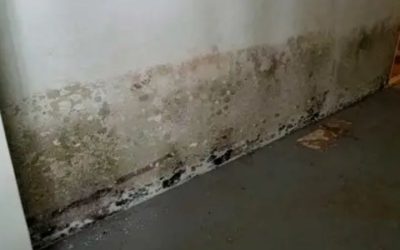
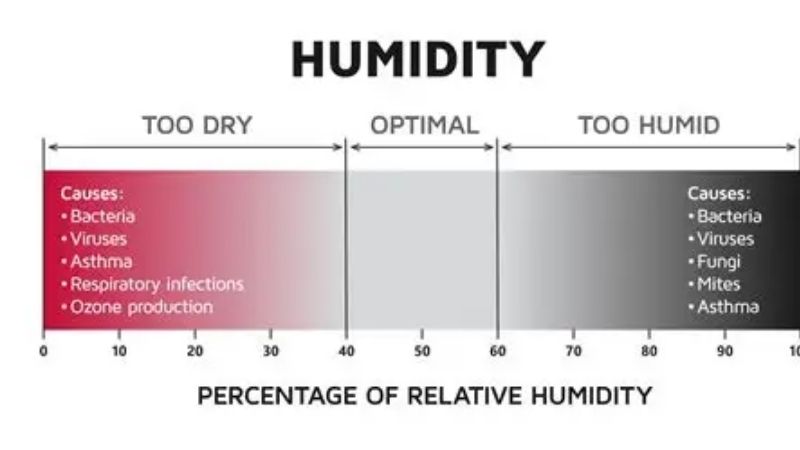
Winter humidity is a balance between comfort and what the building’s coldest surfaces can tolerate. The EPA’s broader indoor guidance often references about 30–50% relative humidity, while ENERGY STAR’s cold-climate winter advice is generally more cautious, around 30–40%. These are starting contexts, not a guarantee that every insulated window will remain dry at the same setting. Outdoor cold, indoor temperature, glass construction, and local cold spots all change the risk of condensation. The practical target is a measured level that avoids persistent wet windows, damp wall corners, or mold-supporting moisture rather than the highest number a humidifier can display.
When a lower indoor target makes sense
The U.S. EPA advises that water condensing on windows, walls and pictures calls for relocating/reducing humidifier or lowering humidistat setting.
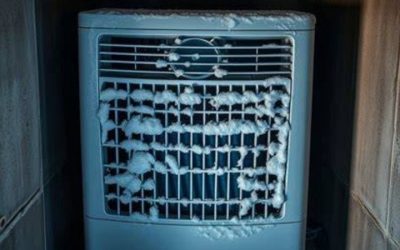
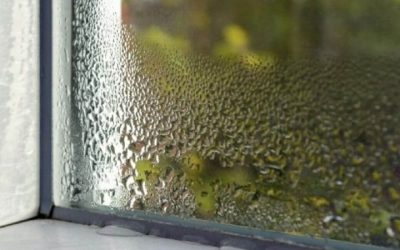
If droplets appear on the room-facing glass, treat them as useful feedback instead of assuming the hygrometer has failed. Warm indoor air can reach a cold window and cool enough for water to condense even though the same air felt comfortable away from the glass. Lower the humidifier setting, ensure bathroom and kitchen moisture is exhausted appropriately, and keep monitoring the affected area. Avoid placing a humidifier directly by the window in an effort to ‘warm’ the glass with mist. Moisture trapped behind curtains or in a frame can be overlooked until trim or finishes show visible damage.
Outdoor temperature and colder window surfaces
Same AprilAire Model 600 manual recommends lowering to about 25% RH for expected 0°F outdoors; do not extrapolate into a universal table.
Outdoor temperature tables published for one humidifier model should not be turned into universal household rules. A manufacturer’s example linking a lower humidity setting to very cold weather reflects that product’s operating assumptions and a particular condensation concern. Use such figures only in their stated context and defer to the instructions for the installed equipment. For homes with different window performance, the same outdoor reading may lead to different visible moisture behavior. Record the overnight low if relevant and check windows in the morning, when cold glass often makes the effects easier to notice.
How to Interpret the Evidence
Colder window surfaces are more likely to be below indoor air dew point, causing water to condense even when RH is not excessively high throughout the home.
Raising RH can alleviate dryness but increases condensation risk; exhaust fans, heat distribution and appropriate air exchange matter alongside machine settings.
Adjust for Your Situation
Begin with observable conditions and proceed only through permitted user controls. A safety alarm, damaged part, live connection or inaccessible component ends the do-it-yourself path.
Step 1: measure indoor RH in an occupied room
Place a hygrometer away from a window, heater or mist plume and allow it to settle. Write down the indoor reading with outdoor conditions.
One number is not a universal winter target.
EPA suggests a hygrometer; AcuRite 00613 official spec says ±3 percentage points accuracy for 20-80% RH range.
For a useful home check, place a hygrometer in ordinary occupied-room air, away from windows, radiators, vents, and mist outlets. Record the indoor temperature and RH at a consistent time for several days rather than reacting to one reading. Compare the numbers with dampness at glass edges, wood trim, and cool corners. Change humidifier settings gradually, then allow conditions to stabilize before deciding whether the adjustment helped. A second sensor in an unusually damp or dry room can reveal a localized issue that would be hidden by looking only at a thermostat in a central hallway.
Step 2: choose a season-appropriate starting point
In colder winter conditions, consider ENERGY STAR guidance around 30-40% RH, with EPA general guidance of 30-50%. Compare comfort with window and wall moisture.
Colder glass may require a lower setting.
The U.S. EPA advises that indoor humidity should remain below 60% and ideally 30-50% RH to reduce mold/moisture concerns.
A sensible winter humidity plan should include ordinary moisture sources as well as the humidifier itself. Long showers, cooking without outdoor exhaust, water intrusion, and indoor drying of laundry can raise localized moisture even when the main living room seems dry. If a room is persistently wet, adding more heating or more mist is not the first solution. Reduce or vent the source, and seek qualified help for hidden leakage or recurring mold. The end point is a stable indoor environment with dry building surfaces, not a precisely maintained percentage achieved at the expense of condensation.
Step 3: look for moisture feedback
Inspect room-facing window glass, frames and corners for condensation or frost. If surfaces become wet, lower humidification and improve ventilation.
Do not target 50% just because it is within a general range.
AprilAire manual explains maximum indoor RH before condensation depends on cold outdoor temperature and window performance.
Step 4: use equipment limits
Set humidifier output only as its manual allows and empty standing water appropriately. Confirm moisture problems do not worsen.
EPA advises against humidifying above 50% RH.
EPA Use and Care of Home Humidifiers directs users not to humidify beyond 50% RH and to reduce output if surfaces become damp.
Products That Help
Useful supplies for the specific checks above can include AcuRite 00613 hygrometer and AprilAire Model 600 humidifier. Confirm the exact size, device compatibility and applicable maintenance instructions first. Equipment and tools do not remove the need to stop for a safety fault.
Frequently Asked Questions
The answers below separate normal operation, owner-accessible checks and conditions that require manufacturer support or professional service.
Is 50% humidity too high in winter?
It can be too high for cold windows even though 50% is the upper edge of EPA general guidance. If condensation appears, lower the humidifier setting.
What if the outdoor temperature falls below freezing?
Colder exterior conditions cool window surfaces and may require lower indoor RH. AprilAire gives model-specific examples but no one percentage fits every window.
Is 30% indoor humidity too low in winter?
Not necessarily. ENERGY STAR describes roughly 30-40% RH as a cold-climate heating-season range; use measurements and whether surfaces are dry.
Should I use a humidifier in winter if my windows sweat?
No additional humidification is warranted while windows are actively sweating. Reduce output, dry affected surfaces and check outdoor-vented ventilation.
Final Thoughts
Place a hygrometer away from a window, heater or mist plume and allow it to settle. EPA advises against humidifying above 50% RH.