how to measure indoor humidity: A smart thermostat, room app or low-cost hygrometer may show a humidity number, but its sensor location and specified accuracy determine what that number means.
Quick Answer: Use a digital hygrometer that displays %RH. Place it in normal room air away from sunlight, direct drafts, a window, radiators and humidifier mist; record temperature and RH after readings stabilize. Compare locations or use a reference check if the result seems implausible.
As an Amazon Associate we earn from qualifying purchases.
By DIY Ideas 4 Home Editorial Team
Before You Start: Tools, Materials and Safety
Work only with the surfaces, materials and controls that the exact manual identifies as owner-accessible. Check the expected result at each stage before proceeding.
| Decision point | Owner action | Result to check | Stop or exception |
|---|---|---|---|
| Choose a suitable hygrometer | Read the accuracy range of the exact measuring device rather than relying on a generic app. | AcuRite 00613, for example, states ±3 RH percentage points in its specified 20-80% band. | Those model figures are not an accuracy claim for every hygrometer. |
| Measure in representative room air | Set the device away from sun, glass, radiators, supply drafts and humidifier mist. | Wait for the display to stabilize before recording RH and temperature. | Do not mistake condensation on a wall for room-air RH. |
| Check more than one room or time | Record the location, temperature in °F, RH and time of day. | Compare repeat measurements when cooking or showering is not distorting readings. | A single spot check cannot represent a whole home. |
| Verify a suspicious meter cautiously | If needed, use a controlled manufacturer-supported reference or compare with another known device. | A saturated salt reference near 75.3% RH at 77°F requires equilibrium and careful conditions. | The WMO cautions that a home salt test is not a traceable calibration. |
Choose a digital hygrometer that reads %RH
A hygrometer/humidity gauge is the household tool EPA identifies for RH measurement.
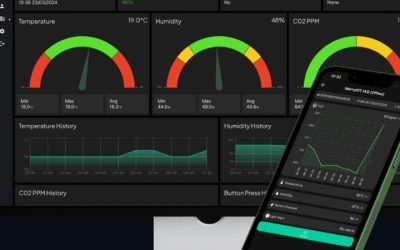
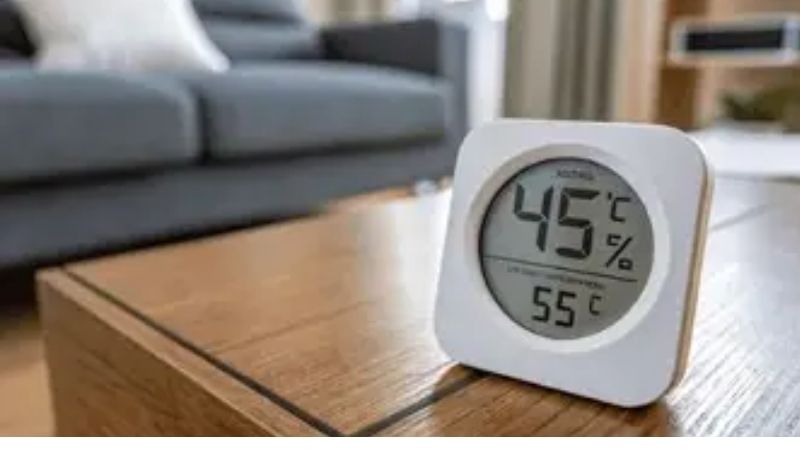
A hygrometer is useful because it gives a repeatable number to replace a vague impression that the air feels dry or muggy. Make sure the device displays relative humidity as %RH and, preferably, room temperature next to it. Humidity is relative to temperature, so two rooms can display different percentages even when their moisture conditions are connected. Read the maker’s stated accuracy instead of treating every digit as laboratory precision. For example, a display showing a small change of one percentage point may be within the instrument’s ordinary variation rather than evidence that a humidifier adjustment transformed the room.
Place the meter away from heat and mist
A spot-reading is not whole-home humidity: avoid solar/infrared heated surfaces; measure where people occupy the room.
Sensor placement is often the biggest controllable source of misleading readings. Avoid a windowsill with direct sun, the path of a heating register, an exterior door, a bathroom shower plume, or the visible mist outlet of a humidifier. Place the unit in normal occupied air at a convenient stable location. If you move the hygrometer from a cold basement to a warm bedroom, give it time to settle before recording a comparison. The objective is to measure room conditions people experience, not the unusually humid or warm microclimate inches from a device.
Let the reading stabilize and record it
AcuRite model 00613 manual identifies humidity, temperature, high/low records and installation; follow that model’s battery instructions.
Keep a simple measurement log: room name, indoor temperature, relative humidity, approximate time, and any unusual activity such as cooking or bathing. Take readings on different days when possible. This helps reveal whether the issue is persistent or tied to an obvious moisture event. When comparing rooms, keep the measurement method similar so placement differences do not dominate. A low reading from one inexpensive sensor is enough to prompt a closer check, but it is not automatically proof that whole-house humidification is required. Look for condensation or leaks before adding moisture.
How to Interpret the Evidence
RH changes as air temperature changes even when total vapor amount is unchanged.
Sensor is one location; heat sources and sunlight cause local bias.
WMO saturated NaCl at 25°C provides an approximate controlled-humidity reference, not a DIY accuracy certificate.
How to Do the Task Step by Step
Begin with observable conditions and proceed only through permitted user controls. A safety alarm, damaged part, live connection or inaccessible component ends the do-it-yourself path.
Step 1: choose a suitable hygrometer
Read the accuracy range of the exact measuring device rather than relying on a generic app. AcuRite 00613, for example, states ±3 RH percentage points in its specified 20-80% band.
Those model figures are not an accuracy claim for every hygrometer.
AcuRite 00613: published indoor humidity reading range 16-98% RH; instrument accuracy ±3 percentage points at 20-80% RH.
A salt-reference check can be a way to investigate an apparently implausible hygrometer reading, but it is not the same as traceable calibration. A saturated sodium-chloride reference has a defined equilibrium humidity only under controlled temperature and enclosure conditions, and mistakes in setup can distort the result. Use the device maker’s supported check or adjustment procedure if one exists. Do not alter a sensor’s calibration based on an improvised jar experiment without understanding the limitations. For normal household decisions, consistency, proper placement, and acknowledging the manufacturer’s accuracy range are often more useful than chasing an exact tenth of a percent.
Step 2: measure in representative room air
Set the device away from sun, glass, radiators, supply drafts and humidifier mist. Wait for the display to stabilize before recording RH and temperature.
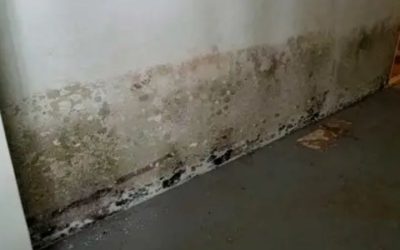
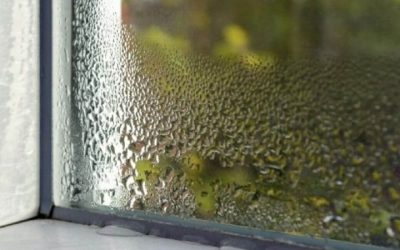
Do not mistake condensation on a wall for room-air RH.
Relative humidity is vapor in room air relative to what air can hold at that temperature; report %RH and °F together.
Once you have a trustworthy reading, interpret it alongside the room rather than in isolation. A bedroom at one RH may feel different depending on temperature and airflow, while condensation at a cold window can occur even when a central meter seems reasonable. Repeat the measurement away from the window if moisture appears there. If the reading changes abruptly when a nearby humidifier turns on, check whether the mist is blowing toward the sensor. The device should support a decision about cleaning, ventilation, or moisture adjustment; it cannot diagnose mold hidden in a wall or guarantee that every room has identical humidity.
Step 3: check more than one room or time
Record the location, temperature in °F, RH and time of day. Compare repeat measurements when cooking or showering is not distorting readings.
A single spot check cannot represent a whole home.
Same 00613: indoor temperature 32-122°F; published temperature accuracy ±2°F; powered by 1 AA battery.
If two household hygrometers disagree, place them side by side in the same representative room and let both settle before comparing their readings. Check each device’s stated accuracy and avoid assuming the higher-priced display is automatically correct. A consistent difference can be recorded as measurement uncertainty, while an unstable display may call for a battery check or manufacturer support. The comparison is more meaningful than carrying devices through changing temperatures and immediately judging their numbers.
Step 4: verify a suspicious meter cautiously
If needed, use a controlled manufacturer-supported reference or compare with another known device. A saturated salt reference near 75.3% RH at 77°F requires equilibrium and careful conditions.
The WMO cautions that a home salt test is not a traceable calibration.
WMO reference: saturated sodium-chloride environment approximately 75.3% RH at 25°C (77°F), given a controlled, equilibrated enclosure.
Products That Help
Useful supplies for the specific checks above can include AcuRite 00613 hygrometer and SensorPush room sensor. Confirm the exact size, device compatibility and applicable maintenance instructions first. Equipment and tools do not remove the need to stop for a safety fault.
Frequently Asked Questions
The answers below separate normal operation, owner-accessible checks and conditions that require manufacturer support or professional service.
What should a hygrometer read indoors?
Use the hygrometer’s percent-RH reading with room temperature. The EPA often gives 30-50% as general moisture guidance, not as a sensor accuracy or calibration rule.
How long should I wait before reading it?
Allow the device to stabilize as its manual requires at a representative spot; there is no verified universal wait time that applies to every sensor.
Can I measure humidity without a hygrometer?
Not reliably with bare observation. A digital hygrometer is the suitable home instrument; surface dampness and symptoms do not provide a numerical room-RH measurement.
Does the salt test make a hygrometer accurate?
No. The WMO salt reference is conditional on controlled temperature and equilibration, and a home salt check is not a traceable calibration.
Final Thoughts
Read the accuracy range of the exact measuring device rather than relying on a generic app. The WMO cautions that a home salt test is not a traceable calibration.