Key takeaways
- Match TPI to material thickness: Aim for at least three teeth engaged in the workpiece at all times. Thin-wall tubing and sheet metal need 14–18 TPI; thick bar stock and hardwood resawing want 3–8 TPI so the gullets can clear chips instead of packing them.
- Blade width sets your turning radius: A 1-inch blade tracks dead straight for resawing but won’t follow a tight curve. Drop to 3/8 inch or narrower for scrollwork and pattern cutting, and accept that it will need more careful tensioning.
- Bimetal outlasts carbon steel by a wide margin: A high-speed steel tooth edge welded to a spring steel back resists heat and tooth loss far better than a hardened carbon blade. The upfront cost stings less once you stop replacing blades monthly.
- Confirm the loop length before ordering: Band saw blades are made to fit specific wheel spacing. Measure your existing blade or check the plate on your saw — 93 inches, 111.25 inches, and 44-7/8 inches are all common, and they’re not interchangeable.
- Tooth set determines finish quality: Wavy set blades handle varying material thickness with less chatter, making them the safer choice for unknown stock. Raker set cuts faster and leaves a cleaner surface in consistent material.
Nothing humbles a woodworker faster than a band saw blade that wanders mid-cut. You set up a careful resaw on a piece of figured walnut, dial in the fence, and the blade drifts into a barrel curve you can’t sand out. Most of the time the saw isn’t the problem — the blade is. Tooth pitch fights the material, the set is wrong for the kerf, or a carbon steel blade has quietly gone dull after two hours of use. Buying blades by width alone, which is what most of us do at first, leaves a lot of performance on the table.
This guide sorts through the blades that actually earn a spot in a home shop: bimetal stock for the 14-inch cabinet saw, fine-pitch loops for portable band saws cutting conduit and bolts, and variable-tooth patterns that handle mixed material without stalling. Below you’ll find picks for resawing, for metal work, and for the general-purpose cutting that fills most Saturday afternoons, along with the specs that matter when you’re matching a blade to a job.
Our top picks


As an Amazon Associate we earn from qualifying purchases at no extra cost to you. Ratings are shown as listed on Amazon.
🛒 Best Price Today on Amazon
Prime members get fast, free shipping on everything above, plus member-only deals. New members get a 30-day free trial — cancel anytime.
How to Choose a Band Saw Blades (2026)
- Match TPI to material thickness: Aim for at least three teeth engaged in the workpiece at all times. Thin-wall tubing and sheet metal need 14–18 TPI; thick bar stock and hardwood resawing want 3–8 TPI so the gullets can clear chips instead of packing them.
- Blade width sets your turning radius: A 1-inch blade tracks dead straight for resawing but won’t follow a tight curve. Drop to 3/8 inch or narrower for scrollwork and pattern cutting, and accept that it will need more careful tensioning.
- Bimetal outlasts carbon steel by a wide margin: A high-speed steel tooth edge welded to a spring steel back resists heat and tooth loss far better than a hardened carbon blade. The upfront cost stings less once you stop replacing blades monthly.
- Confirm the loop length before ordering: Band saw blades are made to fit specific wheel spacing. Measure your existing blade or check the plate on your saw — 93 inches, 111.25 inches, and 44-7/8 inches are all common, and they’re not interchangeable.
- Tooth set determines finish quality: Wavy set blades handle varying material thickness with less chatter, making them the safer choice for unknown stock. Raker set cuts faster and leaves a cleaner surface in consistent material.
The Best Band Saw Blades (2026)s Reviewed
Lenox Classic Tuff Tooth 93″ x 3/4″ 18 TPI
This is the blade I reach for when cutting angle iron and mild steel plate on a 14-inch saw — the 18 TPI wavy set pitch stays smooth through changing wall thickness without grabbing. The 3/4-inch width and bimetal construction give it enough beam strength to hold a line through a long cut.
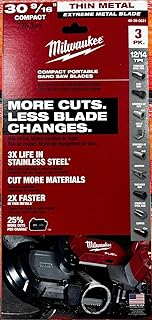
FOXBC 44-7/8″ Portable Bandsaw Blades, 14 TPI, 5-Pack
A sensible value play for anyone burning through blades on a Milwaukee or DeWalt portable saw during renovation work. The .020-inch thickness and 14 TPI count handle EMT, threaded rod, and unistrut cleanly, and the five-pack means you’re not rationing blades on a deadline.
Lenox Classic Pro Vari-Raker 111.25″ x 1″ 5-8 TPI
The variable 5–8 TPI pattern is what makes this blade worth the money — it disrupts the harmonic vibration that causes chatter, so cuts come out quieter and truer. On a larger saw with adequate tension capacity, the full 1-inch width makes this a genuinely capable resaw blade.
Lenox Diemaster 2 93″ x 3/8″ 14-18 TPI
The narrow 3/8-inch width buys you real curve-cutting ability while the variable 14–18 TPI pitch still tracks well through tubing and thin stock. This is a good single-blade compromise if your saw sees both metal and detail work.
LENOX Portable Band Saw Blades 44-7/8″, 14 TPI, 5-Pack
Lenox’s own portable-saw loops run noticeably longer than budget alternatives in stainless and hardened fasteners, where cheap blades strip teeth in a single cut. If your portable saw earns its keep, the price premium pays back in blade changes you don’t have to make.
Frequently Asked Questions
How do I know what blade length my band saw takes?
Check the manufacturer’s plate on the saw body or in the manual first. If neither is available, measure your current blade by laying it flat in a circle and measuring the circumference, or measure wheel diameter and center distance and calculate it.
Can I use a metal-cutting blade on wood?
You can, but it will cut slowly and load up with sawdust because the fine gullets can’t clear wood chips. High-TPI blades also generate heat in wood, which scorches the cut face and dulls teeth faster than you’d expect.
Why does my blade keep drifting to one side?
Uneven tooth set from a dulled side is the usual culprit, often caused by cutting a nail or hard inclusion. Wheel alignment, guide bearing position, and insufficient tension are the other common causes worth checking before you blame the blade.
How long should a bimetal blade last?
Under normal home shop use with correct feed pressure and speed, a quality bimetal blade often runs several months of intermittent cutting. Forcing the cut, running too fast for the material, or cutting hardened steel will shorten that dramatically.
Final Thoughts
For general work on a 14-inch shop saw, the Lenox Diemaster 2 covers the widest range of jobs with its narrow profile and variable pitch. If resawing is your priority and your saw can tension a full-width blade, the Lenox Classic Pro Vari-Raker delivers straighter cuts than anything narrower, while portable saw owners doing steady metal work will get the best return from the LENOX 44-7/8″ five-pack.